Zagato: The Final Chapter of a Story Without End
18 April 2026 3 min read 6 images
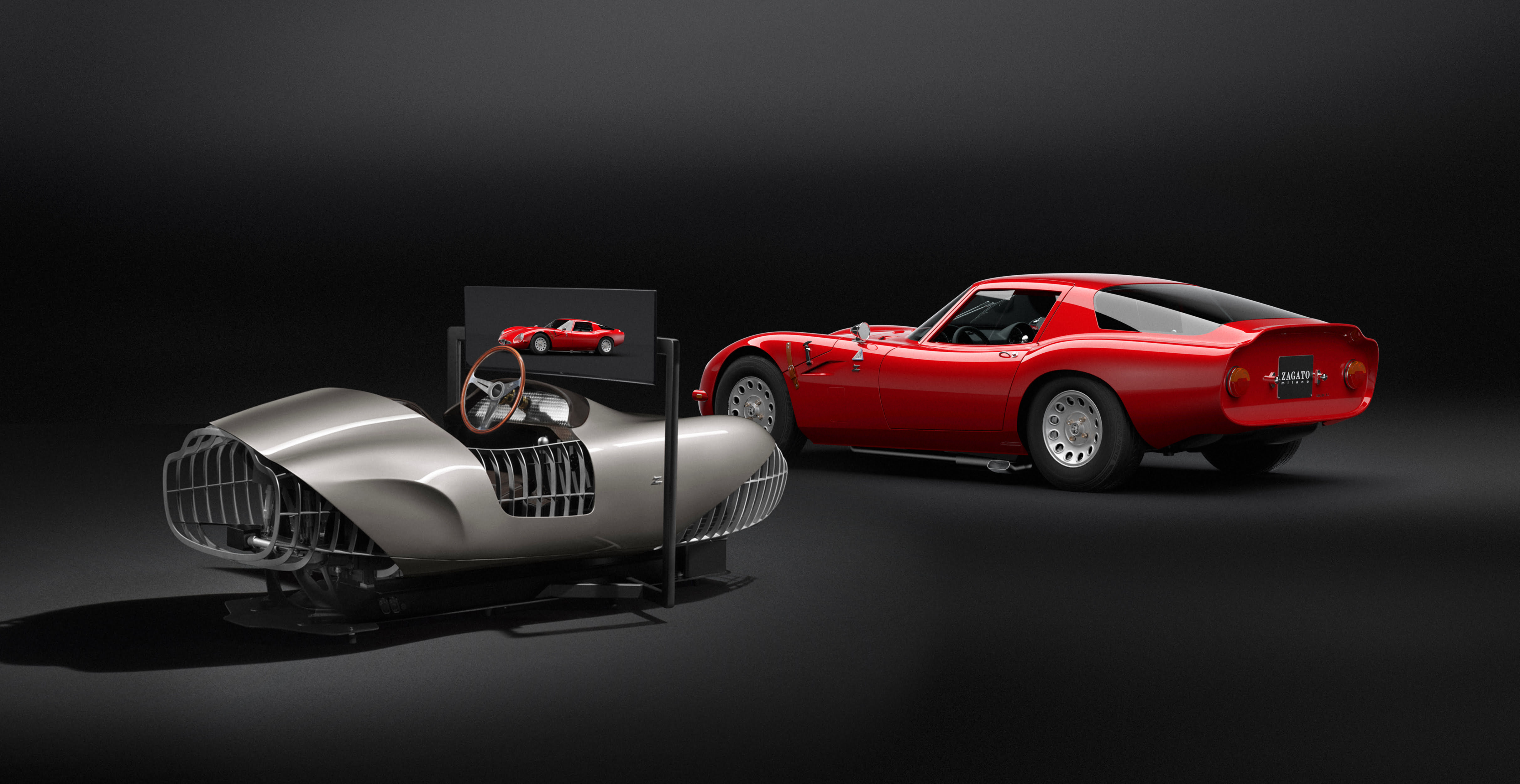
Photo credit: Zagato
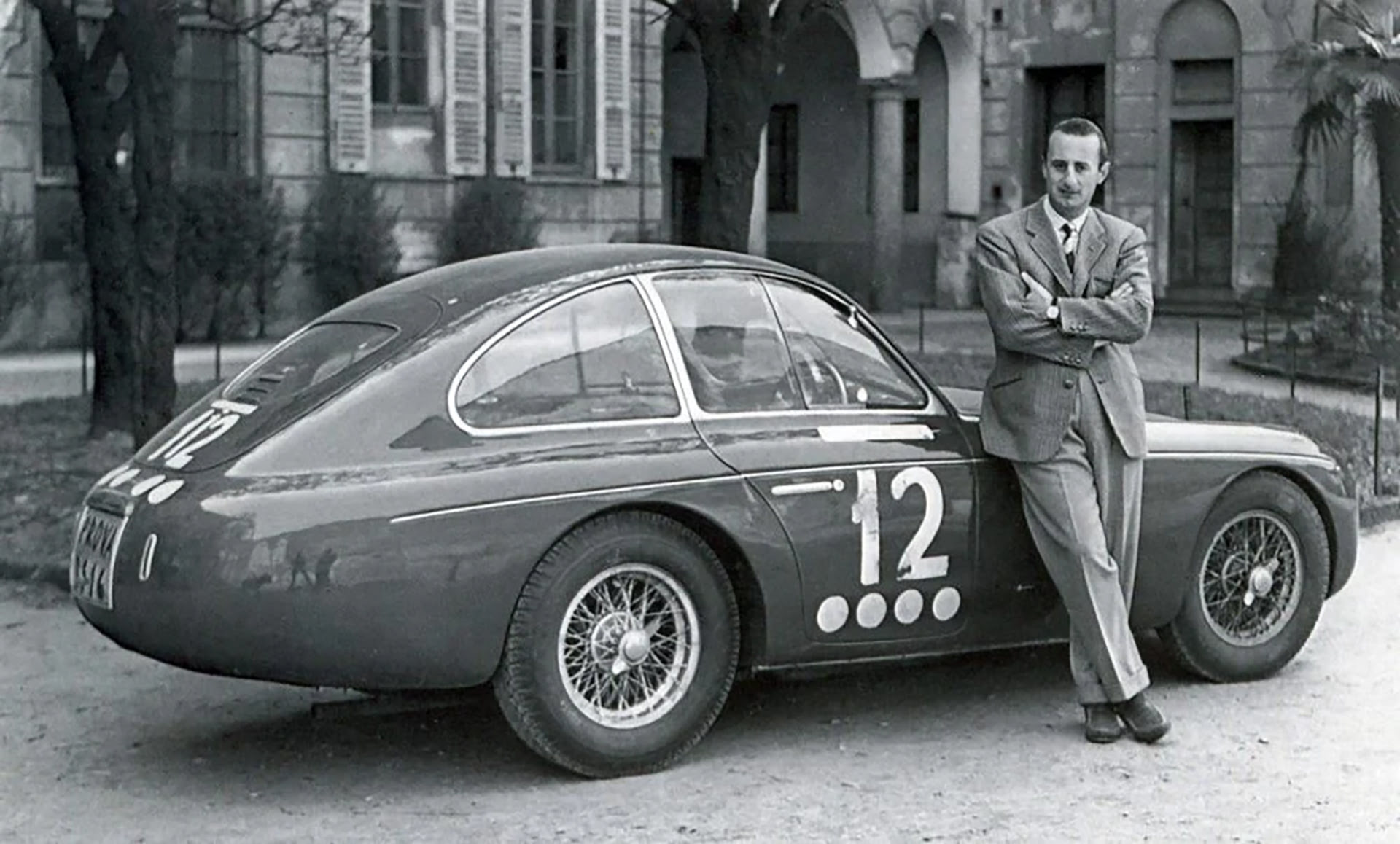
We came to know a Zagato that, in the 1930s, earned its fame because Enzo Ferrari himself wanted its coachwork to carry his Scuderia's Alfa Romeos to victory. We found it again, dominant on the postwar Gran Turismo circuits, honoured with Compasso d'Oro awards and sought out by clients from every corner of the world who desired its models. Then came the years we described when Zagato became an assembler-builder, with industrialised production lines for its special models commissioned by Alfa and Lancia. These were the years when Ugo, the Founder, handed to his sons Elio and Gianni the stewardship of a growth that defined an entire era.
But the flourishing Zagato needed to understand its role as coachbuilder at precisely the moment when the great Manufacturers were learning to produce short series themselves. The intuition belonged to Andrea — third generation of the family, son of Elio — who was the first to truly grasp the opportunities opening up in technological innovation. Andrea equipped the company to design and build cars using CAD and CAM. The refined Atelier on the outskirts of Milan, armed with these technologies, found the road that leads to today: a road that unites creativity, quality, and industrialisation, producing small series or singular jewels that marry the pleasure of a long tradition of originality with the possibility of genuine, joyful road use — classic models, yet refreshingly contemporary.
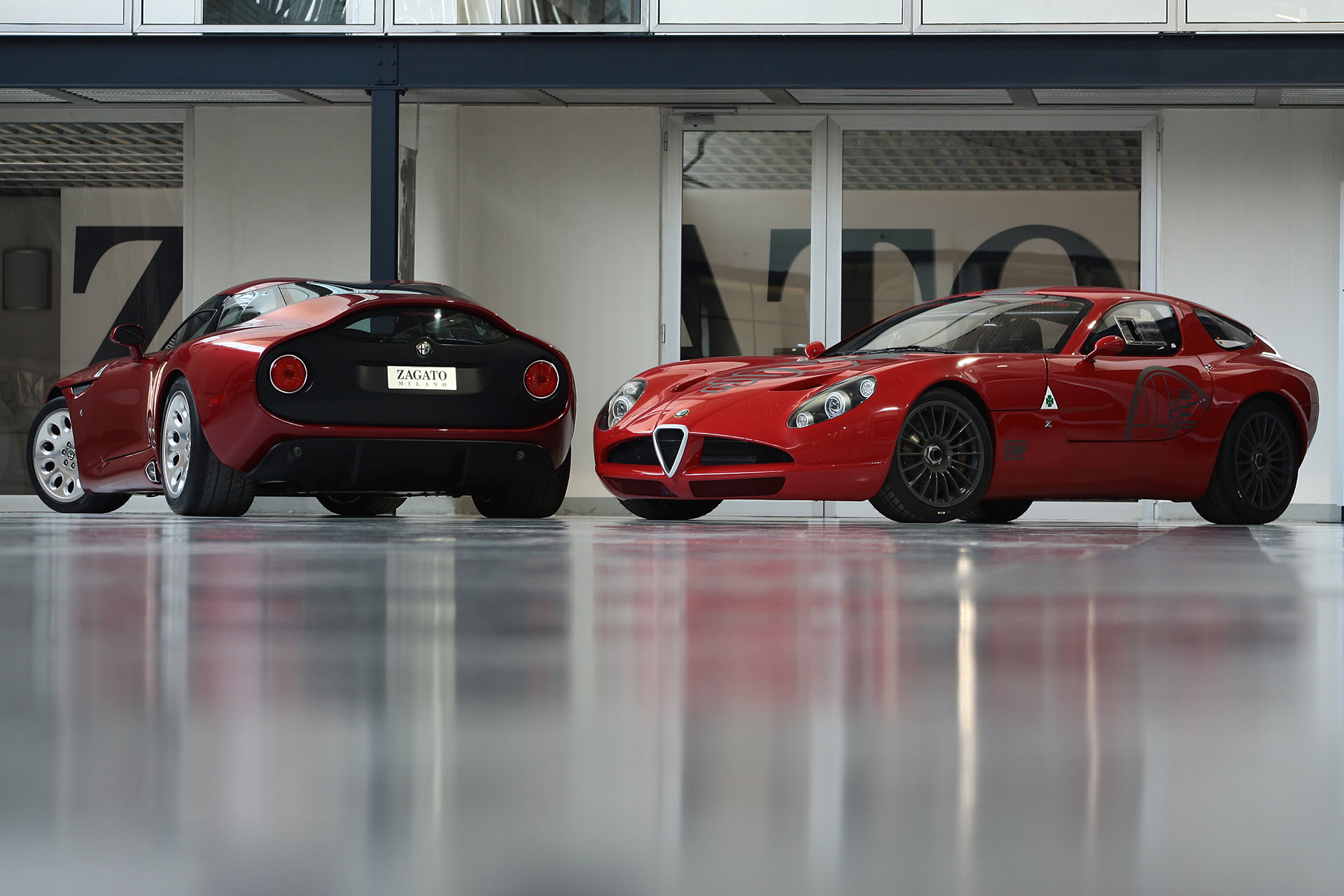
To conclude this journey through the history of Zagato, we have chosen five cars bearing the proud "Z" signature — and one simulator — all born in recent years.

The first of these — more than a car, truly — is a declaration of love. Andrea has as his most precious companion Marella Rivolta, daughter of that Rivolta who sought quality and comfort in the automobile, realising luxurious vehicles conceived and built in Italy, animated by American V8 engines: the IsoRivoltas.
Could Andrea have done otherwise than offer Marella a magnificent berlinetta bearing the classic Griffon emblem, perfectly in harmony with the history of the Marque? It was 2020 when, after meticulous and careful development and testing, the IsoRivolta GT Zagato was born. A model still in production, capable of bringing great satisfaction — not only in terms of performance, but because it restores to today's machine the magnificent flavour of the past.
In the opposite spirit, in 2022, Zagato decided to add a surprise to the already celebrated and beloved Maserati Mostro, reinterpreting it — after the closed coupé version — as a powerful barchetta. An object of rare magic, best appreciated along the Croisette in Cannes or in the Piazza del Casino in Monaco. For those who might question the name, let them simply accept it: "Mostro" was the name that arose naturally from the car Stirling Moss demanded for the 1957 24 Hours of Le Mans — a supremely courageous machine, built by Ugo Zagato together with his sons, carrying a 4500cc engine and a form shaped for pure speed. It did not surprise then, and it does not surprise today; it simply was what it was. Now it takes on a new and different meaning: a monster of beauty.

The imagination and invention of Andrea and his team never rest: the Alfa Romeo Giulia SWB Zagato of 2024 is an authentic masterpiece that, without any shadow of doubt, perfectly embodies the pure sporting spirit of Zagato's Alfas from the 1950s and '60s. The design is rich in iconic references — from the truncated tail inspired by the legendary Giulietta SZ and Giulia TZ, to the "double bubble" roofline, the unmistakable signature of the Milanese Atelier. The cockpit, too, reflects the exclusivity of the project, with bespoke finishes distinguishing it from the series model.

Andrea Zagato's imagination — and above all his profound automotive culture — also brings about the rebirth, again in 2024, of a version of the Alpine Renault A220 that raced at Le Mans in the 1980s. That car had been lengthened to find greater speed along the famous Mulsanne straight. The curious, and almost entirely forgotten, detail was that the extended tail could be fitted or removed depending on the circuit. From this comes the idea of a reevocation of Jean Rédélé's berlinetta with a short or long tail chosen according to use: the Zagato AGTZ Twin Tail. A fine success for an admirable idea, one that found immediate commercial resonance — to the point that even Gordon Murray ordered one for his personal collection.

With its victory in the Concept Cars & Prototypes class at the Concorso d'Eleganza Villa d'Este in 2025, the Alfa Romeo 8C DoppiaCoda Zagato is another jewel in Andrea's crown — or more fittingly, a Quadrifoglio in his buttonhole, for a car that, unlike the Alpine exercise, has a single tail: one that possesses the remarkable quality of being perceived in an entirely different way depending on the angle from which it is seen.
The Zagato tradition of surprising with harmony has never felt more alive. It is an honour and a pleasure to have the Milanese Atelier among the partners of Roarington.

The story of Zagato could pause here, while we wait to discover what other surprises await us. But that would not be right: among the many things born of the Zagato Atelier, there is an instrument that allows one to drive the greatest masterpieces in the history of the automobile. This is the Simulator designed and built for Roarington, dedicated to Andrea's father, Elio Zagato — himself a great racing driver.
Roarington's technology has allowed "Elio Z" to render drivable classic cars from every era, with carefully calibrated adaptations of the driving experience — braking, yaw, acceleration — faithfully reproduced by the actuators that move the simulator itself.
Andrea wanted it "unfinished" — deliberately so — to reveal how the lightest body panels were connected to one another by a small spaceframe that made them rigid while keeping them weightless. A driving experience that unites pure pleasure with the sensation of truly understanding what driving once was.