Zagato: Over a Hundred Years of Achievements. The Revolutionary Sixties: from the Aston Martin DB4 GTZ to the Alfa Romeo TZ2
21 March 2026 1 min read 4 images
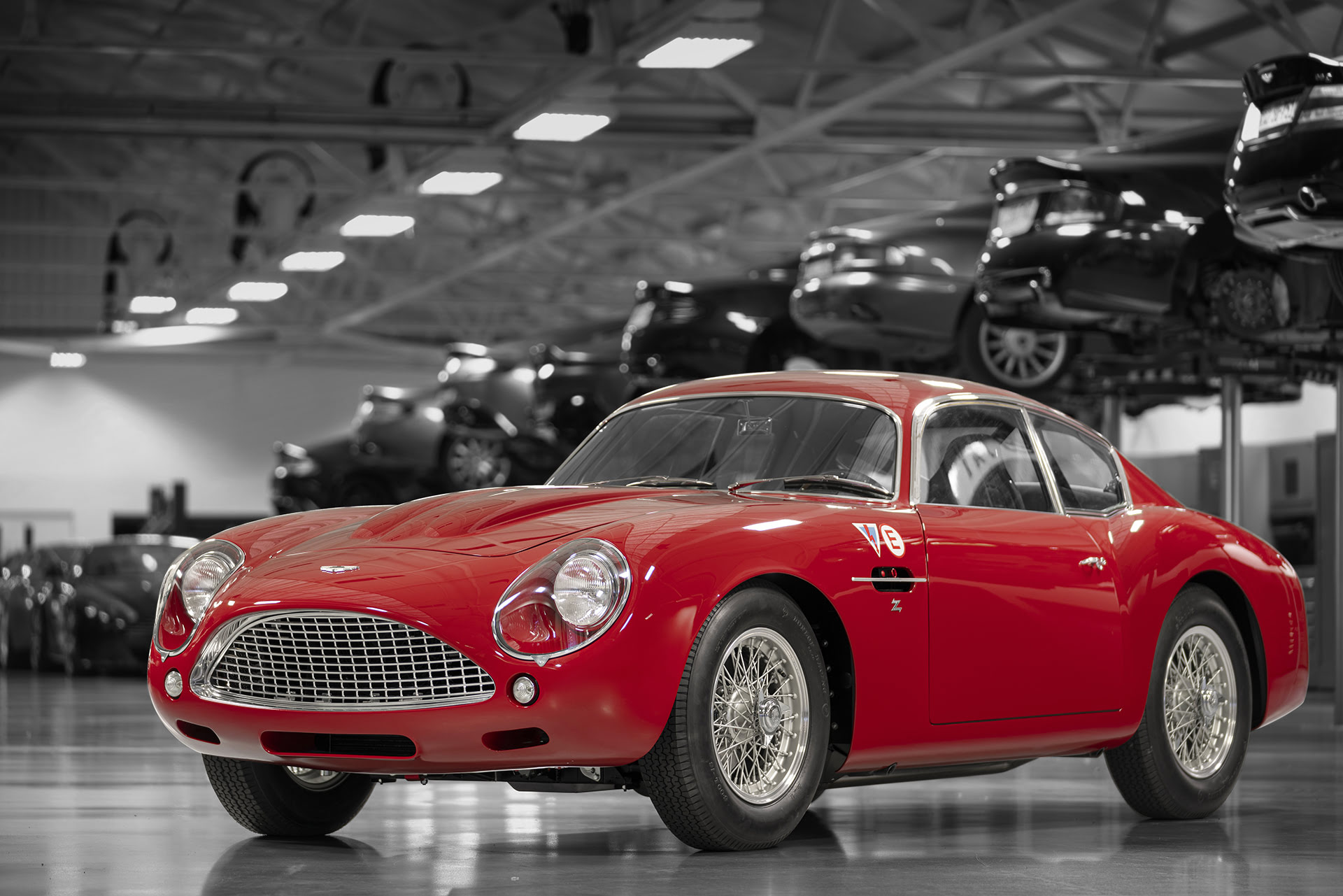
Photo credit: Aston Martin, Alfa Romeo, RM Sotheby’s, Stellantis, Zagato
Anyone who knows Rossini’s celebrated opera “The Barber of Seville” will not easily forget the cavatina of its protagonist — who, with perfectly justified pride, declares that everyone wants him and everyone seeks him out — can understand what Zagato’s position was at the dawn of the 1960s: everyone was looking for them, everyone wanted them. After Lancia, Fiat, Maserati, Abarth, and Porsche, it was now Aston Martin’s turn, further cementing Zagato’s international standing. From 1960, nineteen DB4 GTZs were built — cars that have since become, for most collectors, a dream as beautiful as it is unattainable. Roarington offers the rare opportunity to admire this masterpiece of automotive art in its Digital Showroom, which you can visit by clicking here: Dreamland Exhibitions.

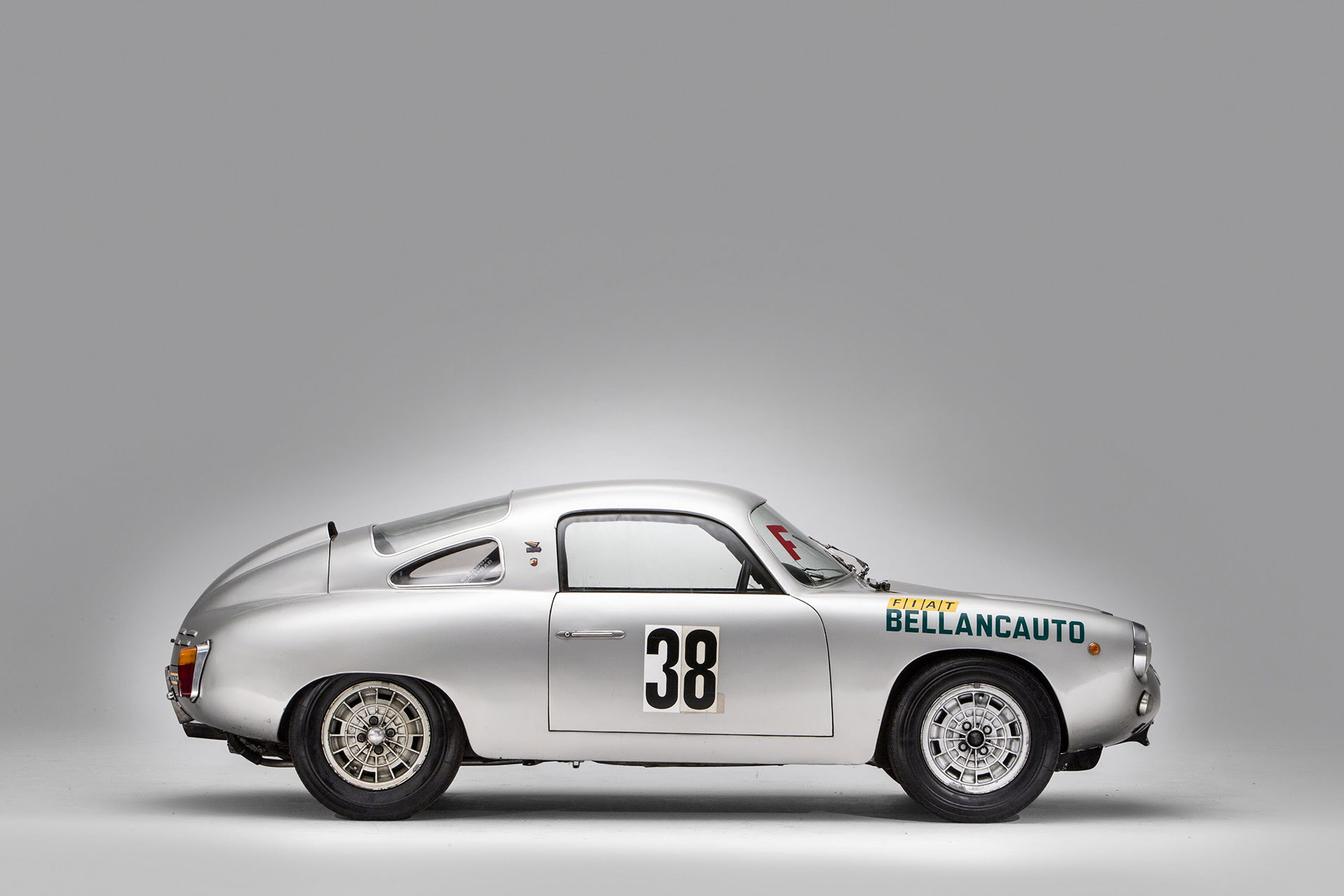
In those years, it was once again Alfa Romeo that became the sharpest arrow in Zagato’s quiver. Before exploring the winning models of the 1960s, one must remember that the Giulietta SVZ and SZ had already been a considerable success, true to Zagato’s enduring principles of lightness and classical form. But the wind shifted suddenly when, on a round-tailed Giulietta SZ, Zagato began experimenting with a principle that the German engineer Wunibald Kamm had intuited back in the 1930s: that a clean, abrupt cut at the tail would allow the airflow to separate in a controlled manner — almost as though the tail were long and teardrop-shaped — creating a zone of low pressure capable of reducing aerodynamic drag.

What Zagato had achieved was a genuine revolution: not only did the Giulietta SZ Coda Tronca become the definitive car to have in Gran Turismo racing, but every manufacturer began to study and adopt the solution. It is enough to consider that, following the presentation of the SZ Coda Tronca in 1961, Ferrari embarked on research that led to the GTO in 1962 — made victorious, in no small part, by this very concept.
Zagato’s continued development of the truncated-tail solution led, in 1965, to the birth of a car that became a legend from the very moment of its victorious debut at the 1000 Km of Monza: the TZ2. Equipped with a 1600 cc engine and built on a tubular spaceframe chassis conceived specifically for competition — itself derived from the TZ and refined still further — the TZ2 was extraordinary above all for its bodywork. Not only was the style magnificent and aggressive, but on this occasion Zagato abandoned their traditional aluminium in favour of fibreglass, so much lighter. The few examples ever built are now among the most coveted objects in the collector’s world, commanding prices that leave one breathless.

All of this activity had driven the expansion of Zagato’s operations, which in those years also began producing small-series models directly for the manufacturers themselves. In practice, the cars built by Zagato were sold and supported by the manufacturer under their own name. Lancia’s experience illustrates this perfectly: the Flavia Sport Zagato, winner of the European Rally Championship, followed by the Flaminia Sport and Super Sport, and then the Fulvia Sport, all confirm the depth of this relationship.
The world changes. But Zagato’s mastery endures at the vanguard. A distinction that should never be taken lightly.