No Smoking: The Impossible Automobiles of Chris Gilmour
25 July 2025 2 min read 4 images
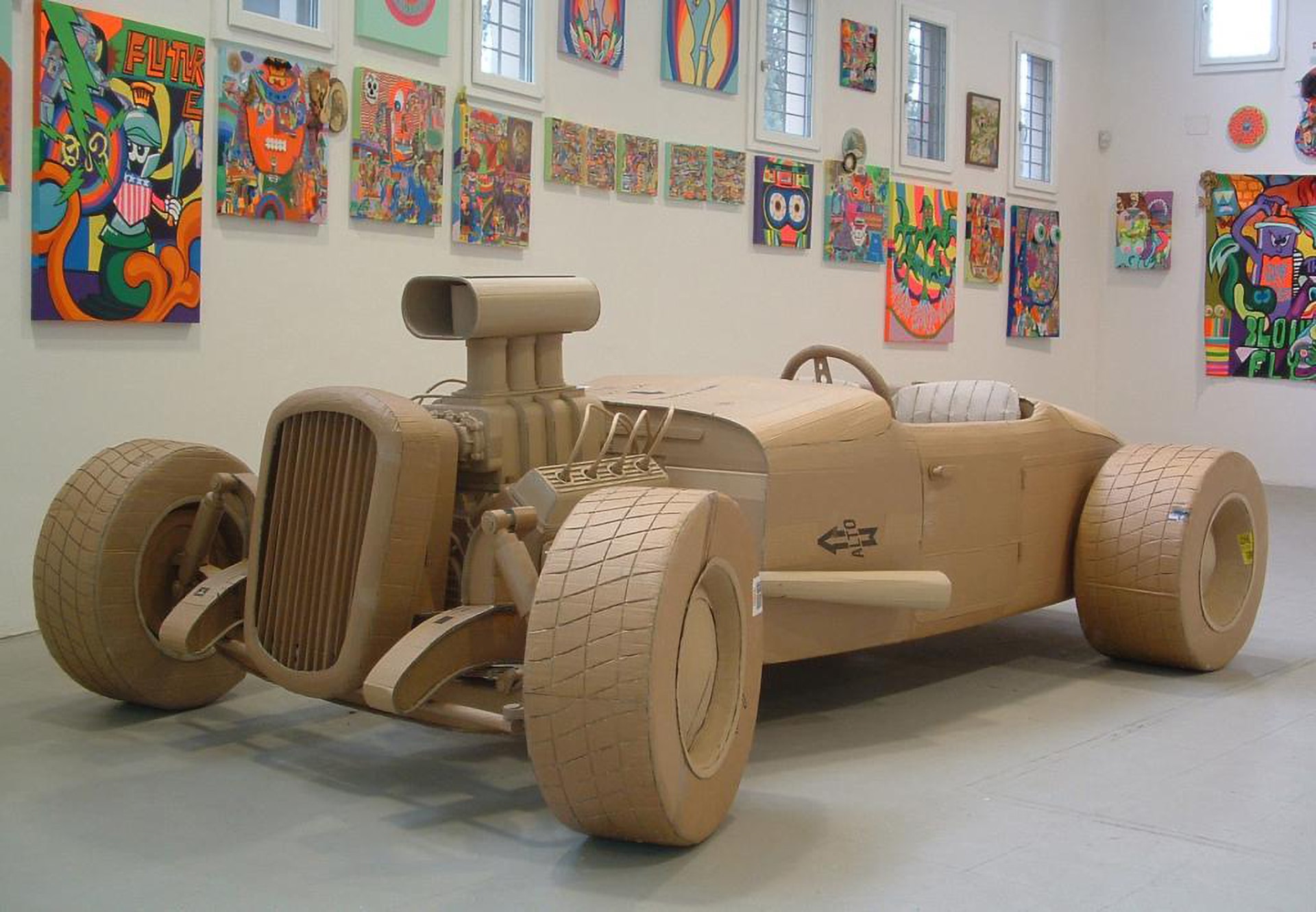
Photo credit: Chris Gilmour
Is there a humbler material than cardboard? Probably not. It is the material of boxes destined for recycling, the material that protects important objects in transit and, once its purpose is served, is forgotten. Yet in the hands of Chris Gilmour, that material becomes its own opposite – it transforms from container to protagonist: no longer waste, but work of art. The British artist, who lived in Italy for many years, has achieved something apparently impossible: building automobiles using nothing but corrugated cardboard and glue. No hidden metal armature, no wooden reinforcement. Only cardboard, patience, and an almost obsessive knowledge of the object to be reproduced. Before beginning a work, Gilmour studies every detail of the real car, often going so far as to disassemble parts of the original vehicle in order to understand its forms and structural components.

The result is remarkable. The viewer stands before what appears to be a real automobile, and only on closer inspection does it become clear that what seemed like metal is cardboard, that the chrome details are simple strips of packaging, and that even the tyres are built from sheets of material layered and glued together. There is something curious in the way Gilmour, working with a light and fragile material, manages to convey a sense of solidity. Metal becomes cardboard, yet continues to be perceived as metal. The sturdiness of the automobile is evoked by a material ordinarily meant to protect it.

In Gilmour's artistic thinking, the automobile is never simply a means of transport. It is one of the objects that best narrates the twentieth century – desire, design, industrial production, and even dreams. This is why in his practice he chooses models that have become popular icons: the Fiat 500, the Lambretta scooter – a recurring presence across numerous works – and the Ape Taxi inspired by Indian auto-rickshaws, all pieces made between 2005 and 2007, the period in which he won the Premio Cairo. A bolder leap came in 2010, when he was drawn to the celebrated Aston Martin DB5 of James Bond, complete with the famous gadgets of the invincible agent 007.

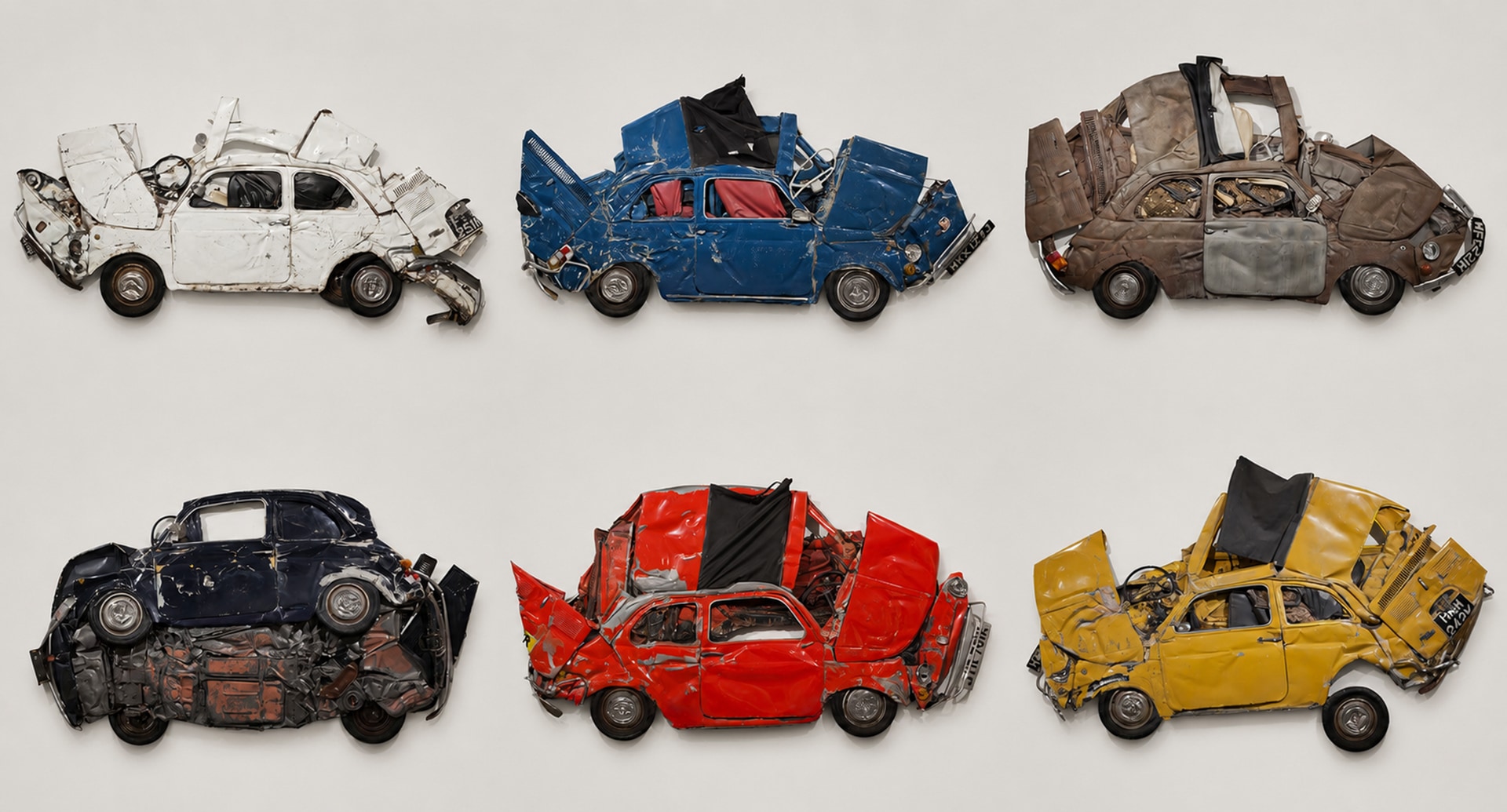
Within the landscape of contemporary art, Chris Gilmour occupies a singular position. He does not destroy objects as certain artists of the Nouveau Réalisme did, nor transform them into provocation as the surrealists did, nor interpret them through the lens of Pop Art. He reconstructs them faithfully, with an almost meticulous precision, using modest and ordinary material. It is precisely this contradiction that makes his works compelling. The automobile, once again, becomes far more than an automobile. It becomes memory, desire, design, industrial culture. And above all, it demonstrates that the value of a work does not depend on the material from which it is made, but on the idea it manages to convey. A sheet of cardboard, in the right hands, can tell the story of the twentieth century better than a tonne of steel.