The Art of Ron Arad and the Vision of Luca di Montezemolo
01 August 2026 1 min read 3 images
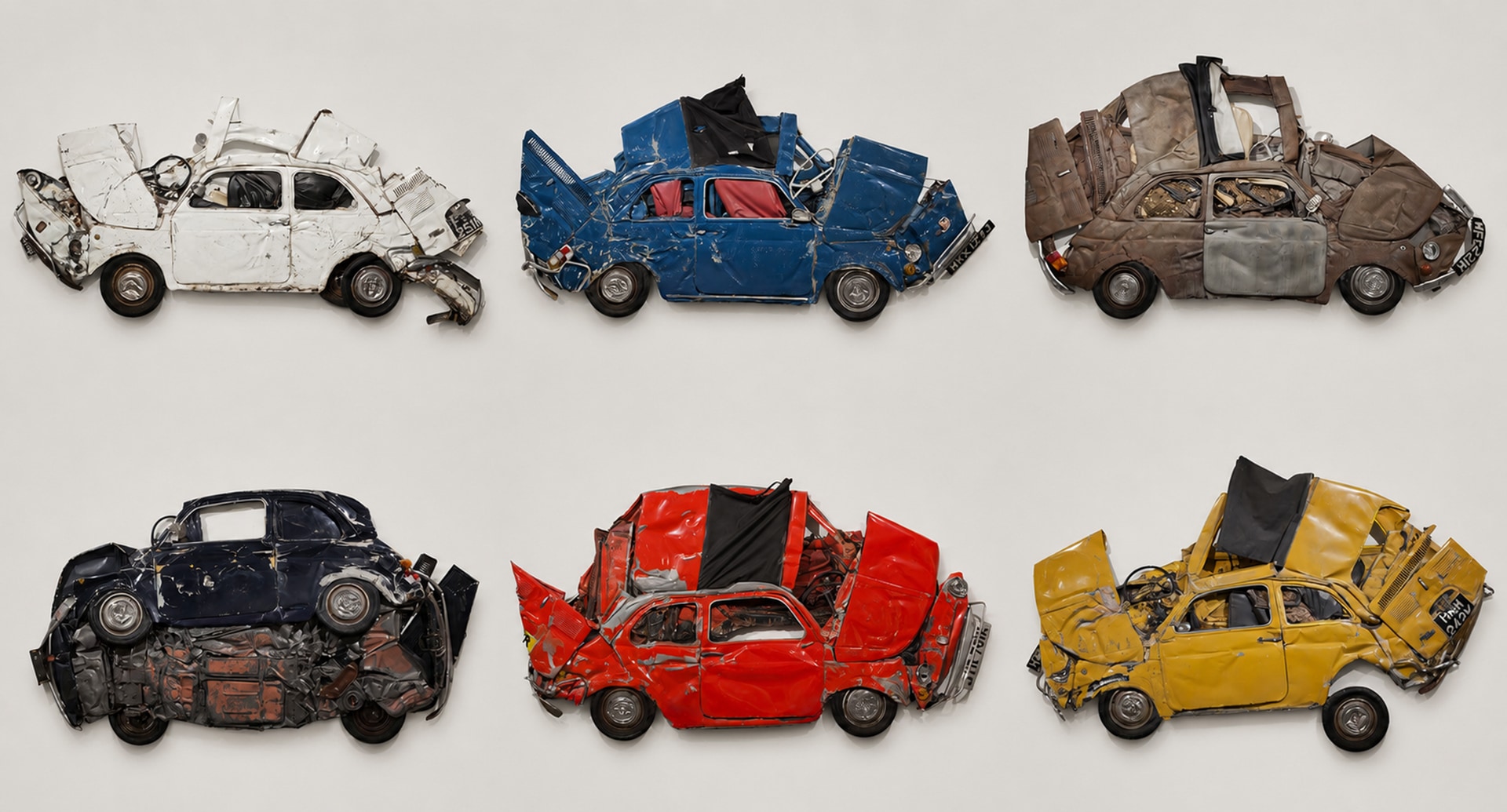
Photo credit: Maserati, MoMa, Pinacoteca Agnelli, Ron Arad
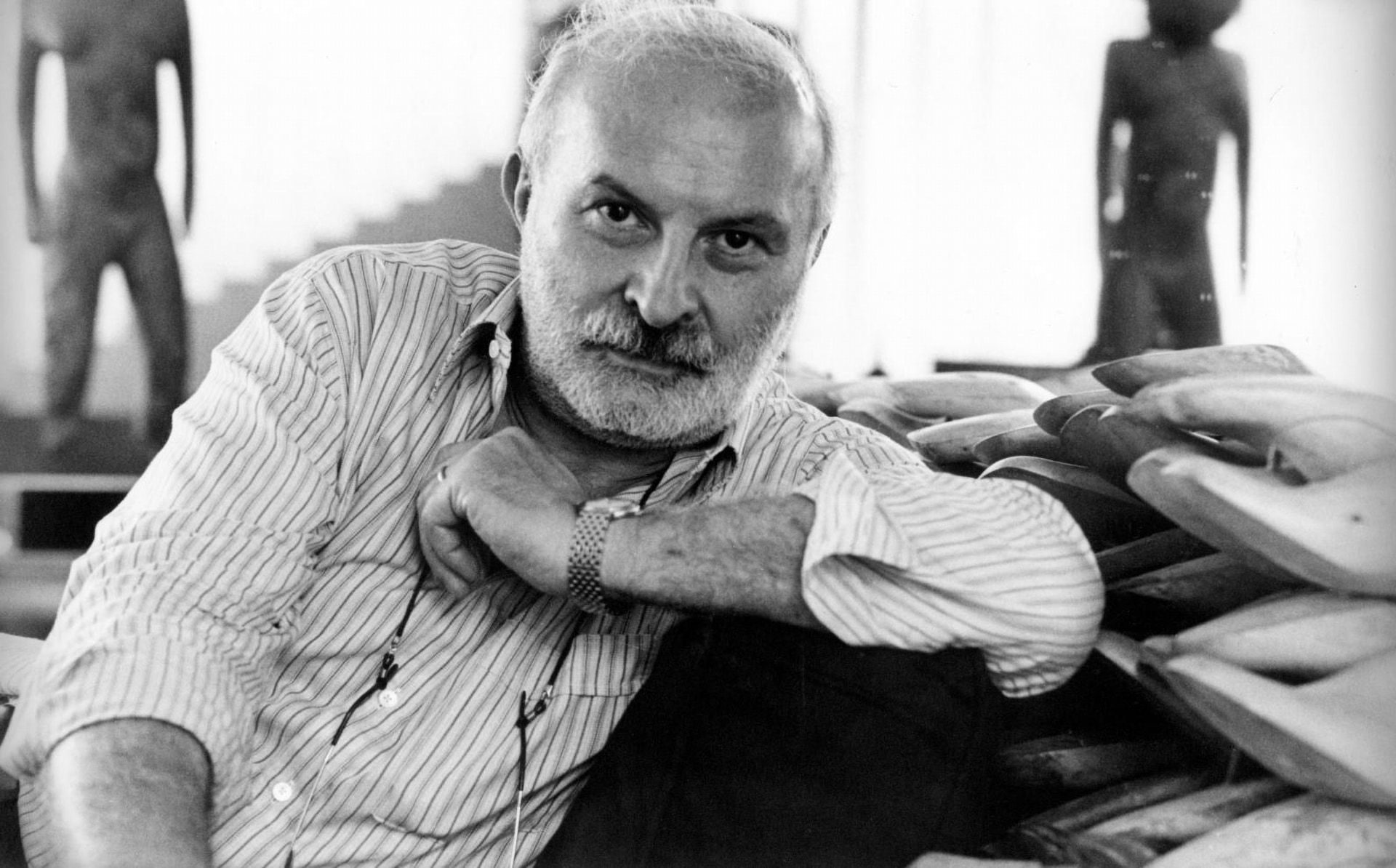
It is impossible to say that one truly knows Ron Arad. His world is less private than it is elusive, and it is well represented by one of his most celebrated pieces: the bookcase that clings to the wall like an untameable serpent. The metal strip from which it is made resists, at every stage of assembly, taking the desired form. An arduous struggle to arrive at a brilliant magnificence. For him, every project must carry its own spark within it.

When people speak to him about the little Fiat 500, he replies with a certain tenderness: "The Fiat 500 is a national symbol for Italy and for our generation, and it is a very captivating vehicle. Everyone has stories about their first date in a Fiat, or their first kiss." Tender and romantic – one cannot deny it. Then he takes six of them, in different colours, and crushes them beneath a powerful press, flattening them completely. And where did that tender affection go? The answer is that of a true artist: "I am not destroying the cars, I am immortalising them."
The exhibition held at Revers Art, where the six completely flattened 500s were hung like paintings, powerfully confirmed his idea of stripping a machine of its function in order to preserve its symbol and its value.

Among Ron Arad’s many remarkable works is also the creation of the Maserati showroom at the brand's historic headquarters in via Ciro Menotti in Modena. Here too, the artist-designer's approach was nothing short of surprising. He had an appointment with the president of Maserati, Luca di Montezemolo, who at that time – we are speaking of the closing years of the last century – was at the helm of Ferrari but had been tasked by the Fiat Group with breathing new life into Maserati.
The president was waiting for him, alongside several colleagues, with drawings and cost estimates in hand. There was a moment of genuine surprise when Ron Arad walked into the meeting room with nothing – no bag, no folder, nothing at all. Asked about his proposal, Arad – without the slightest sign of embarrassment – requested a sheet of paper. Another moment of bewilderment followed: he picked up neither pencil nor pen to sketch an idea, but folded the sheet lengthways into a strip. The silence was absolute. "You see, President, Maserati comes from a long way back – it has had many beautiful moments and others less fortunate. Today, through your commitment, it continues its journey forward." As he spoke, with natural ease he wound the strip into something close to a figure of eight. "In the showroom we create this road that rises, descends, turns back on itself, and rejoins – an endless path, along which we place the cars of every era following the latest models." Not even a moment of silence was needed. "Magnificent, let us proceed..." – Montezemolo’s words, which on that occasion too showed him to be a visionary of rare brilliance.
The showroom is still there, an experience simply to visit. A testament to what it means to do things well – or to ask a genius to invent them.