Don’t Dream It. Be Part of It - We are hiring!

View open positions

Single-Seaters and Collecting: Two Worlds Growing Ever Further Apart

  • 30 August 2025
  • 7 min read
  • 3 images
Single-Seaters and Collecting: Two Worlds Growing Ever Further Apart image

Photo credit: ACM Automobile Club de Monaco, Cavallino Classic, Mercedes-Benz

Racing cars – single-seaters above all, and Formula 1 machines in particular – escape the ordinary logic of auctions and operate by their own law. That law is called the palmares: it is bound to the victories that come with it, and, inevitably, to the champions who drove them.

Yet the history of collecting Formula 1 cars carries other variables, shaped by different eras and by a form of classification we might describe as "human versus technological." Enzo Ferrari and Juan Manuel Fangio were the forerunners of the "human" era: for the Italian constructor, drivers had to adapt to the characteristics of the car as defined by the Scuderia. Even camber and toe settings were not to be touched, however insistently a driver might ask. An absurdity rooted in the conviction that whatever left Maranello had to be perfect. And often it was. But not always. A driver like Fangio – World Champion in every car and with every marque, Alfa Romeo, Maserati, Mercedes-Benz, and Ferrari – could, with the calm that allowed him to run an entire Grand Prix with a toothpick between his lips without biting down on it, and with a patience always aimed at the result, bend the car to his style of driving.

Men continued to be the protagonists in Formula 1 for much of the last century: engineers such as Rudolf Uhlenhaut, Mauro Forghieri, John Barnard, and Gordon Murray invented solutions or corrected mistakes by the force of individual talent and the courage to impose their own vision. They were the symbols of Formula 1 in the era of men.

1_Two Worlds Growing Ever Further Apart Juan Manuel Fangio at the wheel of the Mercedes-Benz W 196 R in 1955, the season in which the Argentine champion claimed his third Formula 1 World Championship title.

Then everything changed. Towards the end of the 1990s, a driver named Michael Schumacher began demanding that controls and information be placed directly on the steering wheel of his single-seater. What everyone at Maranello – driver included – called "manettini" was an unmistakable signal that the digital age was taking hold of power.

That evolutionary process grew more complex, and everything became, progressively, ever more innovative and advanced technology. A Formula 1 car of the new era – and still more so those of today – is no longer the property of the driver, and, paradoxically, no longer quite the property of the constructor either. Today every detail, monitored and measured by computing power beyond any human logic, is a component of a system as complex as it is dominant. A system that resolves itself into a single word: technology.

Engineers and drivers execute what the technology requires. If they do not, the performance is not there.

2_Two Worlds Growing Ever Further Apart Formula 1 single-seaters from the 1960s through to the early 1990s can still be prepared, driven, and brought to the track by collectors and experienced drivers with the support of a capable technical team.

To buy a contemporary Formula 1 car and simply start it requires a team of mechanics and engineers capable of working through procedures that reach well beyond any defined process.

Whoever buys a single-seater from the 1960s or 1970s can drive it with relative ease: steering wheel, gearbox, brakes – and, beyond those, that element transferred from the human to the technical that Niki Lauda called "culo." In other words, the bodily sensitivity of the driver in races where real risk, the genuine kind, competed directly with the will to win.

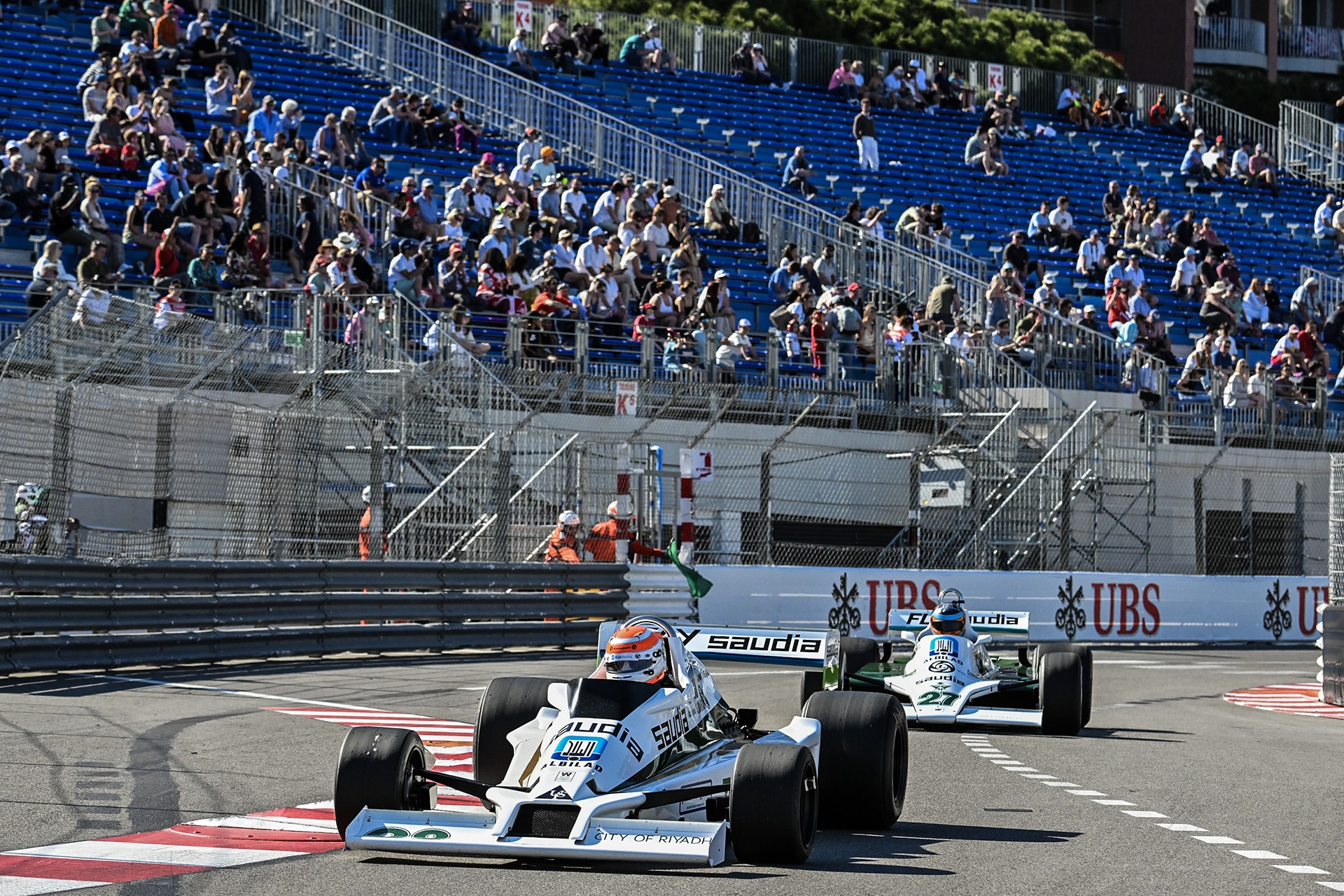
Single-seaters from the 1980s and early 1990s are still drivable with a good technical team around them: the Grand Prix Historique de Monaco proves as much. After that, nothing – which in reality becomes everything: between the single-seater, the engineers at the pit wall, and the remote garage at the team’s headquarters, everything must work in unison for the driver to extract the best from the car. The most recent single-seaters, indeed, require a level of professional support from the constructor comparable to that of a race weekend itself – as in the case of Ferrari’s F1 Clienti programme.

It comes as no surprise that very young drivers today are more capable than established colleagues. These youngest drivers have no father and mother in the traditional sense; they are children of a computer and an iPhone, and they relate to the world accordingly. Are the races beautiful? Yes – but they will never be reproducible, thanks to passionate and even well-resourced collectors, in the years to come. The market for single-seaters will remain anchored to those of the past. The others will carry only the honour of recalling very young champions.

3_Two Worlds Growing Ever Further Apart Formula 1 cars from the most recent generations – including those of the Schumacher era – demand highly specialised knowledge, procedures, and assistance to return to the track: a level of support that official programmes such as Ferrari F1 Clienti are designed to provide.