More bargains than emotions in France
04 April 2026 4 min read 9 images
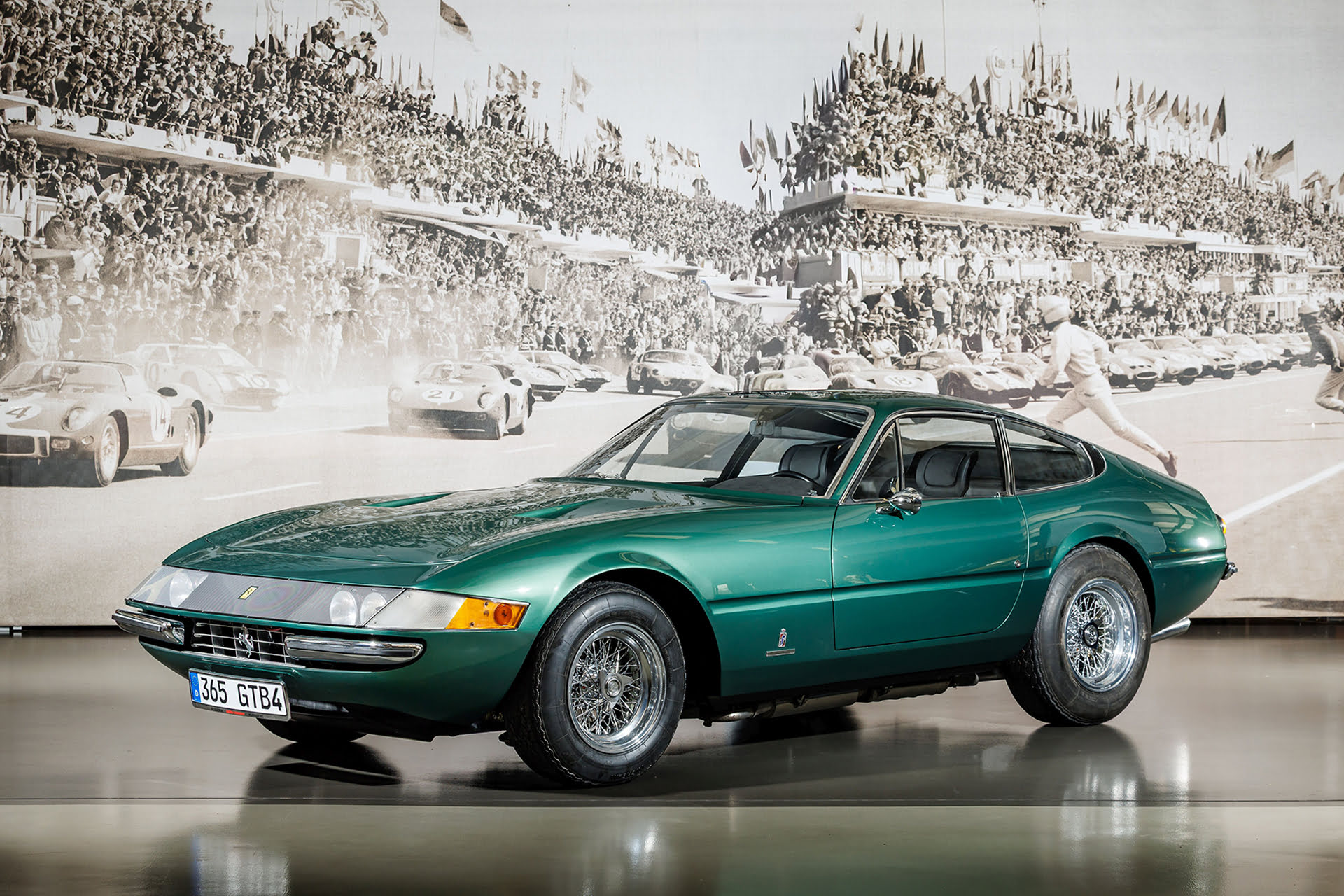
Photo credit: Aguttes, Artcurial
Today we find ourselves in France, where two auction houses organised, in the capital, two sales on the same weekend. Artcurial was first, on Saturday the 14th of March, on the Champs-Élysées, offering the collection of Fritz Neuser — a respected cyclist, racing driver, and seller of the very cars he raced, principally Alfa Romeo and Ferrari. A figure well known in Germany, considerably less so in France, which meant there was a small element of uncertainty about how the sale would go. All thirty cars were offered without reserve and achieved exactly what was predicted: estimates of €4,028,000 against actual sales of €4,006,230. The average price settled at €133,541.

Aguttes, the following day, chose instead the Espace Champerret in Levallois-Perret, on the outskirts of Paris — a well-tested venue, and also the house's home base. Here the cars on offer were triple in number (95), but barely one was without reserve, so it comes as no surprise that the sale percentage landed at just under two-thirds of lots sold (63 cars, for a total of 66.32%). Forecasts had predicted €6,637,500, and in the end the total came in slightly above Artcurial's: €4,423,560, with an average price of €70,215 per car sold.

And yet it was precisely Aguttes that achieved the most expensive car of the weekend: a 2010 Ferrari 599 GTO in the extraordinarily rare shade of Rosso Ferrari 2007 F1 — a tone slightly lighter than the historic red, the one that celebrated Kimi Räikkönen's World Championship title. Fitted with the rare rollbar and few other options, with over 30,000 kilometres on the clock, it was estimated at €750,000–850,000, in keeping with the upward trend for recent Ferraris, and it sold for €850,316.

We must acknowledge that the gap between ordinary examples, excellent ones, and truly exceptional ones is growing enormously — a common phenomenon among collectables, but not always quite so pronounced.
Allow me to illustrate this with another Ferrari, also sold by Aguttes. It was a 2008 430 Scuderia in the classic red, with grey stripes on the bonnet and the standard black Alcantara interior. The car, one must admit, had suffered two minor accidents — in 2009 and again in 2012 — but it was the 85,000 kilometres that made people sit up. And here we must draw a distinction: why is it that a normal car with 18 years and 85,000 kilometres doesn't worry anyone, yet on a Ferrari those same numbers feel like an enormity? The estimate was €160,000–200,000; it sold for €167,300 — less than half the price of an equivalent example with only 5,000 kilometres, and a third less than one with 30,000–40,000 kilometres.
One might ask: if we were to spend over €300,000 on an identical twin with 5,000 kilometres, would we not end up never using it, so as not to diminish its value? In which case, why not pay half the price, have a car that is by all accounts good, and simply enjoy it as much as you please — because it can't depreciate much further anyway? To be clear, mine is a philosophical approach, a way of looking at all the facets of this passion of ours. There is nothing wrong with low-mileage cars. It is, in the end, a free choice.

This is precisely why the next car I want to mention is the exact opposite of everything I have just said — and I assure you, I would want this one in my garage too. We are talking about a perfectly ordinary 1982 Renault R5 TL, ordered new by a lady who did not yet have her driving licence. The car was put away in a garage, except that the lady only obtained her licence some years later. At that point, not feeling entirely at ease behind the wheel, she never once took it out — so much so that it arrived at auction with just 12 kilometres from new. It still had the temporary registration plate — valid for 15 days — with which it had been delivered, proof that it had never set a tyre on a public road. The estimate of €5,000–10,000 was strategically conservative, it being impossible to value a car so utterly singular. The market decided by multiplying that figure tenfold: €54,131. Congratulations, Madame.

From the same Losange badge comes also the new record for a Renault Clio RS. The RS version may not be quite as coveted by collectors as its more celebrated siblings, but it is steadily making a name for itself — thanks to its dynamic qualities and because it costs a fraction of the V6 or the Williams. And the Aguttes example was a rare Limited edition (522 numbered units, all in the magnificent metallic beetle-green livery), with "only" 82,000 kilometres from new. As a gateway classic at €10,000–15,000, it ticked every box. At €17,108, the hammer price surpassed the previous record of €14,100.

Artcurial was a different kind of sale — almost exclusively Ferraris and Alfa Romeos from the 1970s and 1980s. It is no coincidence, then, that the top lot was a 1970 Ferrari 365 GTB/4 Daytona. The history of this car is something of an adventure: ordered by its first owner in Verde Medio with a black interior, it suffered a fire in the early 2000s. The owner at the time saw an opportunity to rebuild it with an aluminium body — a sacrilege, one might say. In 2012 it passed into the hands of Neuser, who between 2014 and 2015 had it fully restored by Italy's finest craftsmen, to the original specifications with which it was born. The estimate of €500,000–800,000 and the sale price of €602,000 might have been €150,000–200,000 higher had it retained its original steel bodywork. But this, too, is part of the story.

Let us speak now of a very strange car indeed: the 1995 Sbarro Alcador Roadster. A brand unknown to most, which produced replicas and one-off creations — such as this one, of which the records show only three examples were ever built. I will give away the ending immediately: the car, estimated at €200,000–400,000 (without reserve), sold for €132,440. And — as it happens — at this very moment, there is another example for sale at a dealership, listed at €749,000 (I checked: it is not the same car). So why such a remarkable difference? Simply because the no-reserve gamble can produce surprises in either direction. In this instance, the advantage went entirely to the buyer.

Finally, I would like to discuss four cars — or rather, four variants of the same model — that gave me considerable pause for thought. They are two Ferrari 512 BBs and two Ferrari 512 BBis. The reflection was prompted by a recent conversation: a friend asked whether I knew anyone selling a 512 BB, and my immediate question was: "Carburettors or injection?" His answer surprised me: "It doesn't matter." Until a few years ago, the distinction between the two models was sharp and clear — the carburettor version, far more sought after, could command up to 50% more than an equivalent fuel-injected car.

The perfect test case presented itself at Artcurial, when two examples — one carburettor, one injection — were offered one after the other. Both red with black interiors, one from 1981, the other from 1983. Estimated at nearly the same level (€220,000–260,000 for the newer car, €220,000–280,000 for the older one — and that itself says a great deal), the carburettor car sold for €222,740 while the injection version went for €180,600. So the gap is now reduced to a mere 20%? Not quite — because the more expensive car has 25,000 kilometres while the other has 48,000. Further confirmation came with the second BBi: this one had even more kilometres, approximately 56,000, yet its estimate was identical at €220,000–260,000. The hammer price was, incredibly, almost as high as the costlier car: €216,720 — less than 3% behind. Aguttes then came to the rescue the following day and closed the case: a 1979 carburettor example — admittedly not in the finest condition — sold for €173,260, in line with its estimate of €160,000–200,000. At this point one thing becomes clear: the marginal differences in price are driven by marginal differences in condition. But on the mythology of the carburettors — that is a subject I intend to return to one day.

Register to unlock this article
Signing up is free and gives you access to hundreds of articles and additional benefits. See what’s included in your free membership. See what's included in your free membership.
Already have an account? Log In