Andy Warhol: When the Automobile Became Pop
08 August 2026 2 min read 4 images
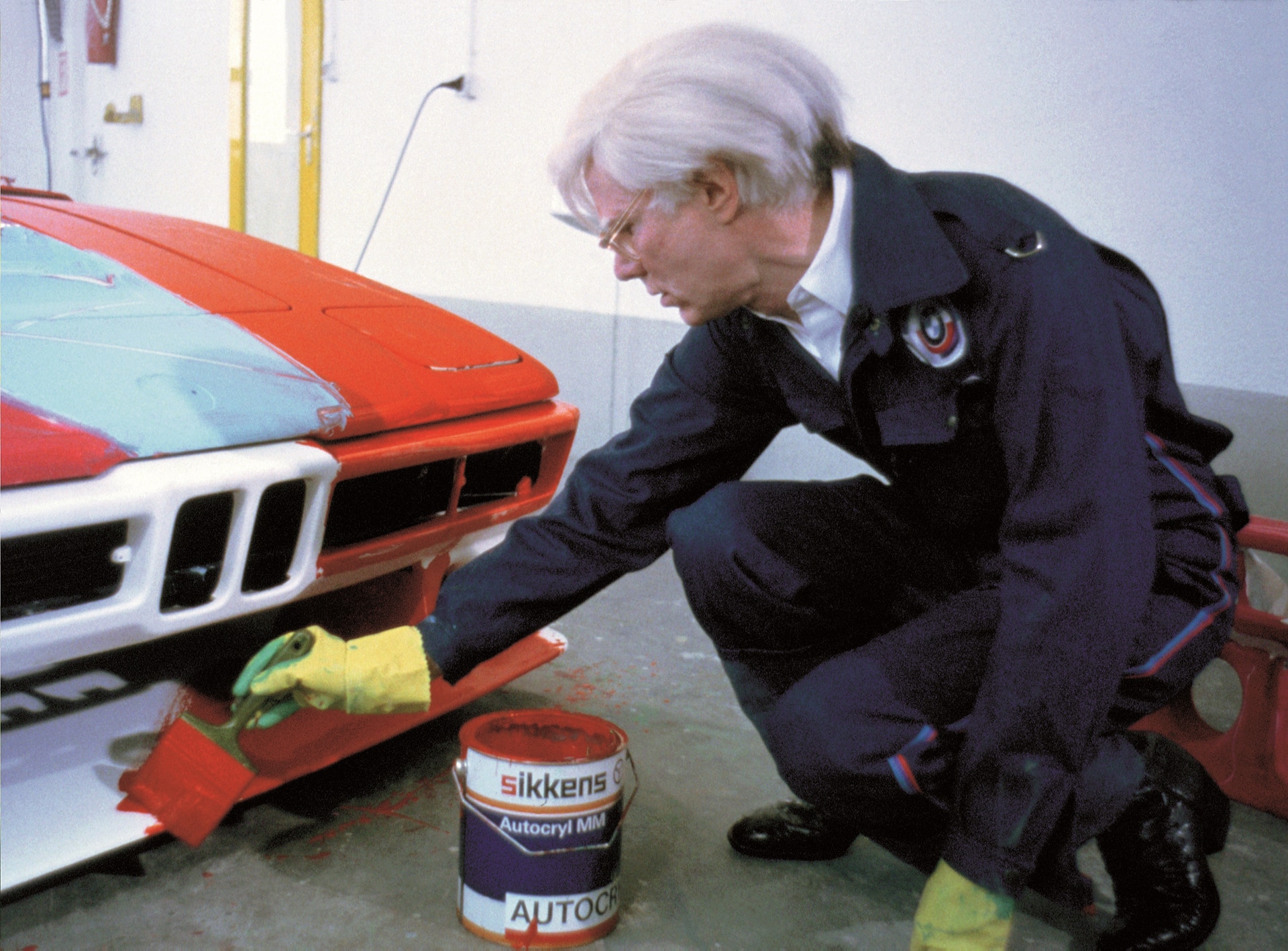
Photo credit: BMW, Mercedes-Benz Art
If Andy Warhol believed that a supermarket was no different from a museum – taking everyday products such as a Coca-Cola bottle or a Campbell’s tin to make art into a message shared by all – one might wonder what he thought when Daimler-Benz, the celebrated Mercedes-Benz, in 1986 entrusted him with the task of marking the centenary of the automobile with a series of works dedicated to the models that had shaped the marque’s history, from the Patent-Motorwagen to the cars of the contemporary era.

Even if the supermarket had become the showroom of the most respected marque in the world, Warhol approached the project as he always had – seeking the power of the image through repetition, through different colour combinations and chromatic registers. In the "Cars" series, bodywork dissolves into colour, details lose their importance, and what remains is the icon. The artist’s death, in February 1987, prevented the cycle from being completed, but the works he produced articulate his idea perfectly: an automobile can become art when it ceases to be merely an object and becomes part of the collective imagination.

It was not the first time the celebrated artist had confronted the subject of the automobile. Some years earlier, in 1979, Warhol had been invited by BMW to create an Art Car for the series of cars the Munich marque was racing at the 24 Hours of Le Mans. The proposal was that he prepare the livery using scale models or preliminary sketches. He asked for the actual car – the real one – and insisted on painting the M1 assigned to him by hand. In under an hour, the entirely white bodywork was transformed by broad brushstrokes applied with rapid, instinctive gestures. When someone ventured to suggest that the speed of execution had left imprecisions, the artist replied that this was precisely the effect he was after: "when a car is racing, the colours blur and the forms disappear." Unanswerable in its clarity – the car remains, even today, a masterpiece.

His relationship with BMW had not, in any case, always been straightforward. His first Art Car proposal – that time for a 320i – had been rejected by BMW Motorsport. The reason for an affront of that order? One that was objectively practical: the design featured elaborate floral decorations across the windows, making visibility impossible for the driver. One wonders how much apprehension those responsible for the project at BMW must have felt as he set about painting the M1. What if his brush had found its way onto the glass again? It did not, and the car, a few months later, took on the 24 Hours of Le Mans, finishing sixth overall. Visibility: excellent.

Mercedes-Benz and BMW – two distinct worlds, two different objectives, yet one shared conclusion: not to transform automobiles into works of art, but to present them as they already were, as the wider public knew and perceived them, simply recast for the occasion: paintings from a long history, or racing machines for a long race. Ultimately, as the Pop Art movement taught us, any familiar object – even an automobile – can tell the story of its own time or its own purpose, in precisely the same way as its very own manifesto.