A Century in Motion – Part 15: The 1990s Turn the Page
16 May 2026 1 min read 4 images
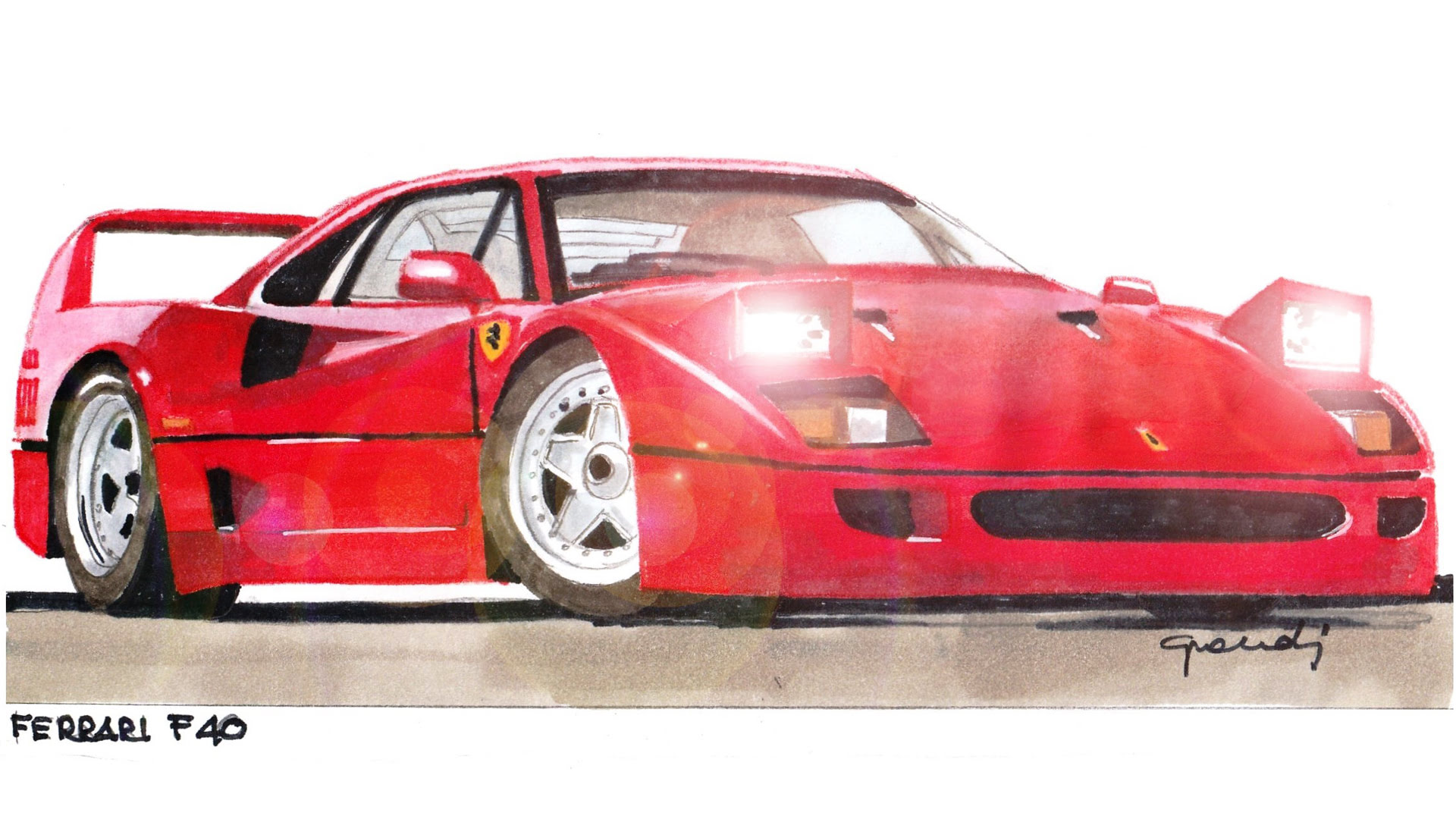
Photo credit: Ferrari, Massimo Grandi, The J Paul Getty Trust
Enzo Ferrari leaves the stage in 1988, on the 14th of August, bequeathing as his testament a car capable of driving the whole world to distraction: the F40. It is the car that celebrates the fortieth anniversary of the Prancing Horse, and it delivers the precise message that he had always known how to look ahead. A twin-turbo V8, composite materials, nearly 500 horsepower for a weight just over a thousand kilograms. A statement of excellence that the ninety-year-old Enzo wished to leave as the signature of his extraordinary life. On the 7th of August, exactly one week before his death, with his health already deeply undermined, he asks his son Piero to watch the Hungarian Grand Prix with him on television. He drifts off; when he wakes he asks his son in what positions the Alfas were running, revealing in that one question the depth of a relationship with Alfa Romeo that had been first affectionate, then bitter. “Papà, they aren't there. They don't race any more.” The reply.

It was, in all likelihood, a message intended for those who — once his own day had come — would have to face increasingly aggressive rivals, McLaren chief among them. Indeed, in 1992, on the wave of its world championships in Formula 1, this very English marque produced a road-going GT bearing the designation F1, destined to become an icon. A central driving position flanked by two passenger seats set slightly back, one on either side, and a 6,000 cc V12 of 630 horsepower: proof that technology was advancing at a pace until then unknown — one has only to look at the Mercedes CLK GTR for a further example.

This is not a matter concerning the automobile alone, but everything around it — as we now know well: digital computation, computers, the Web become a reality the car is swift to embrace. In a world where humanoid robots promise to render unrecognisable the difference between human and post-human, even magnificent women may reveal themselves as the unsettling sovereigns of an uncertain tomorrow.
It is no surprise that the dream of restoring Bugatti to the splendour of its past does not meet with the response that a lasting success would have deserved. The future is obligatory — and this is precisely what the Renault Avantime seeks to declare.

Fashion is projected toward a new kind of luxury, and the movie The Devil Wears Prada interprets, with great accuracy, the aggression of years in which the serpent can be raised to a symbol. So it is in the automobile, with the Dodge Viper; and so it is in architecture too, with those rounded volumes typical of a serpent coiled to strike — as in the Getty Center on the American West Coast, designed by Richard Meier, where architecture itself reaches for that same unsettling message.
All of this to the soundtrack of Guns N' Roses, who — with “Take me down to the Paradise City” — are the first to bring a synthesizer into the mix.
It is the end of a century. On to the next…