Louis Vuitton Dolomites Classic Run: the Art of Travel Speaks Italian
13 September 2026 6 min read 4 images
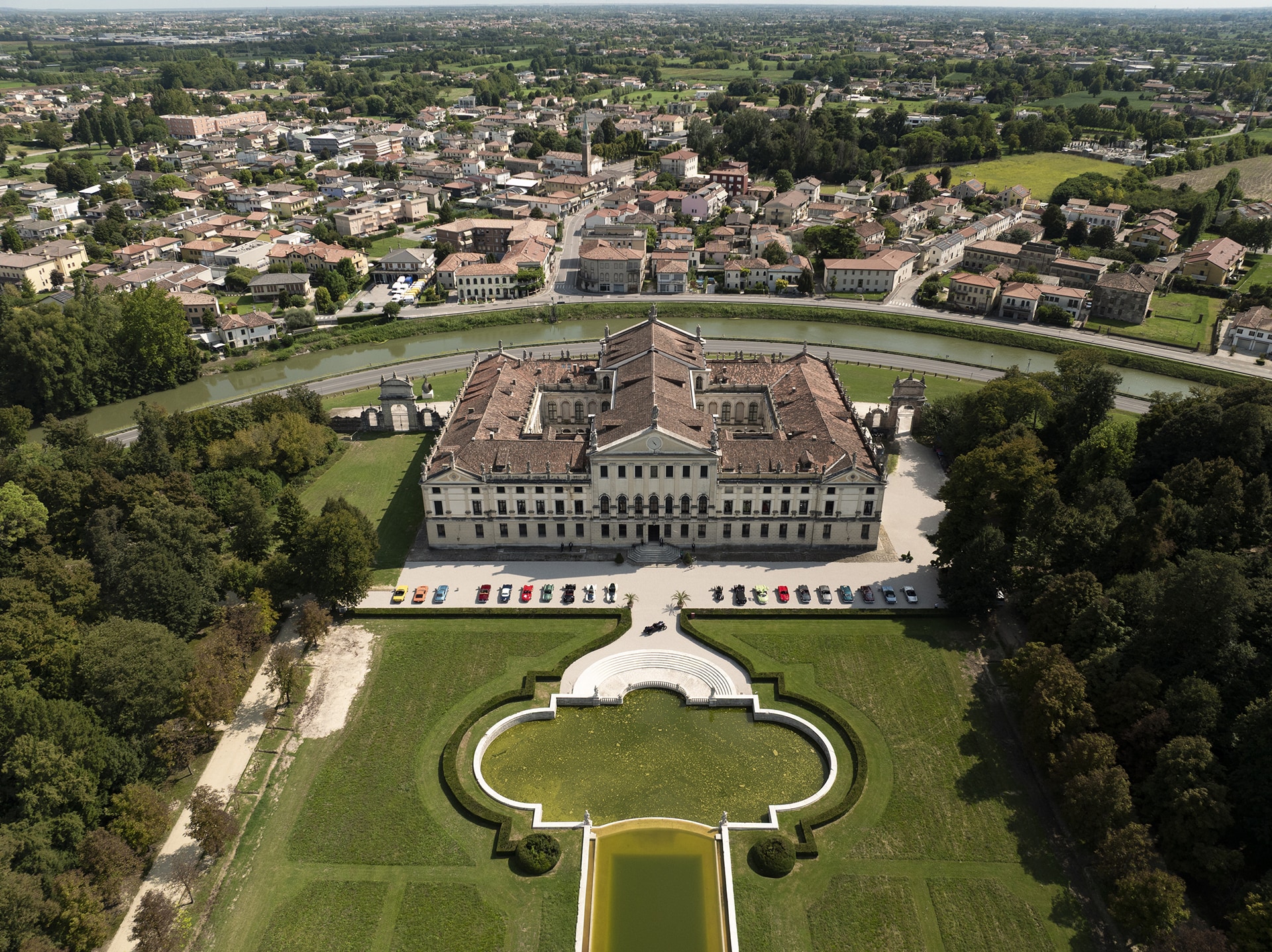
Photo credit: Louis Vuitton Dolomites Classic Run
Venice behind, the Dolomites ahead, and – as the finishing point – the Parco di Monza with its Villa Reale and the Autodromo. These landmarks alone are enough to understand that the Louis Vuitton Dolomites Classic Run 2026 was far more than a regularity rally: four days built around the pleasure of the automobile, the beauty of travel, and the privilege of entering spaces normally closed to the public. Spectacular roads, exceptional cars, and an itinerary capable of weaving together history, landscape, and motorsport without ever losing the thread of emotion. Living it on our behalf was Fritz Kaiser, Founder and Chairman of The Classic Car Trust and Roarington, at the wheel of his celebrated Miura – the very car that starred in the film The Italian Job.

The first sign that this is no ordinary rally comes in Venice. The trophy, designed by Sabine Marcelis and crafted by Venini, is unveiled at the Palazzo Ducale and then entrusted to a Louis Vuitton Trophy Trunk – just as the Formula 1 trophies are. The French Maison, after all, is no newcomer to the automobile: Georges Vuitton created a trunk purpose-built for early motorcars as far back as 1897, and the Classic Runs have been part of its history since 1993. The most recent edition, the Serenissima Run of 2012, ended in Venice itself. Fourteen years later, the journey set off from there once again, concluding on Sunday in the grandstand at Monza to witness the brilliant victory of Kimi Antonelli.
Villa Pisani, on the Riviera del Brenta, served as the starting line for a tightly curated selection of automobiles drawn from some of the most important collections in the world. A few names are enough to convey the standard: Bugatti Type 51 Grand Prix, Mercedes-Benz 300 SL Gullwing, Ferrari 250 GT Zagato, Lamborghini Miura P400, Lancia Aurelia B24 S.

The Dolomites Classic Run is a regularity rally: stopwatches, average speeds to maintain, navigation, and concentration. From Villa Pisani the route climbs toward the Dolomites, passing through Cortina d’Ampezzo and Ponte di Legno, across an itinerary of nearly 600 kilometres during which the alpine landscape shifts constantly. Roads drawn for the pleasure of driving, and mountain air, create that particular complicity between crew and car that finds its completion in the challenge of the standings.
The arrival at Monza – at the Villa Reale, which was the residence of Queen Margherita di Savoia, one of the first women in the world to have driven and owned a car – is completed with a lap of the Autodromo, on the very days of the Grand Prix. The Autodromo has always been part of the great park of the Villa Reale. Inside the circuit, participants parade along the banked Sopraelevate curves and the Grand Prix track itself, to the admiration of the crowd. For Kaiser, the return to Monza carries a personal meaning as well: in the 1990s he was partner, co-owner, and Chairman of the Sauber Formula 1 team.

The magnificent event that Louis Vuitton – partner of F1 and ever-present at circuits with the classic Champagne Moët & Chandon – brought to a close with the thrilling comeback drive by Kimi Antonelli’s Mercedes. Having started from the back of the grid following a power unit change, he fought his way through to a victory that had seemed unthinkable. A fitting conclusion for a French Maison celebrating its Art of Travel by choosing Venice, the Dolomites, great automotive design, and Monza – with the salute of a young Italian champion, on the very stage of Monza.