A record-breaking Peugeot at 407 km/h — well, 405! When marketing does its finest work
07 March 2026 2 min read 4 images
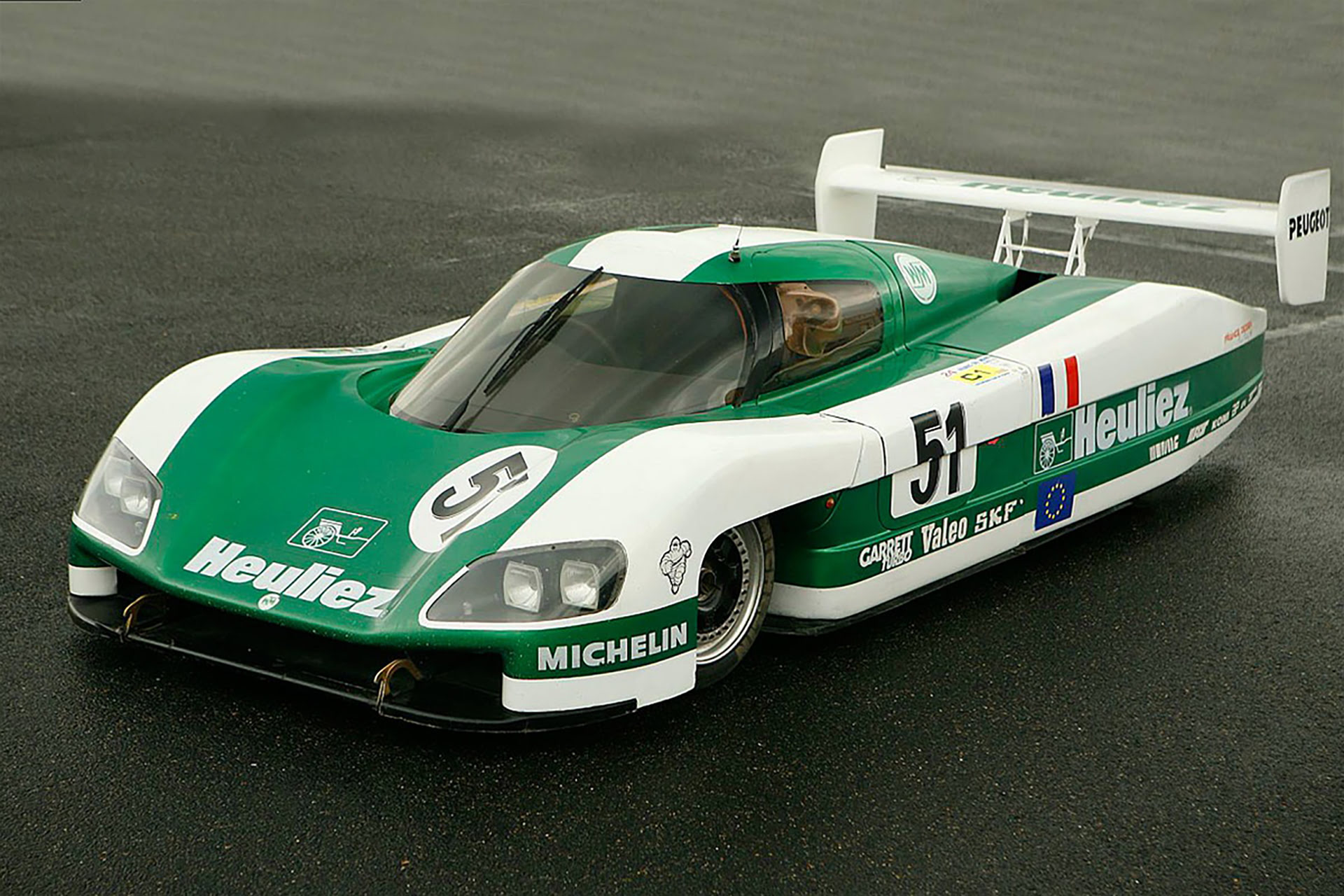
Photo credit: 24 Heures du Mans, Stellantis
It is 1988, and the speed record at Le Mans has stood untouched since 1971, when Jackie Oliver’s Porsche 917LH tore down the straight at 386 km/h.
Entered in the race, there is a car with no great ambitions for the 24 Hours itself, yet built with one precise purpose: to exceed 400 km/h on the straight of the HunaudiHunaudières, conceived by Gérard Welter e Michel Meunier. These two Peugeot engineers founded their own team, called WM — the initials of their surnames — as far back as 1969, and year after year they nurtured a dream: the absolute speed record. They made their Le Mans debut in 1976. A story of pure passion, from a time when motorsport was still something two friends could pursue with a workshop and an unshakeable will to create.

By the late 1980s, private teams can no longer keep pace with the factory efforts of Porsche, Jaguar, and Toyota at Le Mans. And so Welter and Meunier make a conscious, almost romantic choice: to abandon the fight for outright victory and instead pour everything into aerodynamic research, to build a machine so fast it would inscribe itself into legend.
Already during qualifying, the WM P88 — as the prototype entered at the Circuit de la Sarthe in 1988 was designated — surpasses 400 km/h. But a malfunction in the speed-measuring equipment means the record cannot be officially registered. The moment slips away, uncertified.

For the race itself, the decision is made to push the twin turbines of the 2.8-litre Peugeot V6 to even higher boost pressure. And this time, 407 km/h are officially recorded. But the story does not end there. In agreement with the top management of the House of the Lion, it is decided to declare the figure as 405 km/h. Why? Because just the year before, in 1987, Peugeot had launched the 405, a mid-to-upper-range saloon charged with relaunching the French marque after a difficult period. What better occasion than the Le Mans exploit to fuel a marketing and advertising campaign around the new model?

The 405 wins the Car of the Year award for 1988, and that summer it triumphs with the T16, driven by Ari Vatanen, at Pikes Peak. It is the overture to a commercial success: more than two million units produced. Chapeau, Peugeot. The experience with WM would lead the manufacturer to field an official team at Le Mans — one that would claim outright victory in both 1990 and 1991.
One final thought: might it have been precisely Gérard Welter e Michel Meunier who were responsible for making the ACO — the Automobile Club de l’Ouest, organisers of the 24 Hours of Le Mans — decide in 1990 to install two chicanes on the HunaudiHunaudières straight in order to rein in the speeds?

Register to unlock this article
Signing up is free and gives you access to hundreds of articles and additional benefits. See what’s included in your free membership. See what's included in your free membership.
Already have an account? Log In