Paris Auction Week: Records for RM Sotheby’s, Confidence at Artcurial

  • 07 February 2026
  • 4 min read
  • 11 images
Paris Auction Week: Records for RM Sotheby’s, Confidence at Artcurial image

Photo credit: Artcurial, RM Sotheby’s

I could tell you about Artcurial’s new, exceptionally elegant auction venue. I could talk about yet another success for RM Sotheby’s. Instead, I want to start with what surprised me most this year in Paris: a very long queue of boys and girls - all extremely young - patiently waiting to enter and admire the jewels on offer during RM’s preview at the Carrousel du Louvre. A genuine show of strength, proving that motoring can still attract new generations, provided the right strings are struck. And now, to the numbers that give a clear picture of what happened.

Artcurial chose the luxurious Hotel Peninsula, the day after the Best of the Best awards ceremony: elegant, centrally located, and filled with international collectors staying there. One limitation, however, was space, which restricted the offering to just 64 cars, around half of what was offered in 2025. Sales were not numerous - 36 cars - but of significantly higher quality than last year. The total achieved was €14,863,767, around €6 million less than the €21,072,490 recorded twelve months earlier, but the average price nearly doubled, rising from €224,175 to €412,882. In practice, it was a successful boutique auction, perfectly aligned with its setting.
Artcurial, Paris, 27th January 2026
RM Sotheby’s, in addition to fielding an army of followers, brought 78 cars - also down from the 109 offered last year. Like Artcurial, RM saw lower absolute numbers compared with 2025: 62 cars sold this year (79.49%) versus 93 (85.32%) last year. But the leap came in values: €80,706,750 total turnover, an increase of 23% compared with twelve months earlier. And not only that - it was the most successful European auction ever. Moreover, while last year half of the roughly €65 million total came from the Ferrari 250 LM that won Le Mans, this year sales were far more evenly distributed - another very positive signal. Once again, the average price doubled, from €707,094 to €1,301,721.
RM Sotheby’s, Paris, 28th January 2026
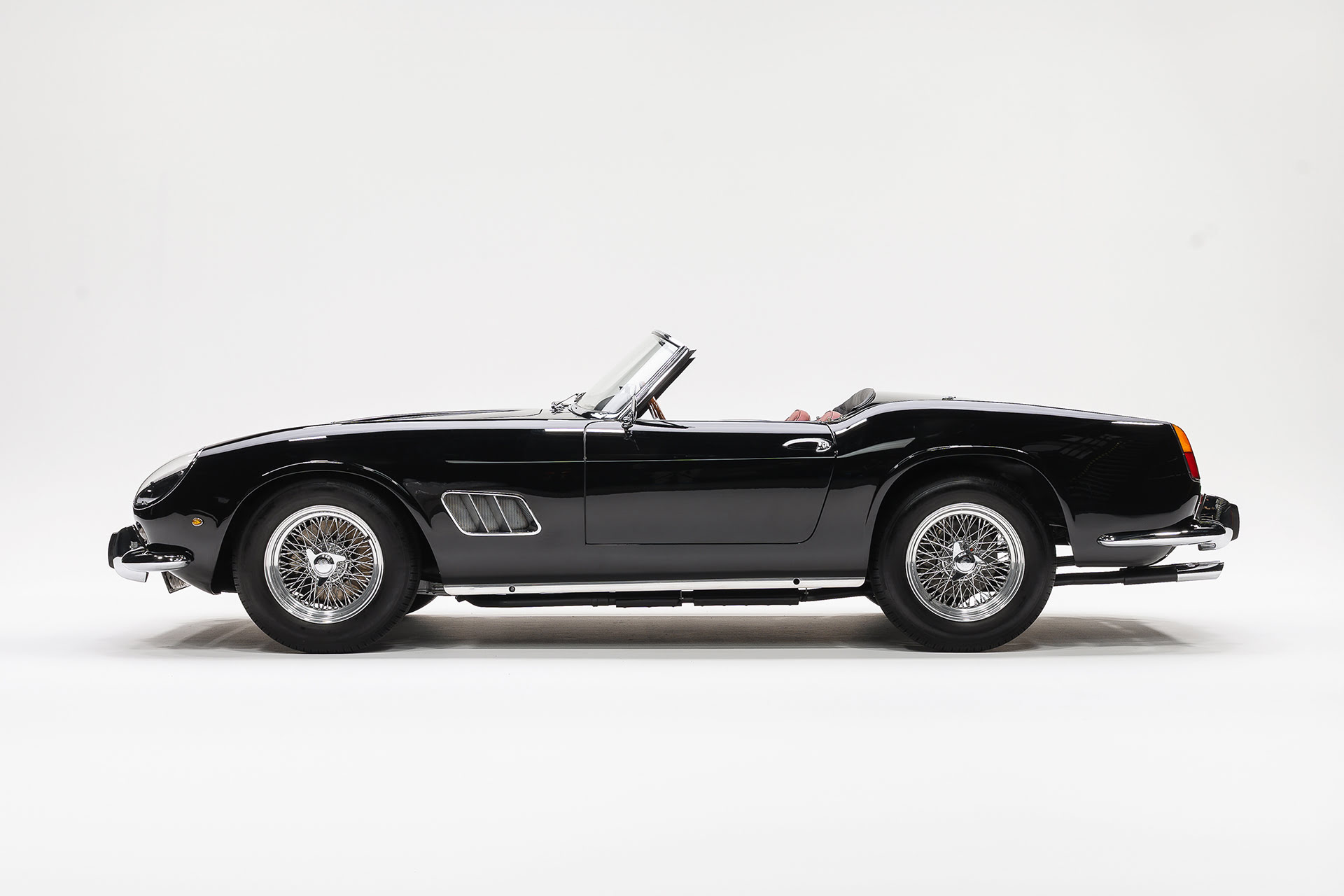
Which was the winning car at RM? Certainly a Ferrari 250 - but which one? The 1960 250 GT SWB California Spider, or the 1956 250 GT LWB Berlinetta Tour de France? The former was one of the 39 examples with covered headlights, finished in black with red interior, and had remained in the same German collection for over thirty years. As a bonus, it came with an additional 3.8-litre engine for anyone reluctant to risk the original unit.
RM Sotheby’s sets a European - 1 1960 Ferrari 250 GT SWB California Spider sold for €14,067,500 ($16,670,000).

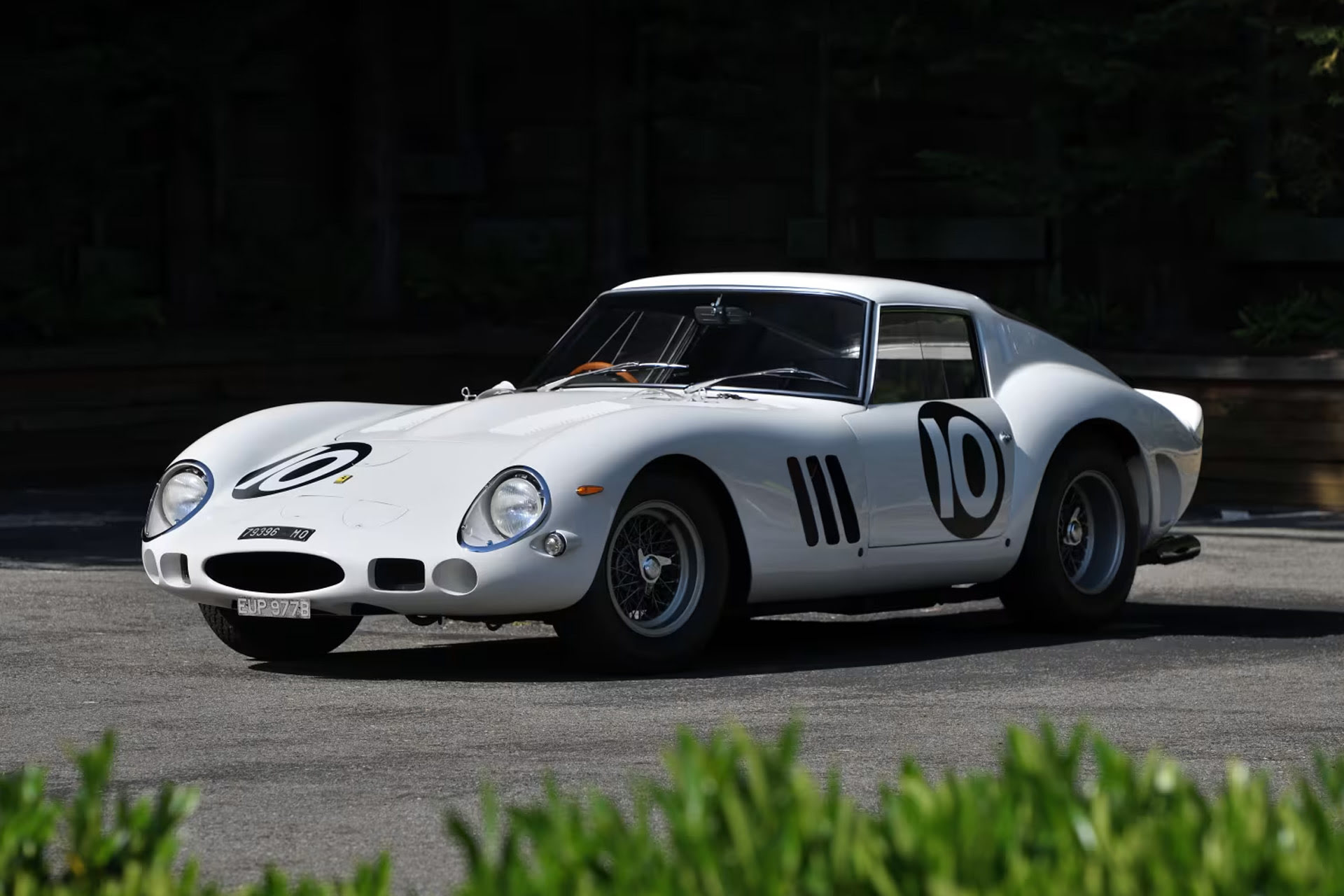
The other was the Tour de France with a capital “T”: the very car that, on its debut, won the famous French marathon and gave its name to the entire dynasty. The colour? Naturally, Blu Tour de France. Both cars were Ferrari Classiche certified, and estimates were similar: €12–14 million for the Spider, and “over €13 million” for the coupé. At auction, however, the more recent California sold for €14,067,500, while the TdF was sold post-auction for €12,000,000.
RM Sotheby’s sets a European - 2 1956 Ferrari 250 GT LWB Berlinetta “Tour de France” sold for €12,000,000 ($14,230,000).

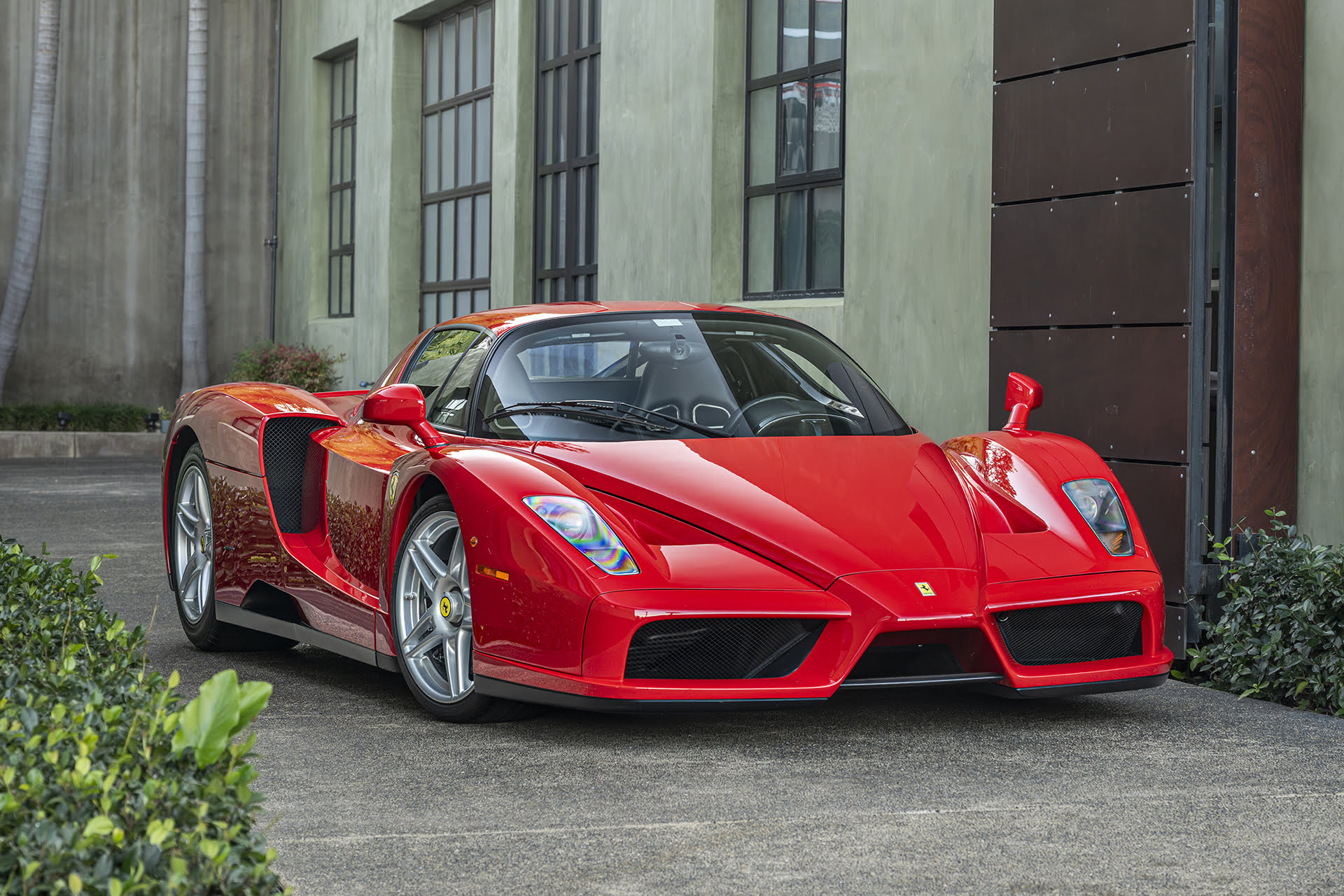
And now to the Ferrari Enzo chapter. Over the past three weeks this model has been mentioned three times - and for good reason. After the sale of the Bachmann Collection, prices have surged almost overnight, and the gap between estimates and results shows it clearly. While looking at the 2004 red example on offer, I said to the friend accompanying me: “Yes, it’s estimated at €3.8–4.2 million, but I’d be disappointed if it didn’t make at least six.” Not only because the model has been rising vertically in recent weeks - yes, weeks - but also because it had been Ferrari Classiche certified just two months earlier and showed only 286 km from new.

There is, however, a caveat: ultra-low mileage is ideal in the US, but Europe is different, because any buyer (except an Italian collector, as the car was registered in Italy) must pay VAT on the full purchase price. Despite this limitation, the car sold for €8,105,000, which - converted directly - equates to $9,605,000, plus 20% VAT, for a total exceeding $11.5 million. Had the car gone to the US, VAT would not apply, but import duties would, and the difference would likely have been marginal.
RM Sotheby’s sets a European - 3 2004 Ferrari Enzo sold for €8,105,000 ($9,605,000).

A similar story applies to the 1997 Ferrari F50, also red and from the same collection. Mileage was higher (1,680 km) but still well below the 6,000 km threshold, and it came complete with all original accessories: hardtop, luggage, tools and manuals. Single-owner, Ferrari Classiche certified two months earlier (almost certainly in preparation for the sale), it was estimated at €5.5–6.5 million. The final price of €7,598,750 confirms continued growth for the model - slightly less dramatic than the Enzo, as the F50 had already risen in 2025, a fact reflected in its estimate. Again, remember to add “tax mathematics” unless the buyer was Italian.
RM Sotheby’s sets a European - 4 1997 Ferrari F50 sold for €7,598,750 ($9,005,000).

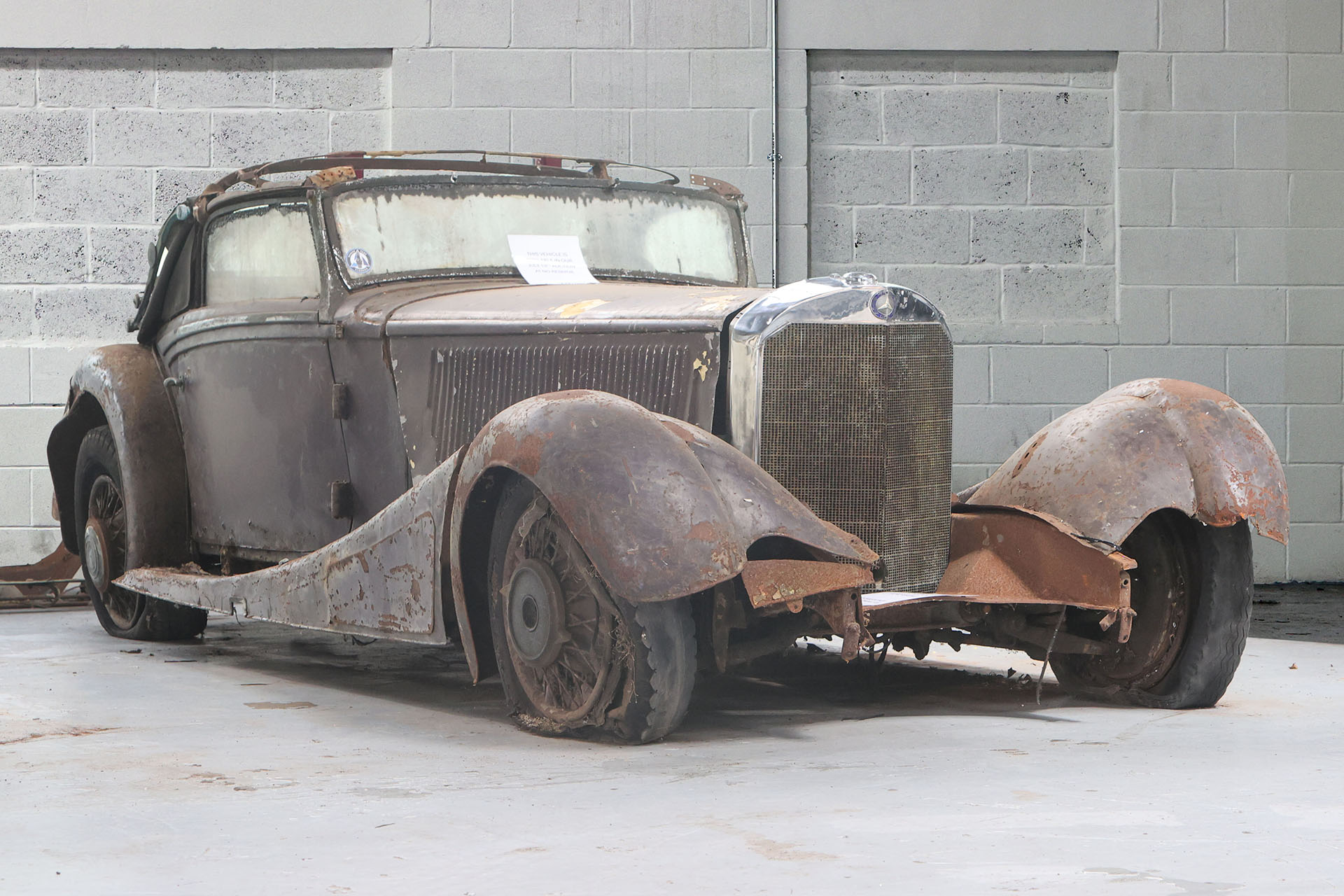
Looking at the facts, it becomes clear that despite undeniable success, RM also witnessed a notable flop that should not be underestimated: the 1934 Alfa Romeo 8C 2300 Long Chassis Le Mans Tourer. Finished in white with green leather interior, engine enlarged to 2.6 litres, and wearing a non-original body, the car was offered in the UK in 2019 with an estimate of £4–5 million (€4.5–6 million). It failed to sell. In 2021 it underwent restoration costing £500,000 (around €550,000). But the world has changed. Six years later, the estimate collapsed to €2–2.5 million - less than half - and despite this, it still failed to sell, stalling at €1.6 million. I sensed this outcome while observing the many potential bidders - and, just as tellingly, the young selfie hunters - largely ignoring it in favour of more modern cars.
RM Sotheby’s sets a European - 5 1934 Alfa Romeo 8C 2300 “Long Chassis” Le Mans Tourer went unsold at €1,600,000 ($1,895,000).

At Artcurial, all eyes were on the 1956 Mercedes-Benz 300 SL Gullwing “Boulevard Suchet”. So important that, despite the smaller crowd compared with RM, special access was required to view this lot up close. The car was finished in medium grey with beige interior and fitted with all the most desirable options: NSL engine (more powerful), sports suspension, Rudge wheels, and the coveted 1:3.42 rear axle. It had never been restored - prompting debate in the room as to whether it was “unrestored” or simply “neglected”. A charming detail lies in its nickname: “Boulevard Suchet”. The first owner lived on Boulevard Suchet in Paris - and the current owner lives at the very same address. The wide estimate of €2–5 million reflected uncertainty about market reaction, though the absence of a reserve offered reassurance. It sold for €4,407,800, a new world record.
RM Sotheby’s sets a European - 6 1956 Mercedes-Benz 300 SL Gullwing sold for €4,407,800 ($5,223,000).

Another world record was set by the 1974 Alpine-Renault A110 1600SC. Finished in classic Bleu France with black interior, it had been acquired around ten years ago by Jean-Pierre Jabouille, winner of the 1979 French Grand Prix (the famous Villeneuve–Arnoux duel). The original engine was later enlarged to 1,950 cc. The €80,000–120,000 estimate was fair: Jabouille’s ownership and the more powerful engine increased desirability, while the irreversible modification deterred purists. Despite this, it soared to €178,800, a new record for any Alpine without racing history.
RM Sotheby’s sets a European - 7 1974 Alpine-Renault A110 ex–Jean-Pierre Jabouille sold for €178,800 ($212,000).

Then there was the ultra-rare and utterly charming Renault 4 Plein Air. The 1960s were the era of spiaggine - beach cars modified by skilled craftsmen who stripped away anything unnecessary: no roof, doors or pillars. Alongside the famous Fiat 500 and 600 Jolly, the French tried their hand with the 4 Plein Air, which failed commercially and disappeared after just a few hundred units. This 1968 example had remained in the same family since new, was lovingly cared for, never restored, and arrived at auction in superb condition. The €20,000–30,000 estimate was probably conservative - and at €95,360, it set a new record for any Renault 4.
RM Sotheby’s sets a European - 8 1968 Renault 4 Plein Air sold for €95,360 ($113,000).
The car I would have taken home, however, was a little British gem with a wonderful story. If I say 1963 Austin Mini Cooper S, you’ll immediately picture Monte Carlo Rally glory - red with a white roof. But this one was blue, and it never competed in a rally. Instead, it was one of the cars used to develop the famous Downton tuning package for the 1071 engine, and it belonged to photographer Bernard Cahier, who received it as a gift for his excellent results with another Mini at that year’s Targa Florio. Condition was far from perfect, but the €40,000–60,000 estimate reflected those battle scars. It sold for €33,376.
RM Sotheby’s sets a European - 9 1963 Austin Mini Cooper S sold for €33,376 ($39,500).