A remote island? Bonhams at the Goodwood Members Meeting
25 April 2026 3 min read 7 images
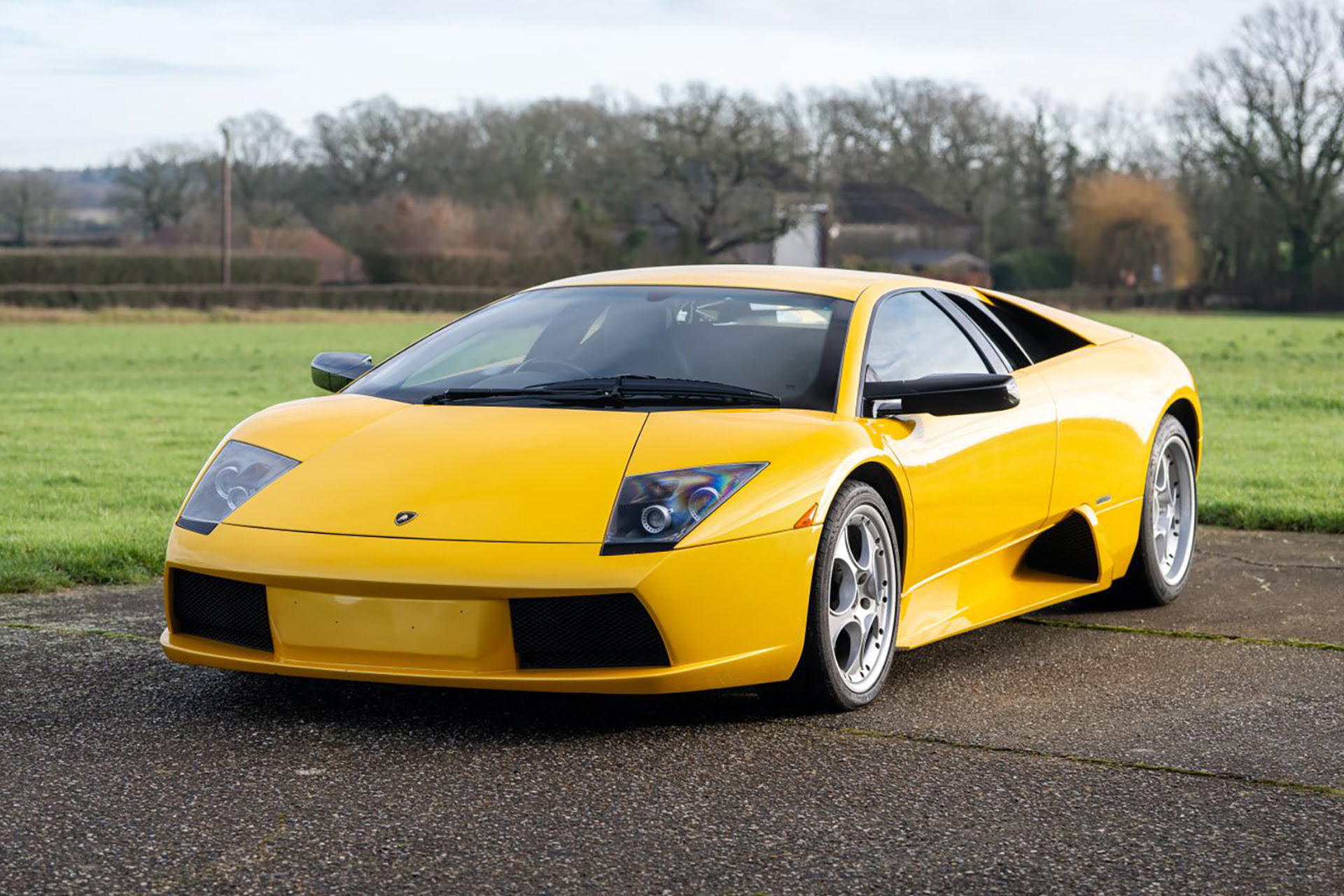
Photo credit: Bonhams
I started by talking about shipping containers, which are celebrating their 70th anniversary this year and make it possible to transport cars from one continent to another so they can be auctioned off at the most suitable venue; then I reflected on Brexit and its effects on the classic car market and Britain’s dangerous isolation, and finally on the complicated situation facing British auction houses operating in a market that has lost much of its international character. It was a good story but too long; I’ll pick it up again to try to make sense of Bonhams’ results at the Goodwood Members’ Meeting on April 19.
Let’s look at the data to understand: Estimates of £4,435,000 compared to last year’s £7,689,000 have dropped to just £2,878,922 compared to £4,835,175 in 2025, while the average price fell from £81,952 to £52,344 this year. And the fact that 72.37% (55 out of 76) of cars sold this year—up from 70.24% last year (59 out of 84)—should not be seen as a consolation, because it is a direct consequence of the significant increase in cars sold without reserve (rising from 22.62% to 30.26%). Before making a final judgment, let’s wait for the 2027 edition of the Members Meeting, but it is fair to ask whether the United Kingdom, once a power that rivaled the United States on equal terms, is becoming an organizer of sales aimed primarily at the domestic market.

Enough of that—I don’t want to ramble too much; I’d better focus on the cars at Goodwood.
This time, the most expensive car was also one of my favorites. I’d had my eye on the 2002 Lamborghini Murcielago Coupé for a few days before the event. First of all, it’s a model that’s skyrocketing in value this year; second, it was a manual transmission version; and finally, the yellow exterior with black interior is a perfect combination. It’s true that we’re talking about one of the earliest examples, while the market currently favors the latest versions, but the estimate of £175,000–225,000 (no reserve) was a real bargain: about half the price of an equivalent left-hand-drive model. The final price, however, went well beyond the estimate to £264,500, in line with market value.

It’s also no surprise that another Lamborghini, this time a 2014 Gallardo, exceeded its estimate. In this case, it was an LP560-2 50th Anniversary Coupé, created to celebrate the Italian company’s half-century milestone. It wasn’t just a marketing ploy, as power increased to 552 bhp, the drivetrain lost the front wheels, and the bodywork gained the Superleggera’s carbon-fiber rear wing. Only 100 units were produced (and just 12 with right-hand drive), and this one, in Opalis White—a stunning combination with dark red accents—had covered just 15,500 miles since new. The estimate of £50,000–60,000 was decidedly conservative, and the £103,500 price tag does not seem out of line with the market.

The Murcielago, exceeding estimates, even outbid the catalog’s cover car, the 1939 Jaguar SS100 3.5-liter. Purchased by Michael Turner in 1955, he has owned it ever since, restoring it between 1996 and 1997. Despite a documented racing history, the estimate was £225,000–275,000, and in the end, bids failed to reach the low estimate, stopping at £218,500. The years, like people, are often cruel; fewer and fewer people remember these cars from their racing days, and so they fade from the collective memory. In this case, not even the fame of its owner, the legendary racing painter, was enough to bring it within the estimate.

Staying on the pre-war theme at Goodwood, a new record was likely set: that of the cheapest Bugatti “ever.” It had everything that could be considered wrong with a Bugatti: it was a Type 40 (and thus a road-going, non-racing version), a two-seater body with no known designer (and not much style to boot), a restoration dating back over thirty years, and many mismatched parts. But gosh, it was still a real Bugatti! Plus, it was listed in the first Bugatti Register from 1962, the ownership history was crystal clear (the seller had owned it since the early ’70s), and in my opinion, it wouldn’t take much to get it back on the road. The estimate was £100–150,000—no reserve—and it changed hands for £101,200. A Bugatti (a real one, not the Baby II for kids) for £100,000 is something I haven’t seen in 20 years.

One of the best deals of the day went to the buyer of the Bentley R-Type 4 ½-liter DHC. With its classic yet not pre-war styling (meaning no vertical radiator grille or separate fenders), this is the kind of model that struggles to command a high price. However, even in this case, it had its major merits: a prestigious name with an extremely elegant body (crafted by a heavyweight like HJ Mulliner), extremely rare with only three examples produced, and, moreover, regularly started but never driven. This example had been purchased by the seller in April 2019 for £88,550 (above the estimate at the time of £60,000–80,000), but partly due to lack of use and partly due to a changing market, it returned to auction with the estimate halved: £40,000–60,000. The buyers, however, were even harsher, and a savvy bidder snapped it up for £22,667.

The other bargain of the day was even cheaper: the 1966 Morgan Plus 4 Plus. We all know the Morgan and picture it as an open-top. In the early 1960s, they attempted to introduce a coupé version with fiberglass bodywork. The design was decidedly clunky, and the market rejected it outright: only 26 were produced, and today, needless to say, they are highly sought after. Bonhams had one of those rare examples in red with a black interior. It had never been restored and had been driven until a couple of years ago, but a general inspection was still recommended before taking it on a long trip. It even came with a spare engine as a bonus. Precisely because Plus 4 Plus models are extremely rare, their prices are high and can reach £80,000. This particular example required a lot of work, it’s true, but the estimate of £30–50,000 was justified. But, without a shadow of a doubt, the £14,750 paid—less than half the low estimate—made it a purchase to remember.

Register to unlock this article
Signing up is free and gives you access to hundreds of articles and additional benefits. See what’s included in your free membership. See what's included in your free membership.
Already have an account? Log In