Cars
When Air Became Formula 1’s Greatest Ally. Wings and Downforce
How aerodynamic wings transformed Formula 1 in 1968, turning cornering grip into the key to speed and redefining racing car design.

For decades, speed in Formula 1 had been a matter of raw power and streamlined bodywork — a relentless effort to reduce drag, culminating in the full aerodynamic enclosure of the Mercedes W196 Stromlinienwagen, deployed on the fastest circuits in 1954. The idea of using aerodynamics differently arrived from America, where the Chaparrals developed in the 1960s by Jim Hall employed something entirely new: a movable rear wing that generated aerodynamic load, pressing the car into the asphalt and multiplying its grip through the corners. It was a completely different way of thinking. Speed was no longer only about going fast in a straight line — it was about becoming fast in the curves above all else, about a car that could, as they said, “glue itself” to the road through vertical load.
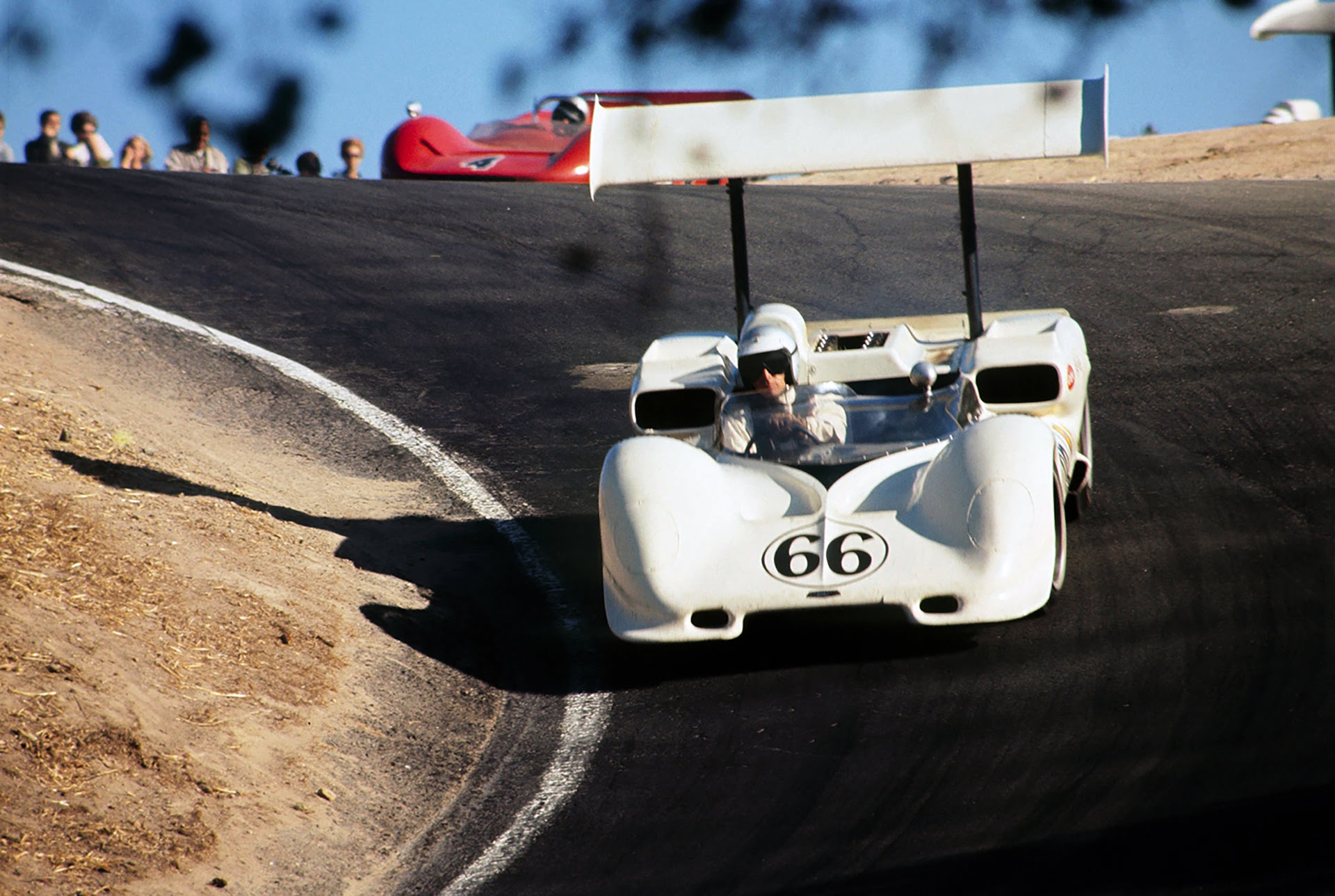
This principle made its entrance into Formula 1 in the final years of the 1960s, and it found one of its first concrete expressions at the 1968 Belgian Grand Prix, on the circuit of Spa-Francorchamps. There, Scuderia Ferrari lined up the cars of Jacky Ickx and Chris Amon carrying a movable wing positioned in the central section of the car, close to the engine — almost midway between the cockpit and the rear axle. Behind that choice, at once simple and visionary, stood engineers Mauro Forghieri and Giacomo Caliri, among the very first to understand how an inverted aerofoil could generate a vertical force capable of dramatically improving adhesion.