Cars
When the Tub Replaced the Tubes. Colin Chapman and the Birth of the Monocoque Chassis
Colin Chapman’s Lotus 25 introduced the monocoque, revolutionising Formula 1 design forever.

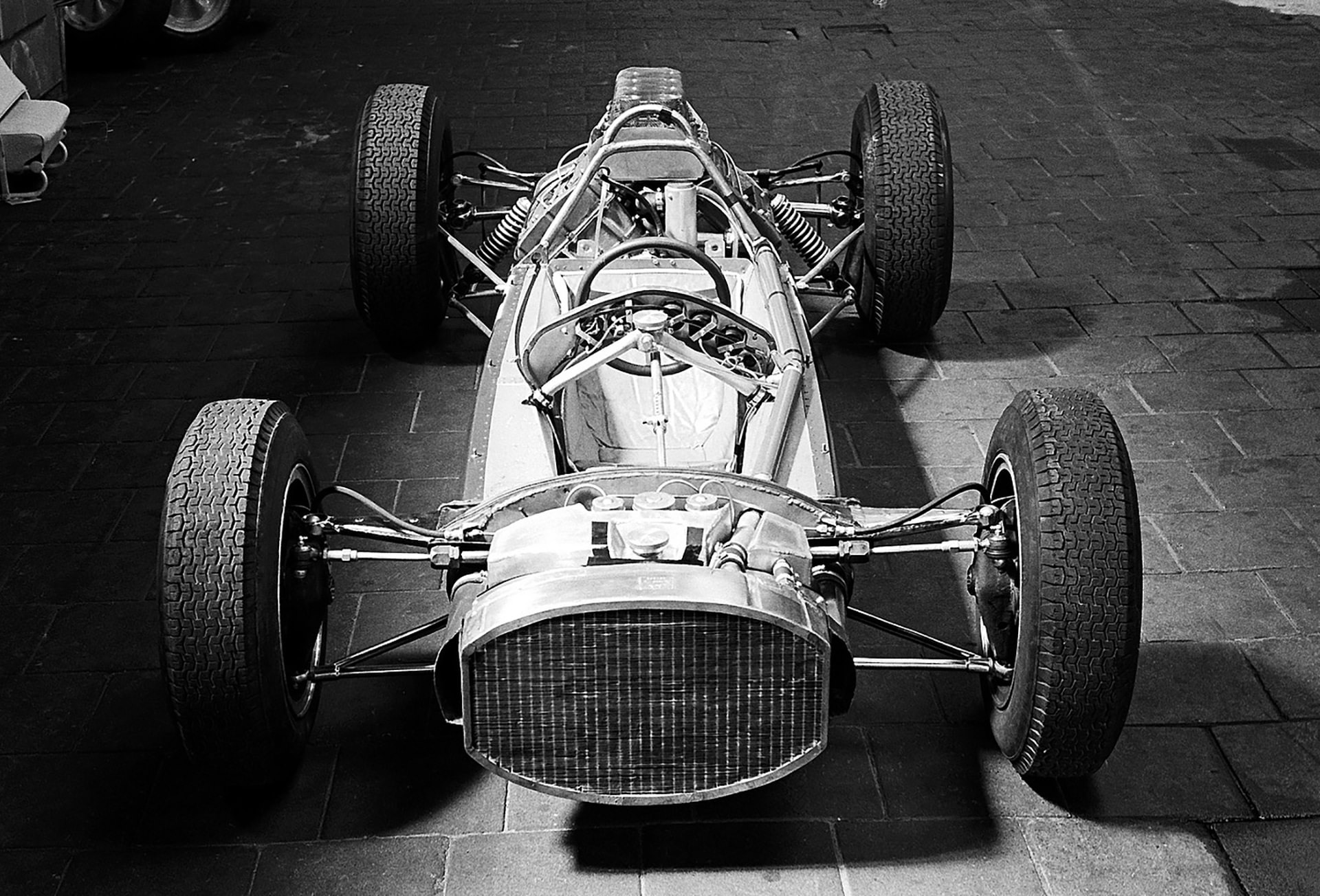
At the dawn of the 1960s, Formula 1 single-seaters were still built as space-frame structures — the chassis formed by steel tubes welded together, a solution rooted in tradition but incapable of providing the torsional rigidity that racing cars truly demanded. One must not forget that lightness had always been a sacred principle for the constructors, and so the tubes used had to represent the finest possible compromise between stiffness and weight. And that compromise was, by its very nature, a limitation.
It is no surprise, then, that the idea of an architecture capable of reconciling lightness with rigidity should come to a man who had made lightness the very philosophy of his automobiles — the Lotus. An idea that changed forever the way racing cars are conceived. His name was Colin Chapman: a former driver and visionary interpreter of competition machines that bore no resemblance to anything that had come before. His early successes brought him swiftly to the role of founder and chief designer of Team Lotus, which made its Formula 1 debut at Monaco in 1958. Four years after that first Grand Prix, when the Lotus reputation was already considerable, Chapman unveiled the Lotus 25: the first Formula 1 single-seater built not around a traditional chassis, but around a fully stressed aluminium monocoque. Every component of the car — from the suspension to the wheels, all the way to the engine — was attached directly to the tub, and inside it sat the driver.