Cars
When the Oxen Stopped Pulling the Cart: John Cooper and the Rear Engine in Formula 1
How Formula 1 moved from front engines to rear-engine cars, transforming racing forever.

1950 was the year of birth of the Formula 1 World Drivers’ Championship, contested with single-seater cars powered by either supercharged 1500cc engines or naturally aspirated 4500cc units. The Constructors’ Championship — or Marques Championship, as it was then called — was run separately, with two-seater Sports cars.
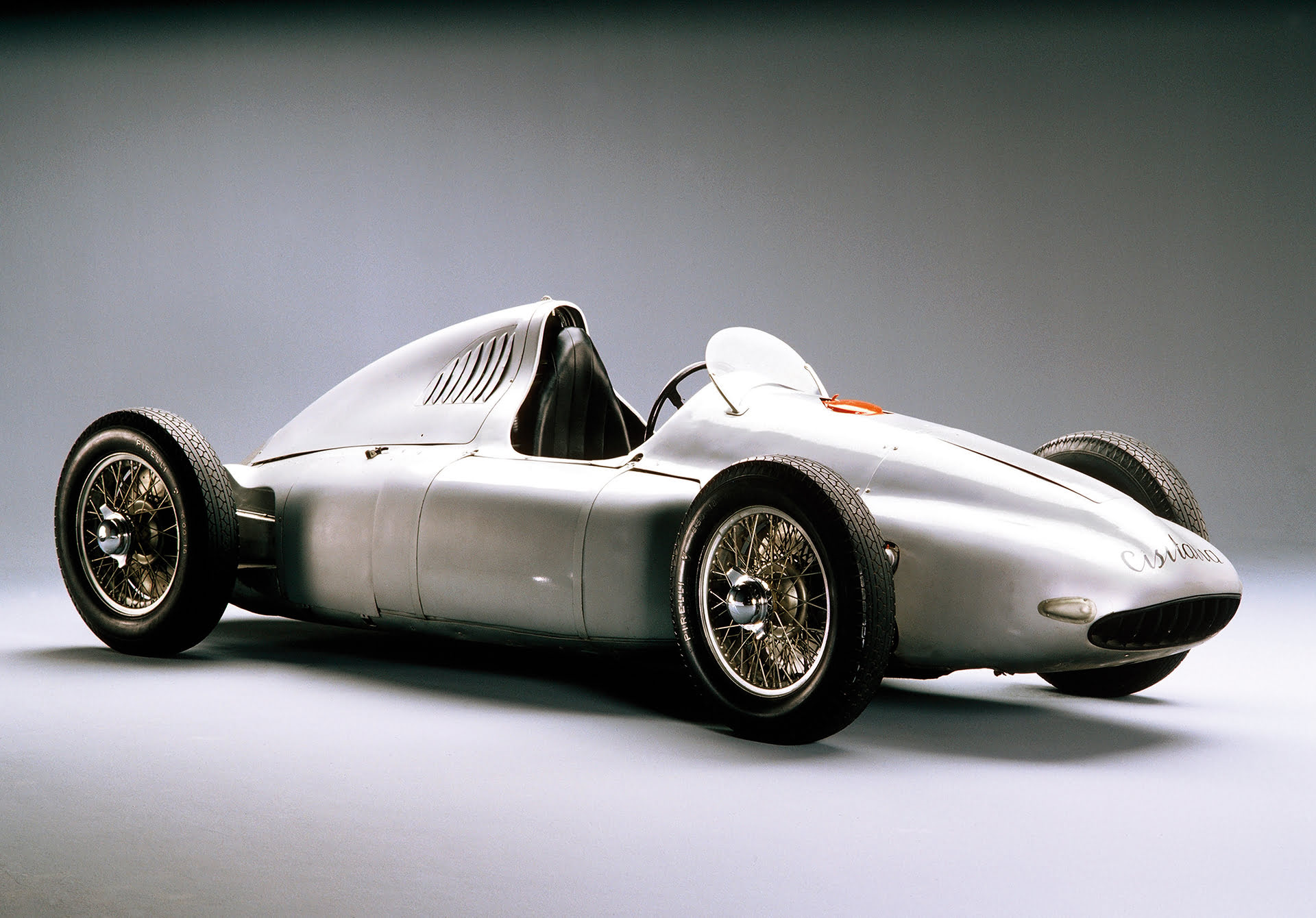
The single-seaters of those years were conceived entirely according to pre-war tradition: engine at the front, drive to the rear wheels. Only Auto Union had dared to experiment with a rear-engined single-seater — and had succeeded, it must be said, with remarkable conviction. The idea of revisiting that concept had come from Ferdinand Porsche, financed by the Italian industrialist Piero Dusio of Cisitalia, who in 1949 designed a revolutionary Formula 1 car with the engine behind the driver. The financial burden, however, proved overwhelming, and the car never turned a wheel in anger. Today it rests in Stuttgart, in the Porsche Museum — a beautiful ghost.