Cars
The Queens of the 1000 Miglia: Porsche 550 – ‘Giant Killer
Weighing just 550kg, the Porsche 550 Spyder outran cars of twice its power – and left a name, a legend, and a philosophy behind it.
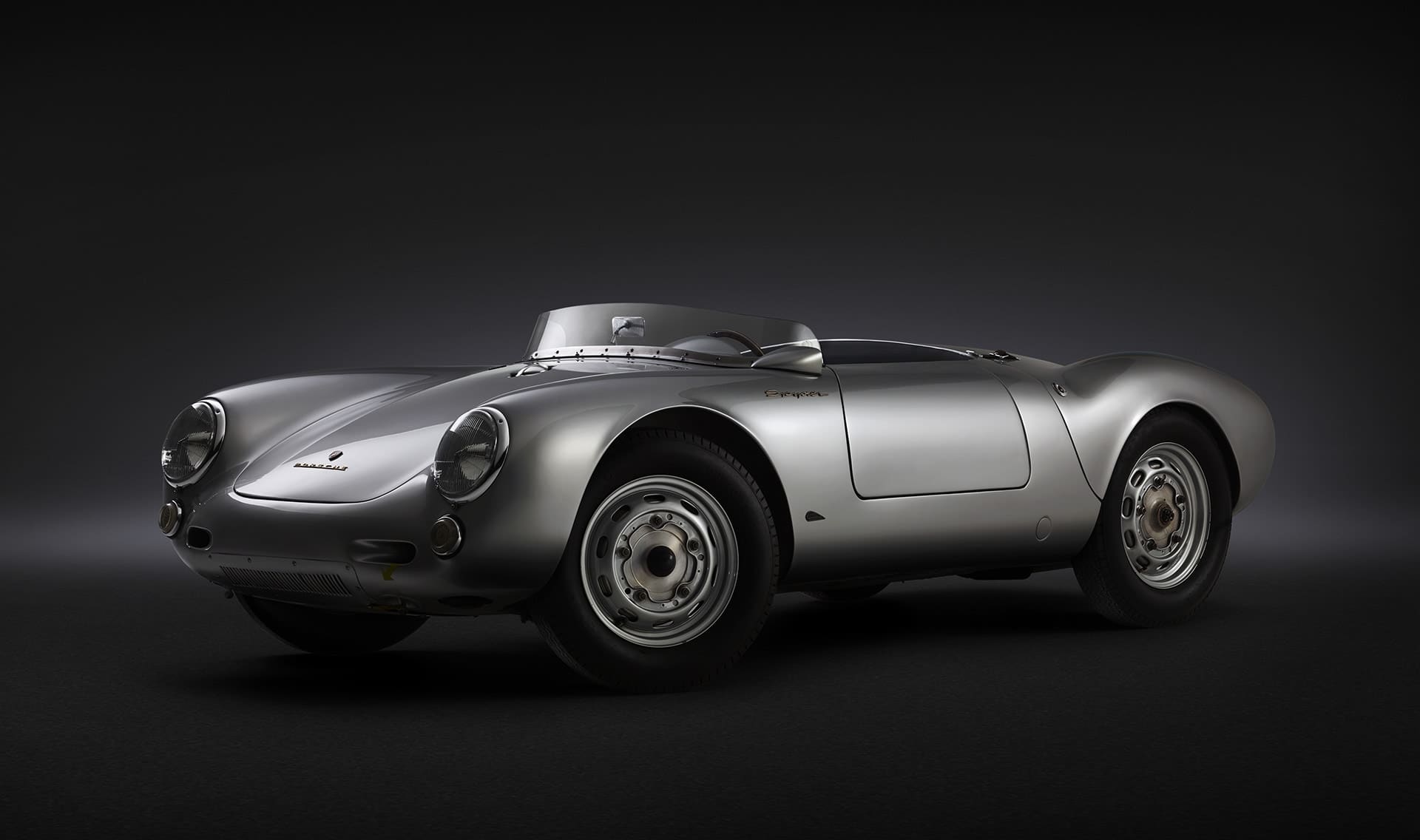
Looking at the Porsche 550, it seems almost impossible that a car so small could have troubled rivals many times its size. Yet that is precisely what it did, earning a nickname that still describes it perfectly today: "Giant Killer."
The idea for the 550 was born in 1952, when Ferdy Porsche decided to build a competition car from the ground up. Until that point, Porsches entered in racing had been elaborations and developments of the road car. The project, presented the following year, set out to extract maximum performance from a small engine through lightness, balance, and aerodynamics – a brilliant vision that sat in natural harmony with the production-car strategy.
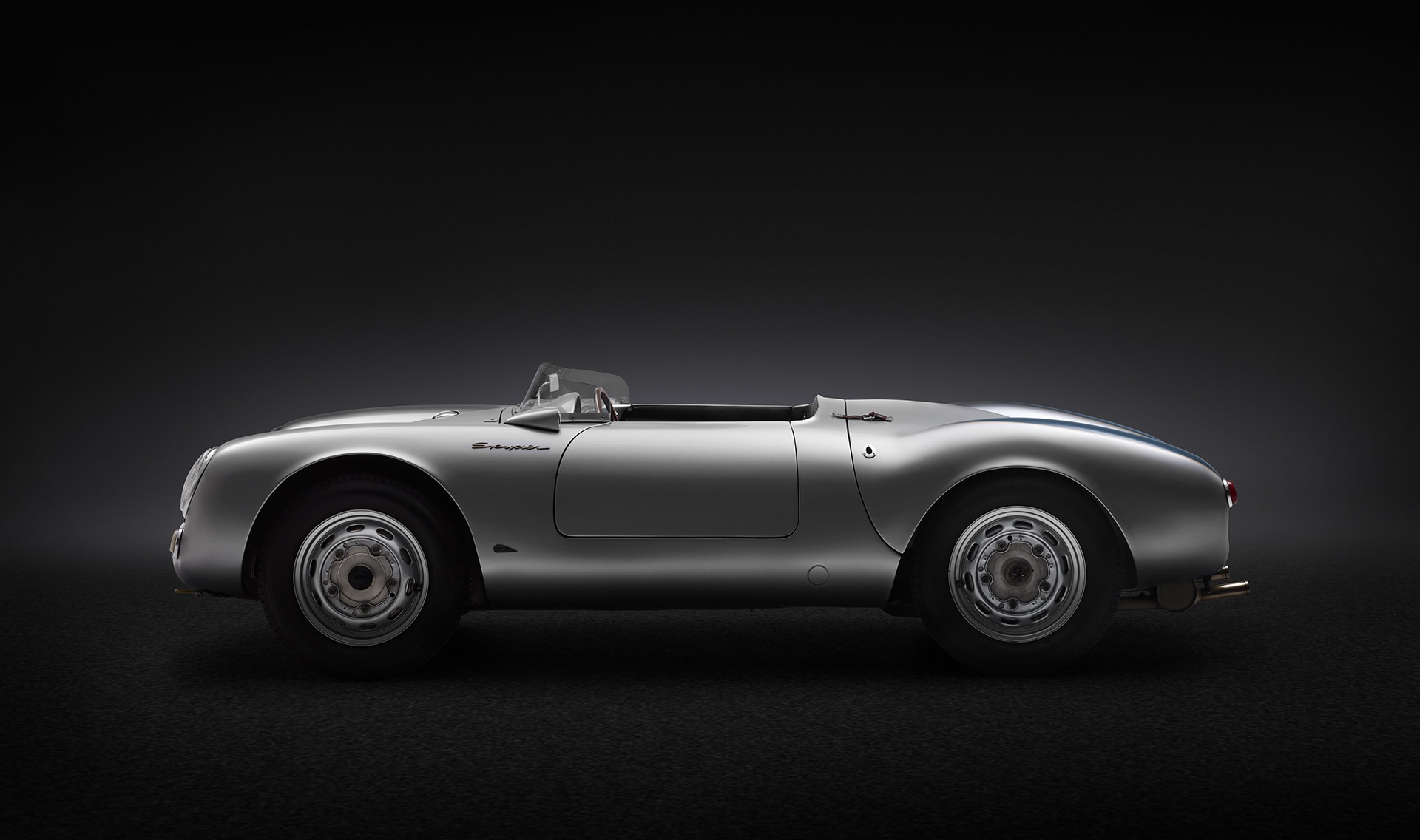
The body takes shape in the coachwork department led by Erwin Komenda, while the construction of customer cars is entrusted to Wendler. The aluminium shell seems to wrap driver and mechanicals in the bare minimum of material: a barely-there windscreen, tiny doors, angled round headlights, and grilles on the rear lid. The real surprise, however, lies beneath those clean surfaces. The air-cooled 1.5-litre flat-four retains the architecture of Porsche’s road engines, but none of their simplicity. Designed by Ernst Fuhrmann, the Typ 547 features four overhead camshafts driven by vertical shafts and bevel gears, twin ignition, and dry-sump lubrication – mechanicals of near Grand Prix specification, producing around 110 horsepower. Modest on paper. But the 550 weighs around 550 kilograms, and the engine sits ahead of the rear axle rather than behind it as on the 356 – a mid-mounted position that fundamentally changes the weight distribution and the car’s behaviour.
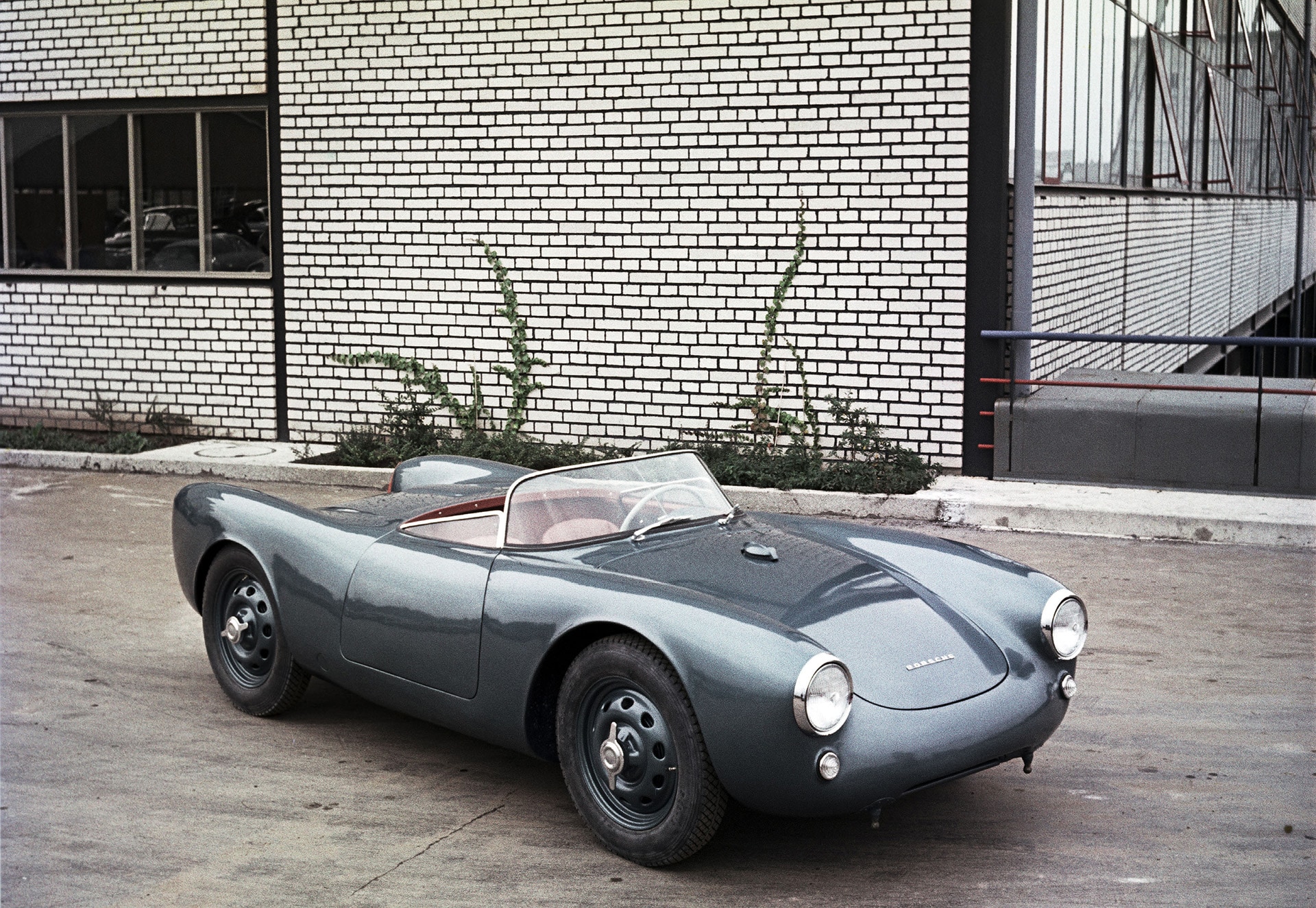
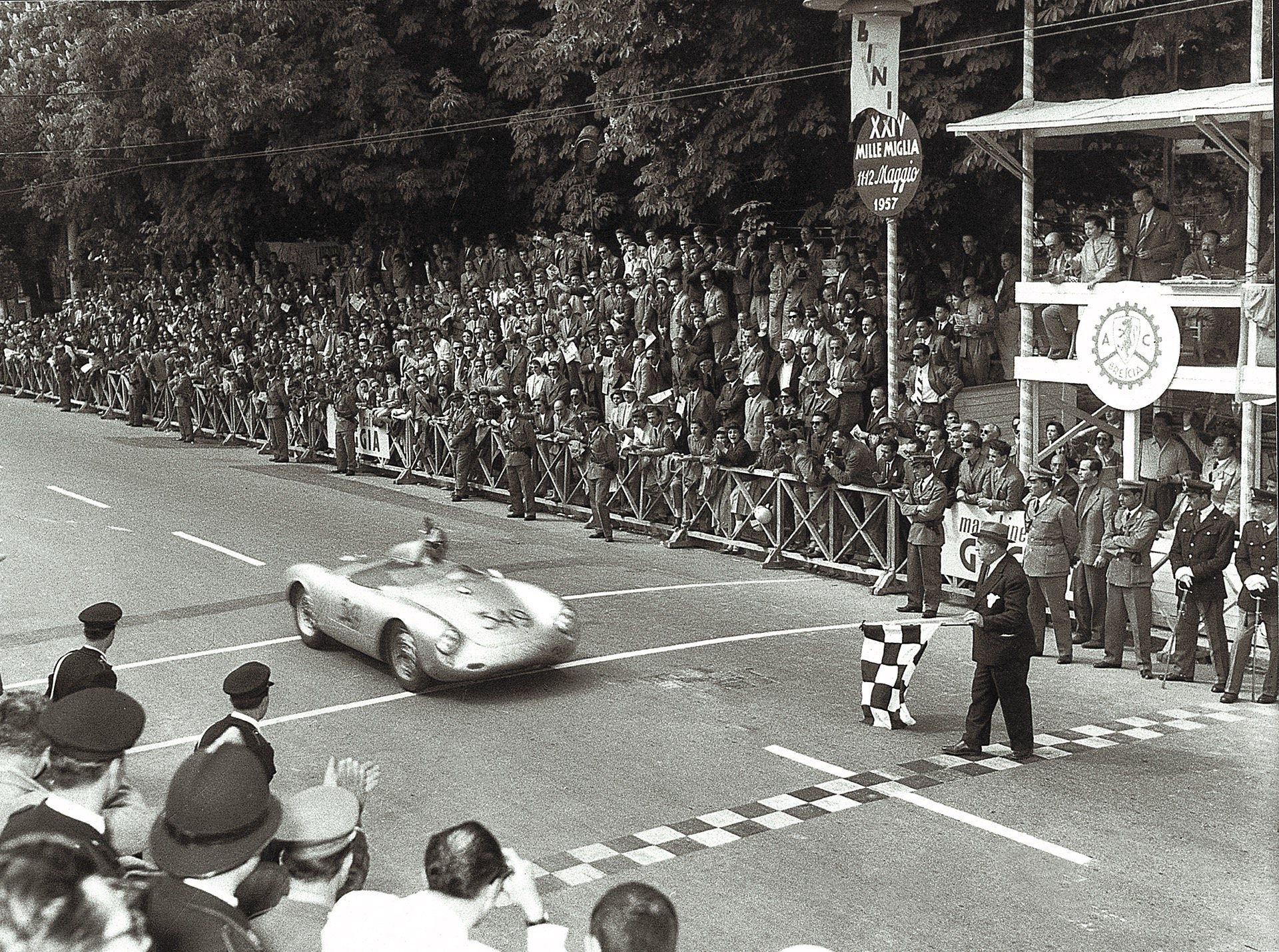
The 550 was never conceived as a model intended to remain unchanged over time. It was built in small numbers and refined race by race, right up to the thoroughgoing evolution of the 550 A in 1956. For many customers it also possessed a quality that surprises today: the ability to drive to the circuit on public roads, race, and return home in the same car – provided, of course, one reached the finish line. The extreme character of the 550 is understood most readily in profile: the cockpit sits almost recessed between the wheels, and the whole car seems to skim the asphalt. A stance that makes possible one of the most remarkable images in Mille Miglia history.
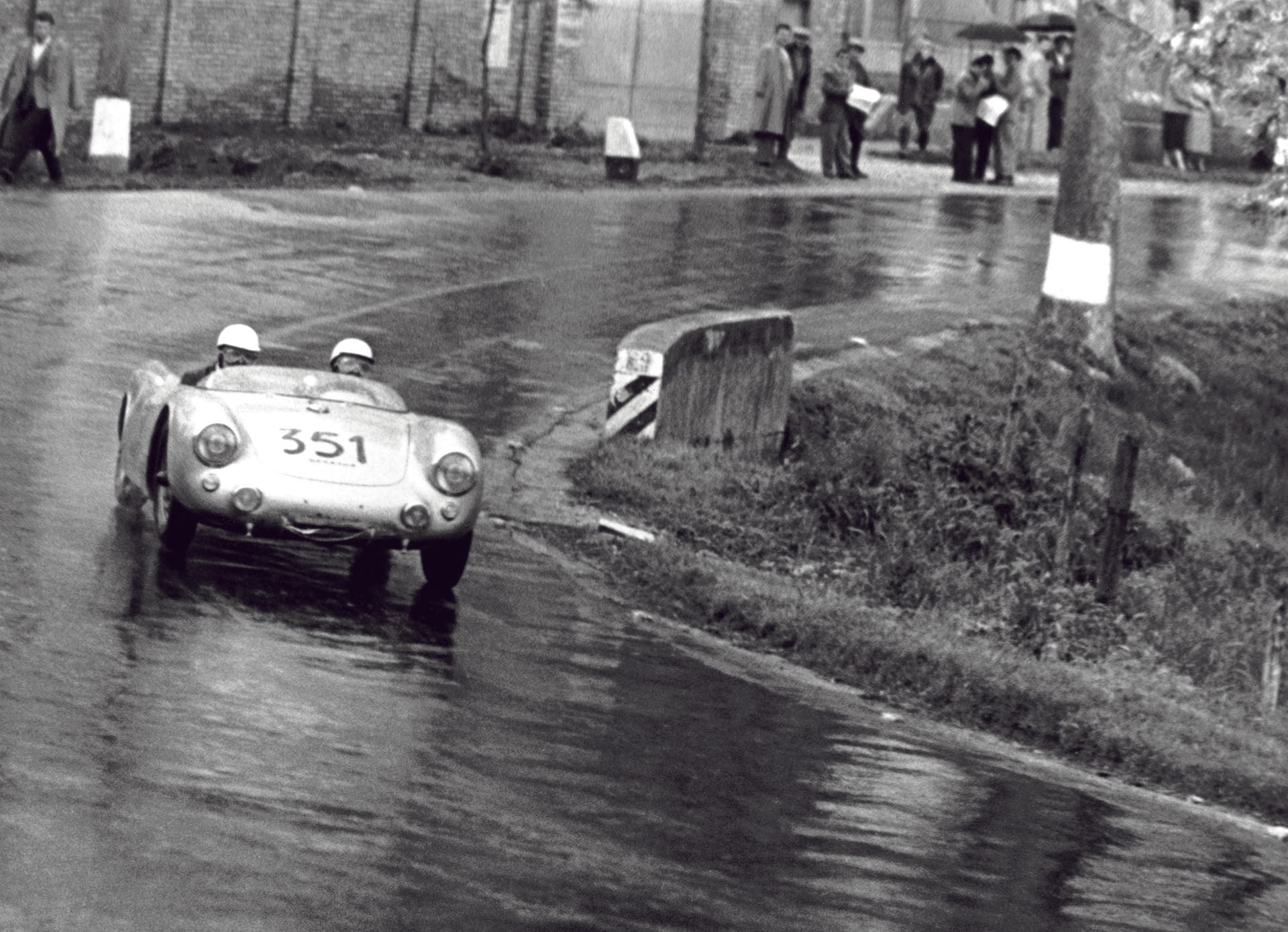
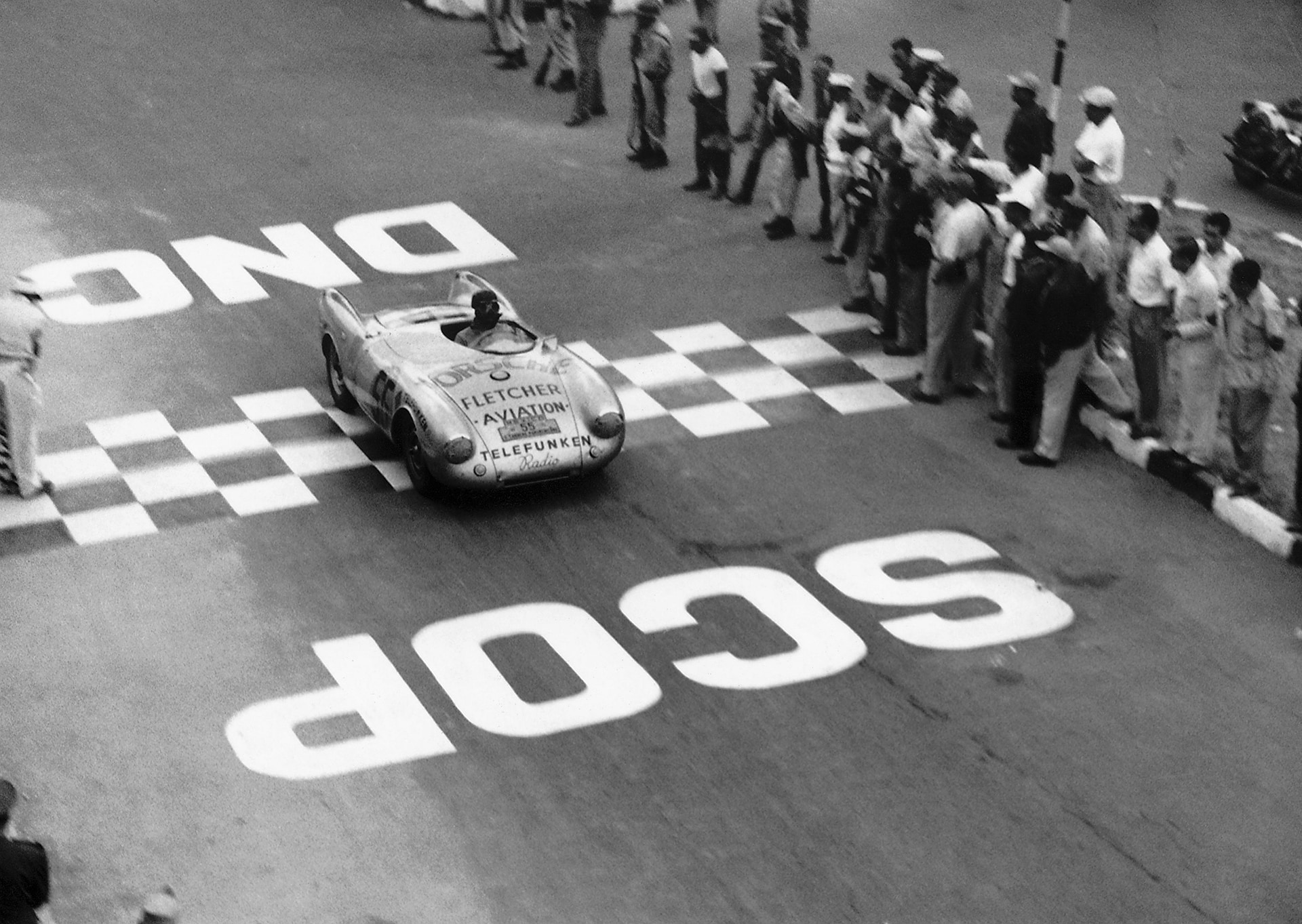
In 1954 Hans Herrmann and Herbert Linge are running the Mille Miglia when they arrive at a level crossing. The barrier is coming down. Stopping would mean losing precious time, but Herrmann chooses to press on. Both men crouch low in the cockpit and the Porsche slips beneath the barrier, crossing the tracks before the train arrives. An enormous risk, and one that became a legendary episode. The pair take victory in the up-to-1,500cc class and, remarkably, sixth place overall – confirming that the small Porsche can embarrass cars of far greater power. The results at the Carrera Panamericana tell the same story: in Mexico in 1954, the 550 wins its class and finishes third overall. That success would have an unexpected and lasting consequence. Porsche would attach the name "Carrera" to the sophisticated four-cam engine and then to its most sporting road cars, from the 356 A through to successive generations of the 911. A word born on Mexican roads, destined to become part of the marque’s identity.
The fame of the 550, however, belongs to more than race results. In September 1955 James Dean trades his 356 Speedster for a silver Spyder nicknamed "Little Bastard." He loves racing and competes at events in California. Nine days later, on his way to a race, he is killed in a fatal collision at an intersection. The actor was twenty-four years old. An end tragically in keeping with his image as a young rebel.
In 1956 the 550 A arrives, with a new spaceframe chassis and a further-developed engine. In this way the 550 leaves a precious technical legacy for Porsche’s development in competition. With this car, Umberto Maglioli takes outright victory at the Targa Florio – a feat no small-engined car had previously managed. Then came the 718. Decades later, the same idea of a light, mid-engined sports car would reappear in the Boxster and the modern Spyder variants. The lesson of the first Porsche built to race has remained intact: you do not need the largest engine, if you know how to make the best of what you have.