Art
Art and Cars: the Futurists and the Fascination of Painting Speed
Canvas vibrating with motion, noise rendered visible – how Balla, Russolo, and Depero turned the automobile into pure painted energy.
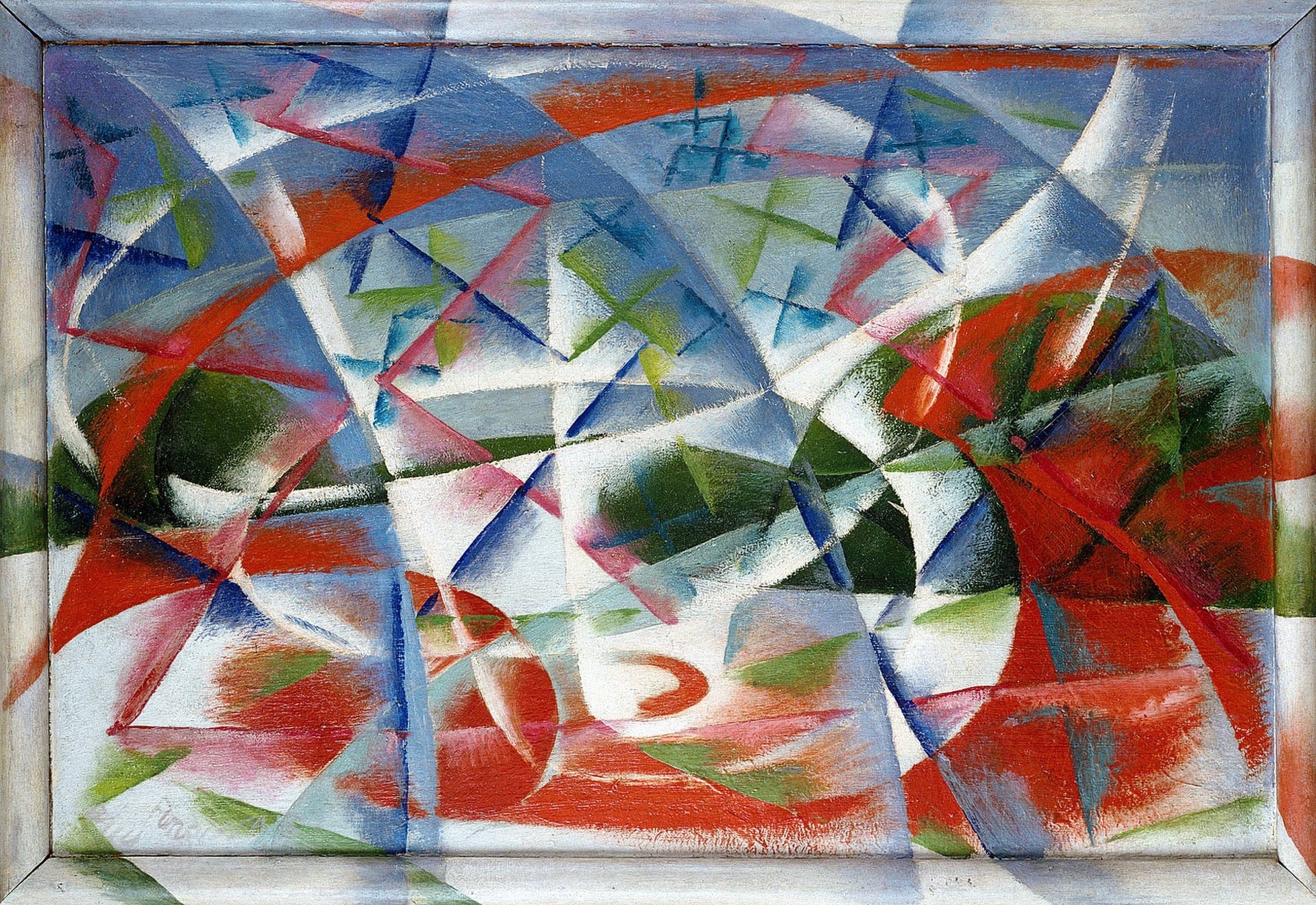
For the Futurists, the automobile was not simply a new means of transport, but the very symbol of the world they wished to celebrate: fast, loud, mechanical, and utterly unlike a past in which mobility had been a complicated undertaking. Filippo Tommaso Marinetti had declared as much in his Manifesto del Futurismo of 1909. His assertion that a racing car was more beautiful than the Winged Victory of Samothrace has since passed into history. The automobile entered art not so much for its forms as for what it represented: movement, energy, speed.
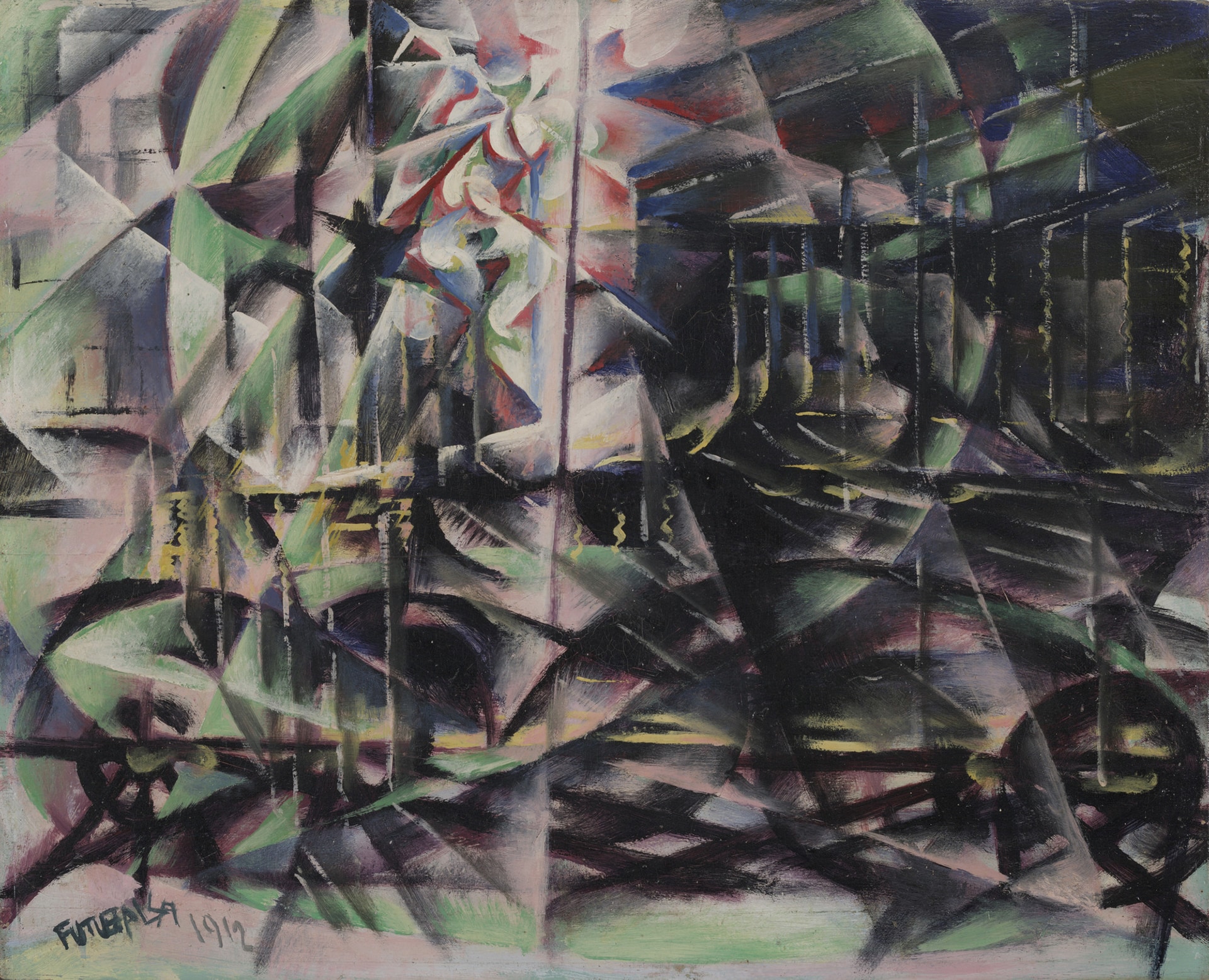
Giacomo Balla was among those who pushed this inquiry furthest. Between 1912 and 1914 he devoted an entire series to the automobile in motion. In Speeding Automobile of 1912, today at MoMA, the car is by now difficult to recognise: what matters is the trace it leaves as it passes. In Abstract Speed + Sound, held at the Peggy Guggenheim Collection in Venice, Balla attempts something still more ambitious – painting velocity and noise together.