Art
Enzo Naso: Paintings That Become Stories
From a Tuscan studio, Enzo Naso layers oil, tempera, and memory onto canvas – each Ferrari a scene rather than a portrait.
Enzo Naso. Paintings that become stories
Many artists who paint automobiles confine their talent to realism, offering beautiful cars that amount to little more than photographs. It is difficult to call them artists. Others – a rare few – know how to interpret automotive art creatively, turning the canvas into a message.
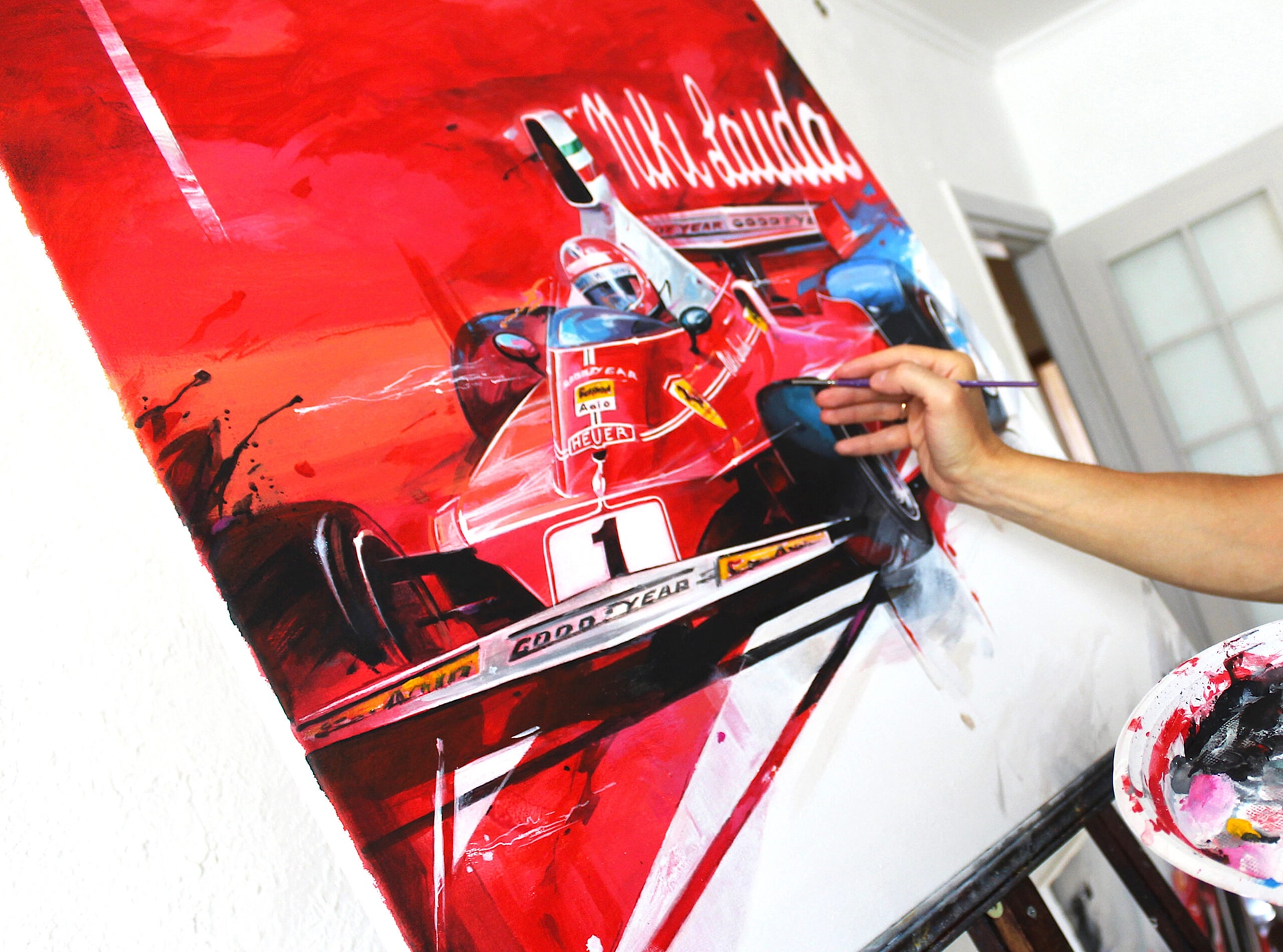
Enzo Naso, Italian, with his studio set among the magnificent Tuscan hills, makes every work a story. From his earliest paintings of the 1980s, the car at the centre – faithful to reality, rendered in the right colours and with the right details – stands at the heart of a scene in which, through varied proportions and chromatic choices, its history is traced.
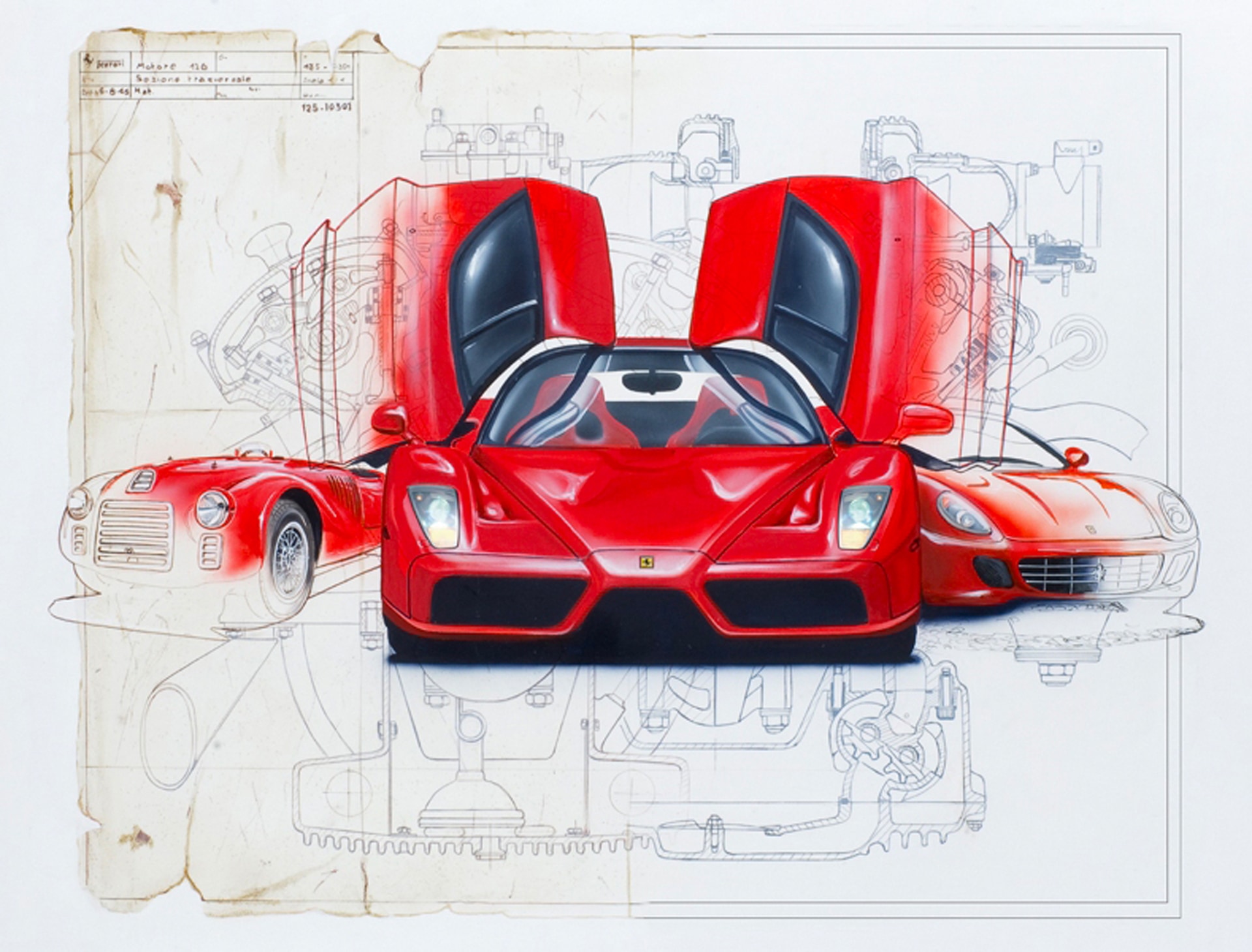
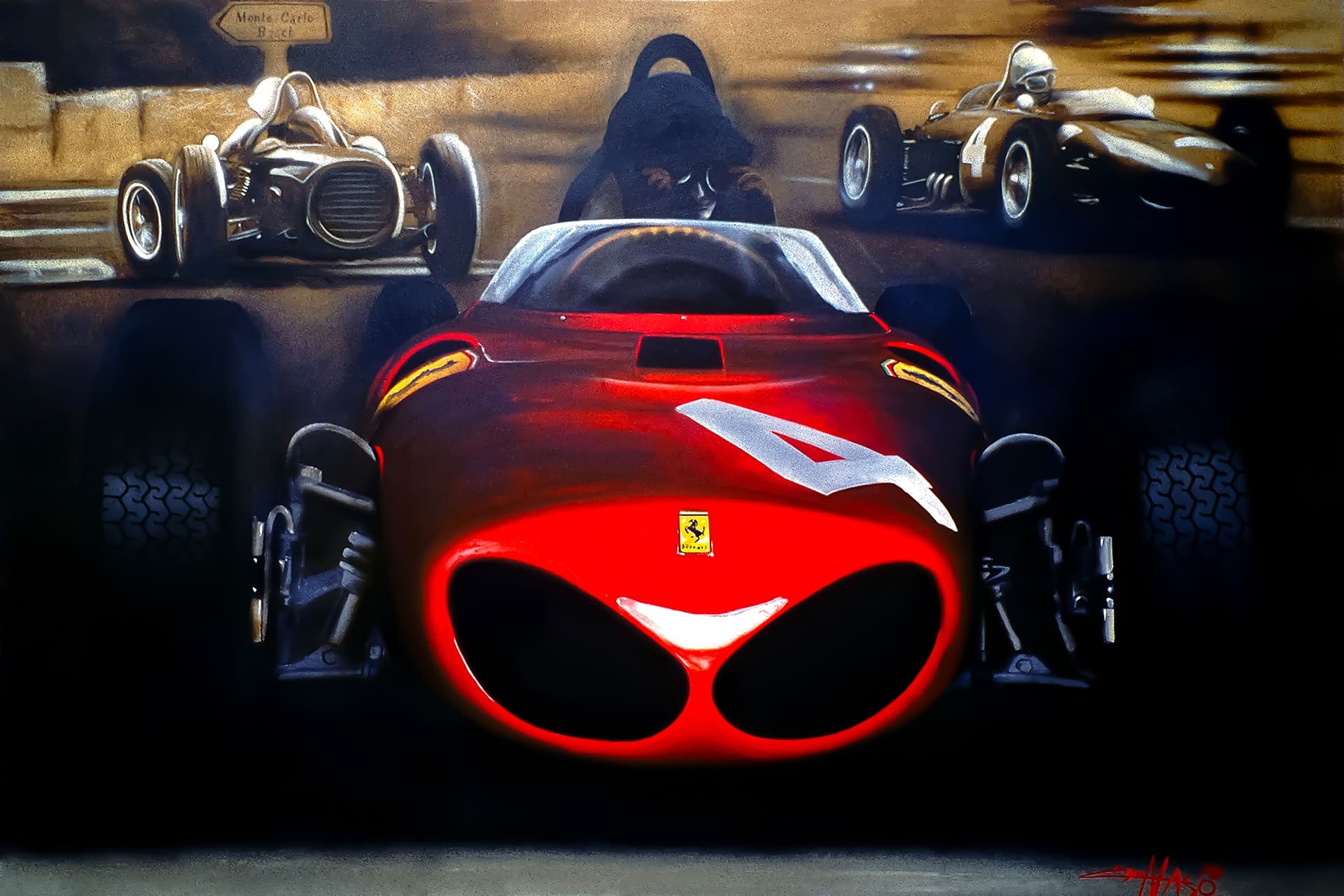
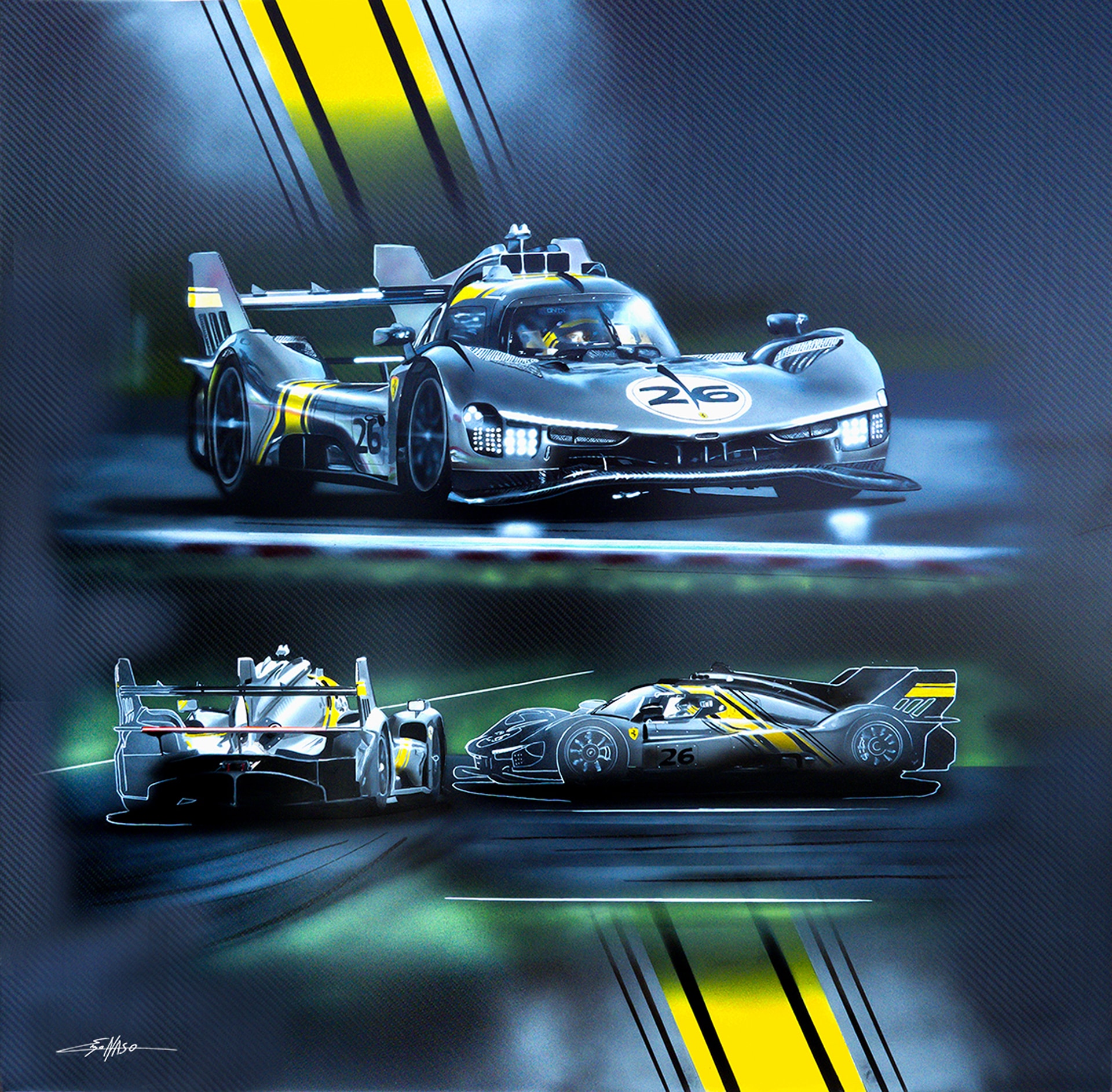
The subject, in its original colours, dominates the canvas, while on different planes it can be seen racing – sometimes carrying numbers that recall victories and drivers. One of Enzo Naso’s most celebrated and appreciated works, for the message it carries, is the one portraying the 156 F1, World Champion in 1961, the famous Shark Nose. At the centre, the car with its aggressive front end. Above, citing history with quiet grace, two 156s are seen racing: the one facing the viewer depicts Phil Hill, who would go on to claim the World Title in it; the other, moving away from the scene towards the left, is a tribute to the tragedy of Von Trips, who at Monza – when the Title was almost within reach – lost his life in that very car. Enzo Naso’s narratives resonate when the subject is placed within history, between the first Ferrari and the most recent Gran Turismo, as in the painting dedicated to the Enzo, or presented in multiple dynamic views, as in the case of the 499P.
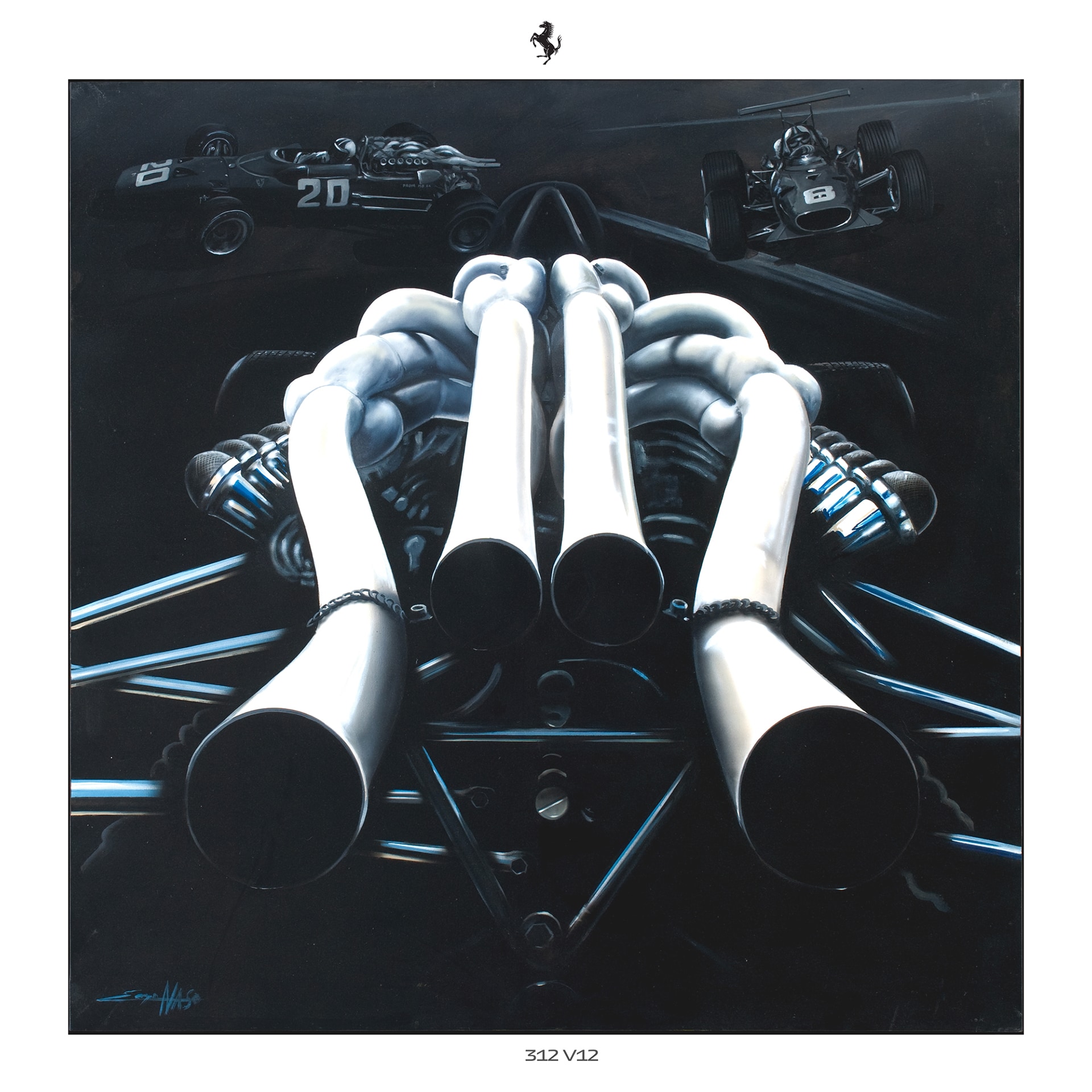
Naso’s artistic sensibility also comes through in the details he selects to convey meaning: a symbol, such as the one created for Ferrari’s 50th anniversary – using the number 50 as the symbolic race number of a powerful Sport car – or placing at the heart of a work the unforgettable tangle of exhaust pipes from the 312 F1 of 1967. It is worth recalling, with some amusement, that this curious solution – "invented" by the brilliant Mauro Forghieri – was nicknamed "spaghetti" with characteristic English irony.
In his works, Naso draws on different techniques according to the result he seeks in each detail: oil paint, tempera, watercolour, and ink. His aim is emotion.
On Instagram, Enzonasostudio, to discover more.