Art
Cars and Art: Keith Haring
A Land Rover, a Buick, a Honda, a BMW – Keith Haring saw every body panel as another surface on which to draw.
A subway wall, a T-shirt, a poster, a human body or, why not, an automobile. For Keith Haring, street artist, the surface he painted on mattered little – what counted was the ability to transform it with his world of symbols that, in the 1980s, had become instantly recognisable.
Haring wanted to bring art out of galleries and away from dealers and offer it to as many people as possible. It was the same principle that had driven him to draw in New York subway stations and, later, to open his Pop Shop so that art could be encountered in its creative reality and become part of everyday life. It was no coincidence, then, that cars and motorcycles entered his vision. They were ordinary objects, three-dimensional and above all mobile, capable of becoming surfaces across which his drawings could travel freely. In his short life – he died at 31 – Keith painted several vehicles, and in 2016 the Petersen Automotive Museum in Los Angeles conceived the idea of presenting them in an exhibition: "The Unconventional Canvases of Keith Haring" brought together five vehicles decorated by the artist: four cars and a motorcycle.
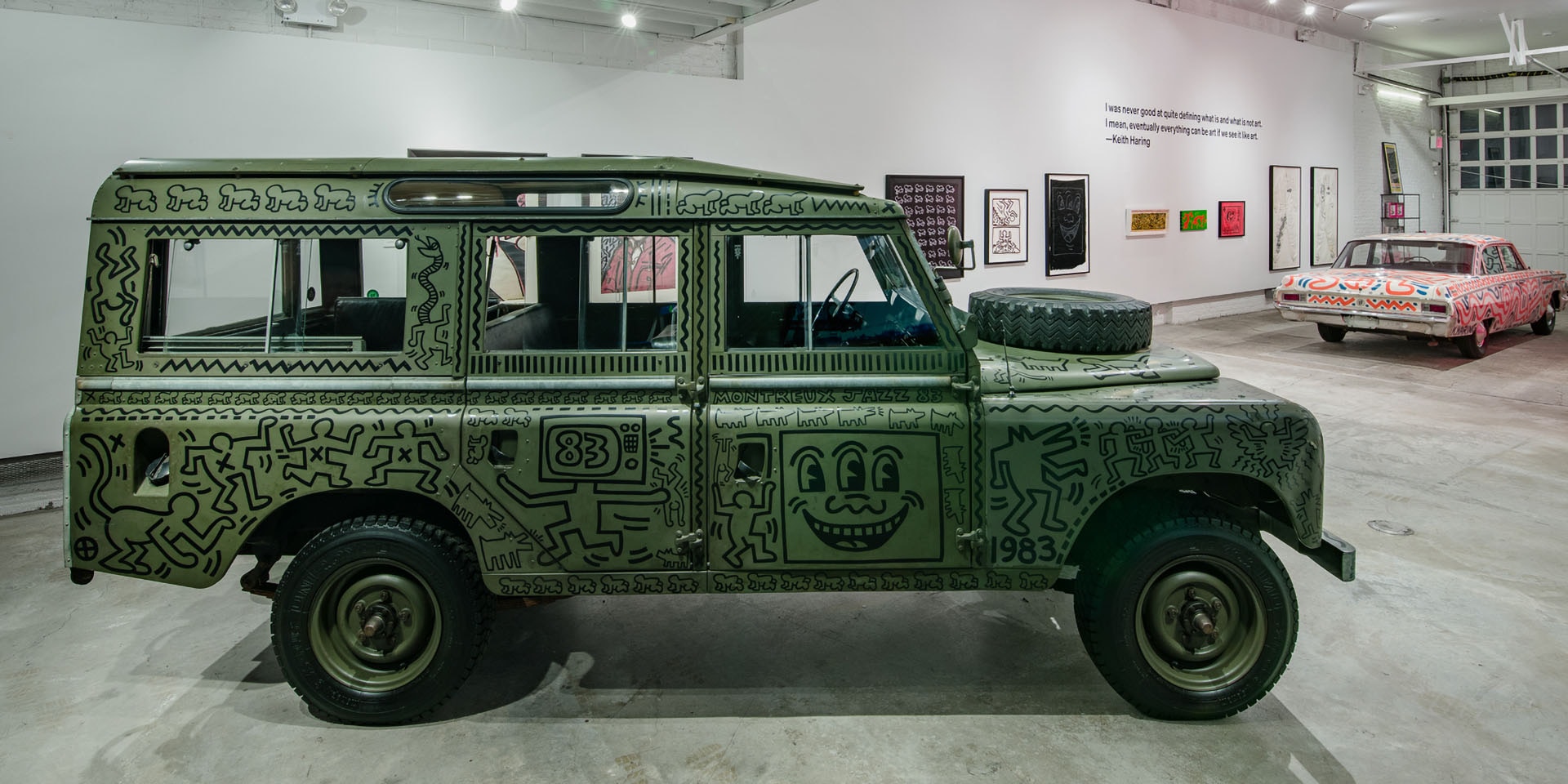
The most curious story belongs to a Land Rover. Haring was twenty-five when he arrived in Montreux, Switzerland, in 1983. During the jazz festival, for which he had designed the poster, he let himself go and began painting everywhere, including a Land Rover Series III 109 that was covered in figures and symbols in a single day. And it did not become a museum piece – the car continued to be used, carrying along the roads a work that today would seem almost impossible to imagine left exposed to the elements.
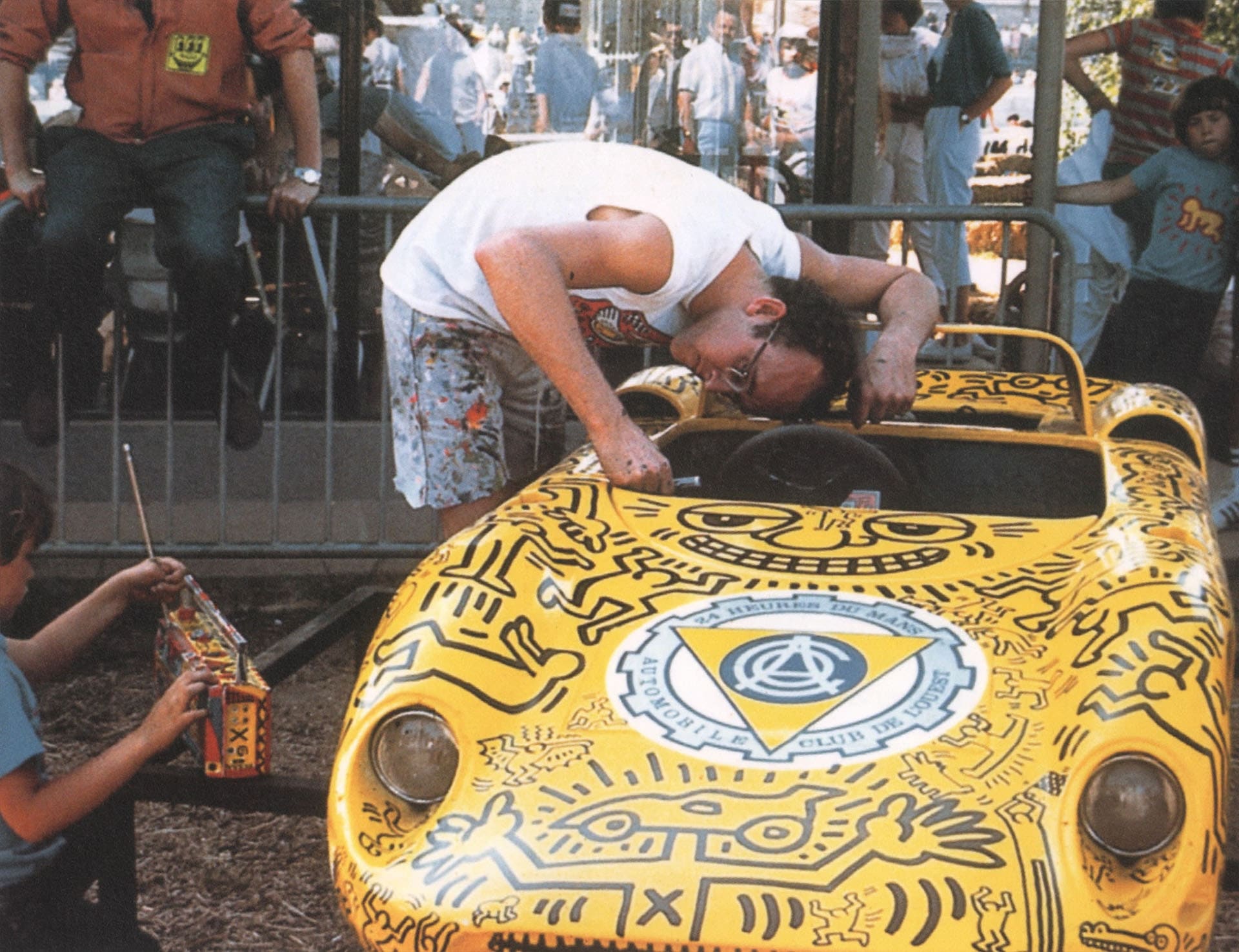
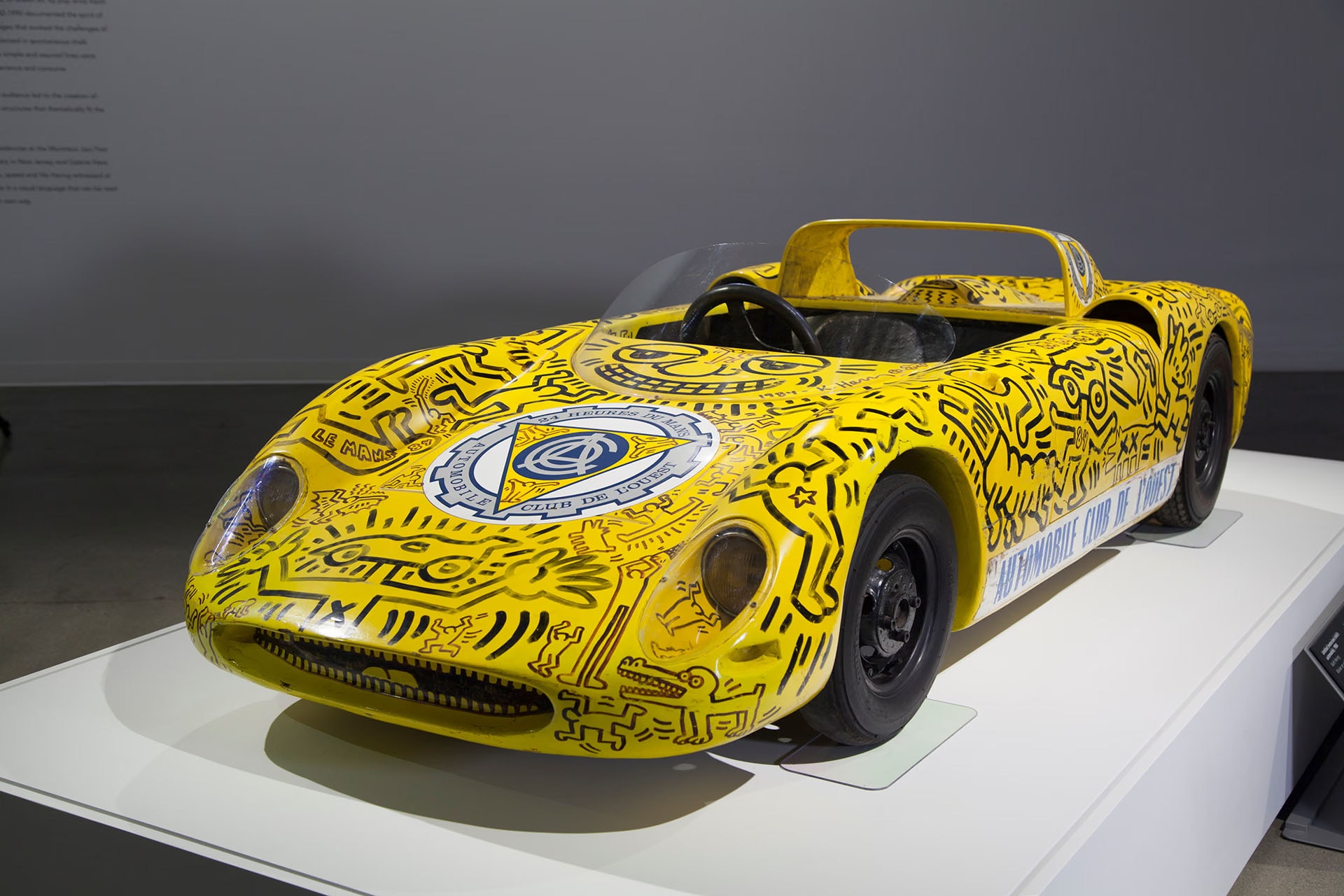
A year later, the stage became even more automotive: Le Mans. The small Ferrari was part of an artistic project organised during the 1984 24 Hours. It was not a real Ferrari, but a scale-model car inspired by the 330 P2. Its story is also documented by the Automobile Club de l’Ouest, organiser of the 24 Hours, which exhibited it at Rétromobile many years later.
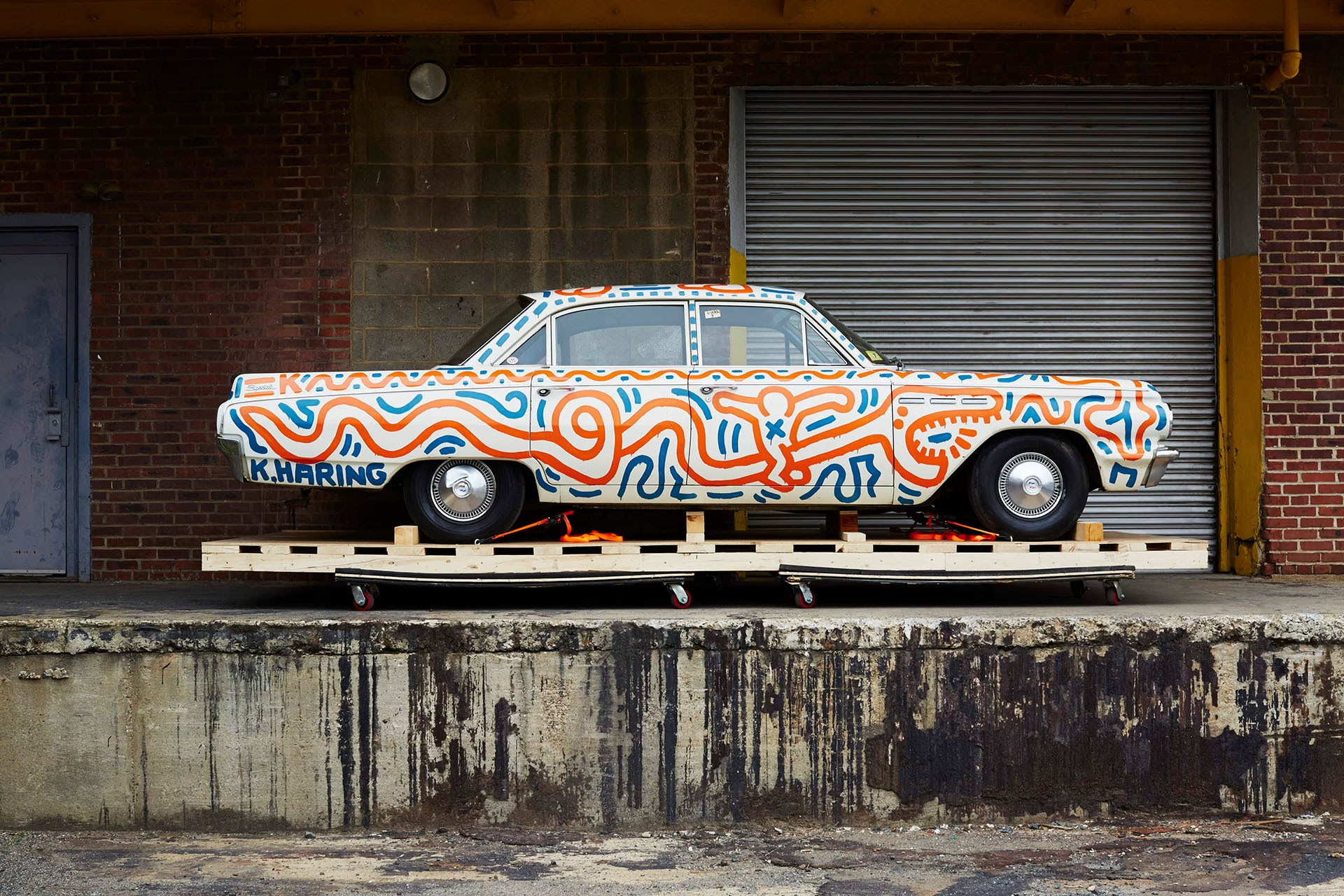
Two years later Haring turned to something considerably larger: a 1963 Buick Special. This time the drawing is not simple decoration – bonnet, roof, flanks, and wings become parts of a single composition, almost as though it were a sculpture on which to keep drawing.
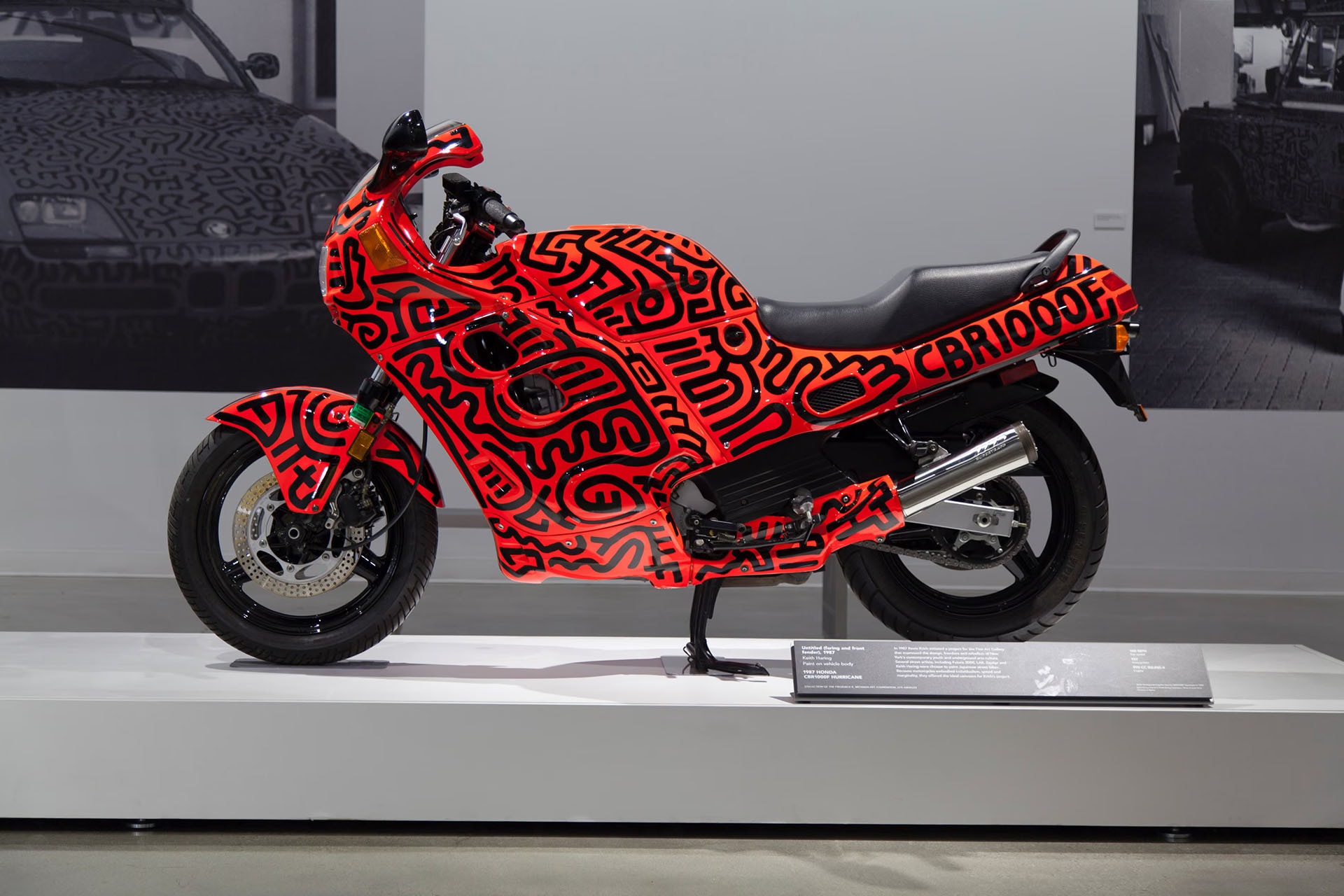
In 1987 a motorcycle followed: a Honda CBR1000F Hurricane, where Haring traced his characteristic black lines across tank, fairings, and air intakes, adapting his language to a surface far more complex than any car body. It is significant that he chose to leave his dynamic mark on a machine that was, at that moment, the Japanese manufacturer’s flagship supersport.
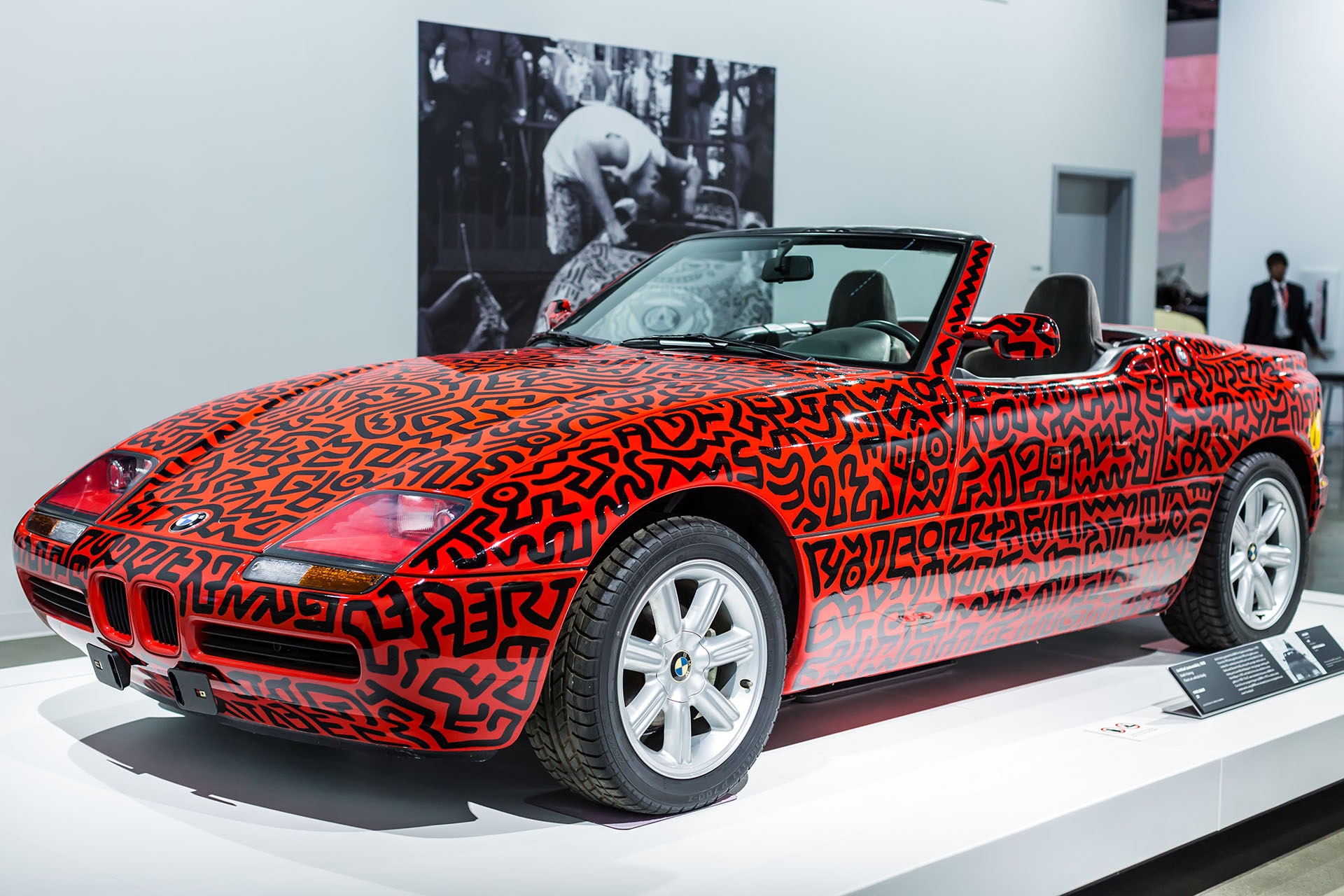
The last of the five vehicles brought together by the Petersen Museum is probably the most famous: the Z1. Presented in 1987, it was one of the most experimental BMWs of the era, with a bodywork of plastic panels and the remarkable doors that disappeared vertically down into the sills. Haring covered the red bodywork with his own universe of black figures, but one important clarification is needed: this is not an official BMW Art Car. The BMW Art Car collection does include a Z1, but it is the one created by A.R. Penck in 1991. Haring’s version, painted in 1990 and connected to the Galerie Hans Mayer in Düsseldorf, belongs to an entirely different story.
A Land Rover at a jazz festival, a small Ferrari at Le Mans, a large American Buick, a Honda supersport, or a futuristic BMW: forms, dimensions, and destinations changed, but the principle remained the same. For Keith Haring, a body panel was simply another surface on which to keep drawing. It is painful to think how much more he could have given to the world’s imagination, had he not left so soon. Thank you, Keith.