Cars
When beauty meets function
The article discusses the transition from functional to aesthetic designs in the automobile industry between the 1920s and 1930s.

The leap from function to aesthetics for car designers was not an easy one. On the one hand, between the 1920s and 1930s, after Jaray had introduced the rules of dynamic efficiency, the public was not yet ready to completely abandon the square vehicles of the time, which were still essentially close relatives of horse-drawn carriages, in favour of cars with flowing, functional lines. In the story described by Massimo Grandi there have been many cases of functional cars that were simply too difficult to sell.
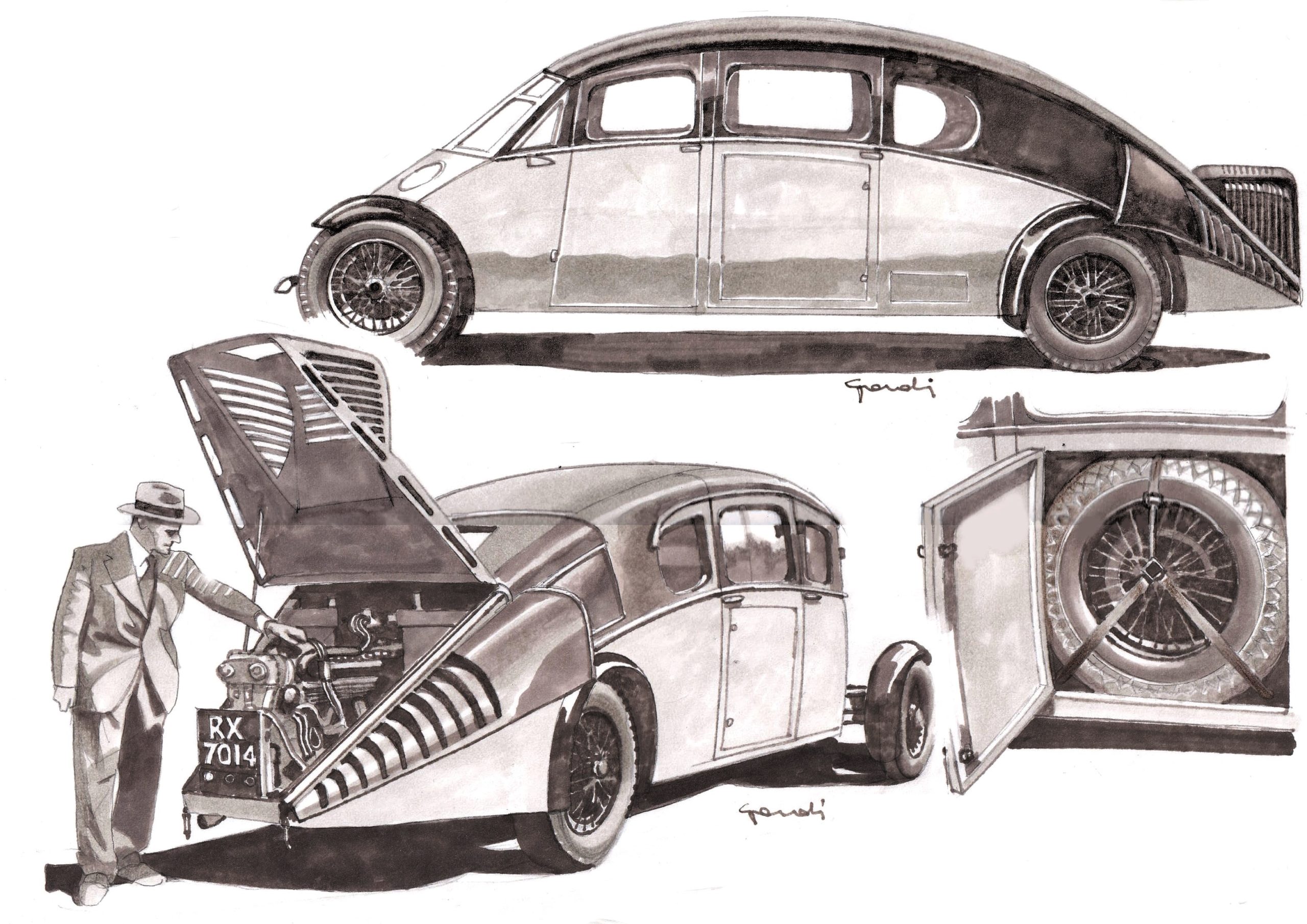 <font size="3">The teardrop shape of the Burney Streamline works particularear-mounted engine position, a trend that was later picked up by numerous car manufacturers</font>
In other words, there have been many illusions created by successes that have never happened. Only in the 1930s, united by some characteristic elements such as very pronounced tails to facilitate the reunification of fluid threads and, at times, by more or less aggressive fins, did cars find their way towards modernity. We have mentioned a few here but invite you to browse the long series of chapters that make up this story, stored in the appropriate “section” of our website.