Cars
Three steps into the future
This article explores the history of aerodynamics in automotive design and the challenges faced by innovators in introducing new and unusual shapes.

Our look back over the history of aerodynamics, which began at the start of the last century, has taught us two things: first, that automotive innovation has always been impeded by the fact that customers want the reassurance of familiar and well-established lines, and are therefore little inclined to accept new and unusual shapes.
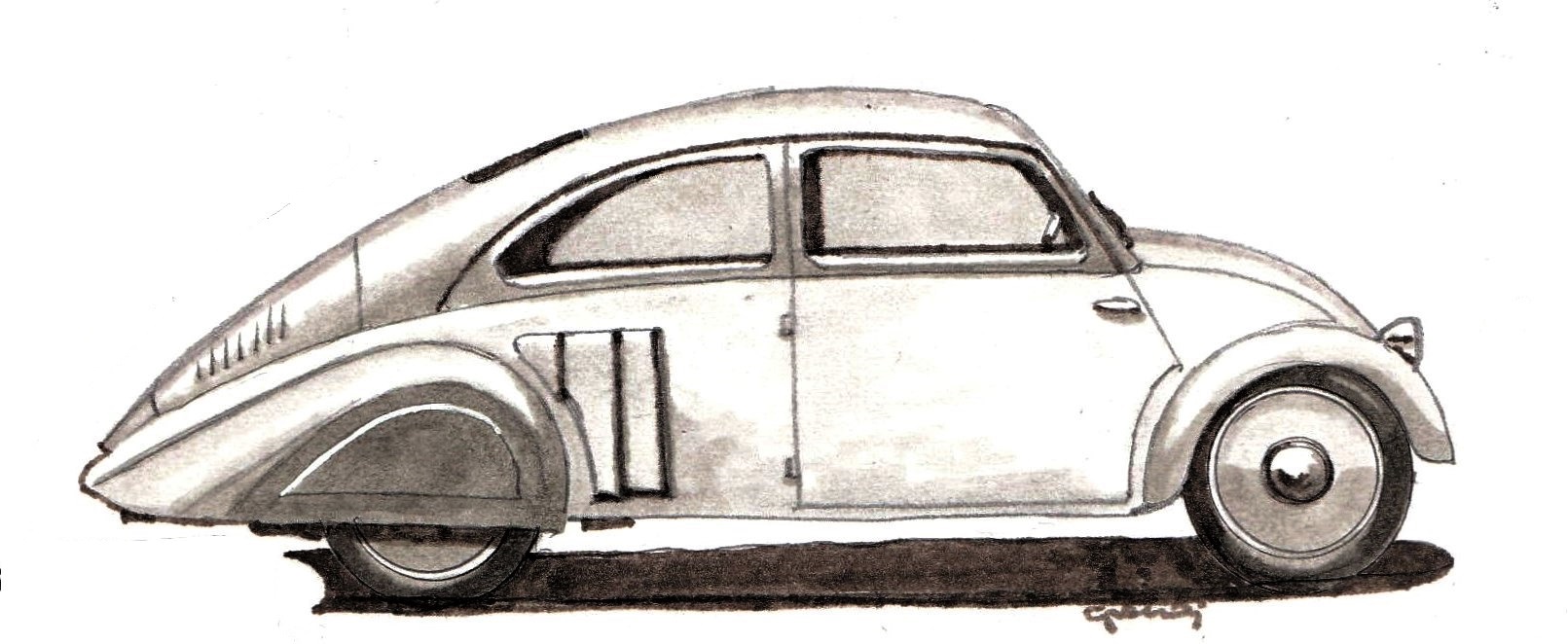 In 1931, German aristocrat Reinhard Koenig Von Fachsenfeld, having enjoyed success as a racer, created his first car based on DKW mechanics, calling it the Record Wagen. It was immediately clear that he had a keen interest in aerodynamics as a means of enhancing performance.
The second is that efficient, streamlined forms are inspired by the air. And here we are thinking of airships more than planes. Paul Jaray’s patents of the early 1920s were studied and interpreted by numerous enthusiasts, including Reinhard Koenig Von Fachsenfeld, a German aristocrat who was passionate about motorcycles and cars, which he raced successfully. Indeed, as we see here, he created several cars of considerable historical interest.