Cars
The Speed Record Story 6 - Forward momentum, despite the tragic War
In the 1930s, the race for the land speed record became a highly anticipated challenge. The all-English affair involved two new contenders, George Eyston with his Thunderbolt and John Cobb with his Railton.

After the appearance of extraordinary vehicles such as Henry Segrave’s Golden Arrow and Malcom Campbell’s Bluebird, the race for the world land speed record became an exciting challenge for the general public. Curiosity was ardent: who would be the first to break the 500 km/h barrier? The challenge, moreover, was an all-English affair with the arrival of two new contenders, George Eyston with his Thunderbolt and John Cobb with his Railton. This speaks volumes about the British and their passion for the automobile.
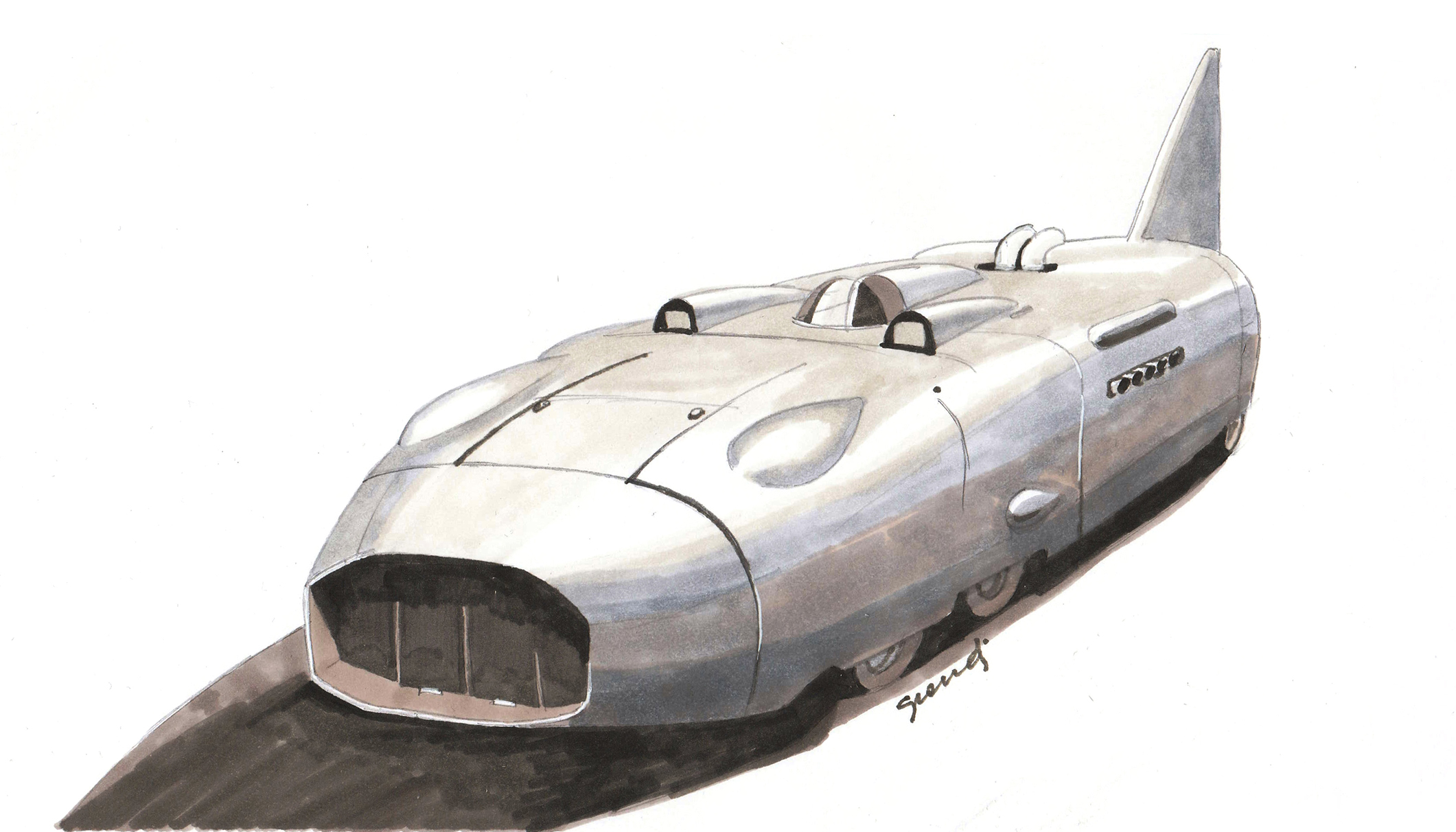 George Eyston’s mighty 6-wheel Thunderbolt which, despite its huge weight of 7 tons, managed to reach 575.336 km/h in 1938
It was 1937 when George Eyston first broke the 500 km/h barrier in the official time trial on the Bonneville Salt Flats, in the USA. His six-wheeled Thunderbolt, with its twin steering front axles, fitted two Rolls Royce engines that transmitted power to the rear wheels: The thunderbolt’s true handicap was its mammoth weight of some 7 tons. The unpainted aluminium body played a curious joke on Eyston too: in the first attempt, the reflection of the sun on the bodywork of the car, similar to those created by the lake, did not allow the speed to be detected and they had to repeat the test!