Cars
The Speed Record Story 4 - 250 kilometres per hour. The final victory of fantasy
The Stanley Rocket broke the 200 km/h barrier in 1906, using a twin-cylinder engine and carefully crafted aerodynamics. Five years later, Benz set a new record of 228.096 km/h with a four-cylinder engine.

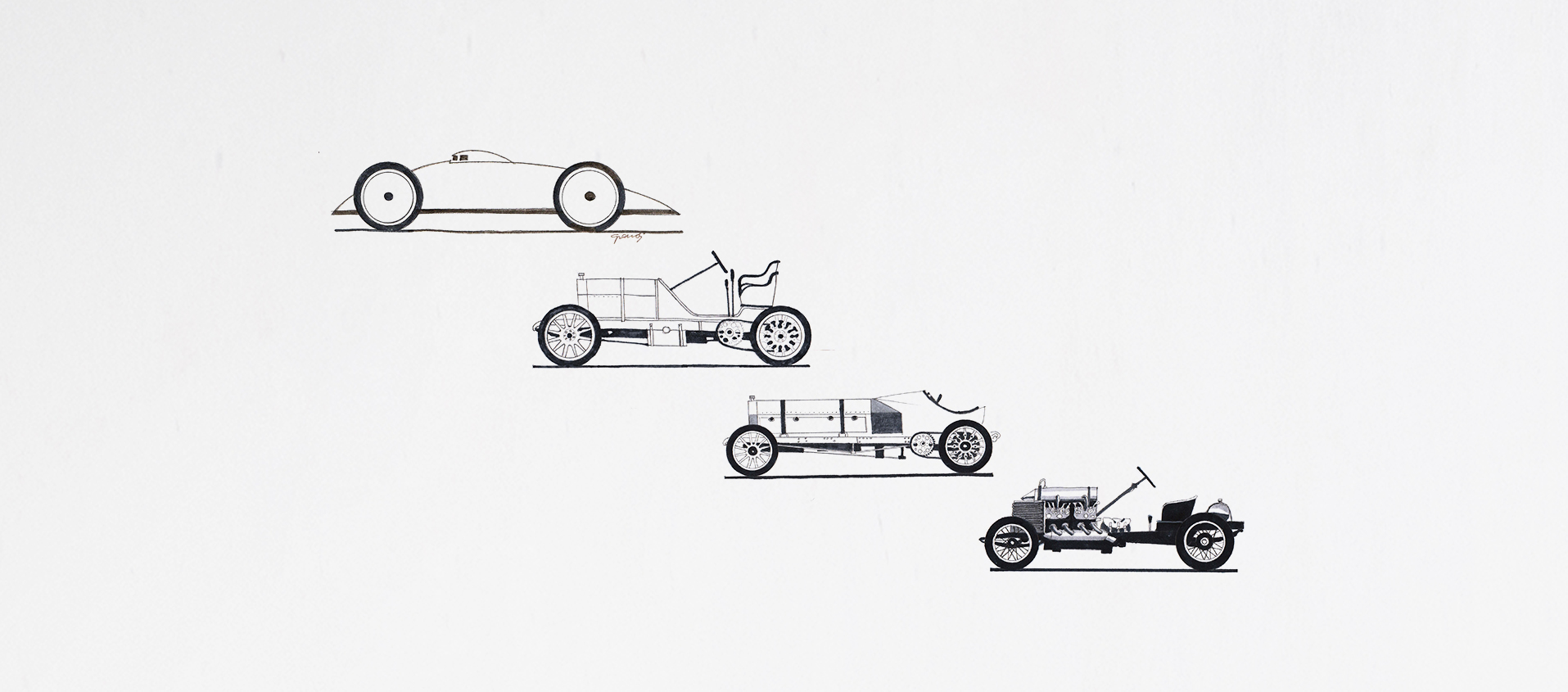
Just as engineers figured out that for vehicles destined to break speed records, Otto cycle internal combustion engines were the winning solution, the 200 km/h barrier was broken – not without surprise – by a steam-powered car. With careful attention to the aerodynamics in a similar vein to the Baker Torpedo – a sort of upside-down canoe that partially resembled the shape of a teardrop – the Stanley Rocket used a twin-cylinder engine capable of producing 150 horsepower and on 26th January 1906, on Daytona Beach, it managed to reach 205.448 Km/h. 58 years would then pass before a non-combustion engine could once again reclaim the record. That was a turbine engine which was followed by jet-powered ones.
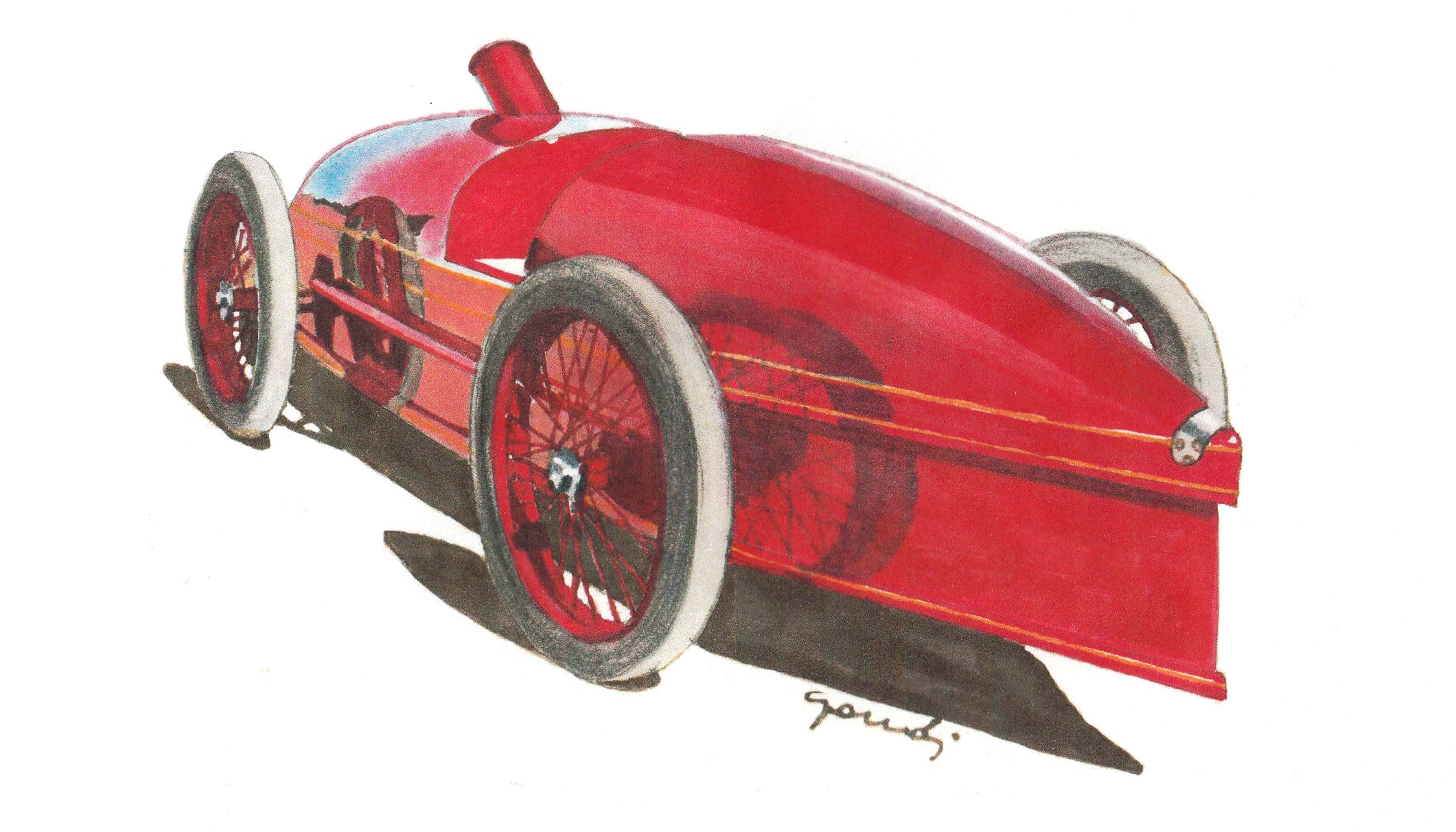 Designed as an upside-down, lightweight and well-balanced canoe, the Stanley Rocket managed to exceed 200 km/h in 1906 powered by a steam engine
The idea of the Stanley brothers was to favour simplicity based on experience: the car was in fact made with wooden frame, just like the canoes of the time and covered with a perfectly stretched canvas. Efficient and lightweight. The engine, with its twin-cylinders and a capacity of 3,373cc, weighed just 84 kilos while the boiler and burner, which were powered by gasoline, weighed 270 kilos. The steam-formation boiler was patented by the Stanleys who produced and sold steam cars in the United States. Weighing less than 1,000 kilos the objective was reached immediately and would have been widely exceeded one year later, had a depression in the sand not caused the destruction of the car (thankfully not of its driver) during another attempt.