Cars
The long road to the Bugatti Veyron
This article explores the story of Ferdinand Piech, the visionary leader with a deep passion for cars and the Porsche dynasty, who was drawn to the Bugatti brand after its failed attempt at revival by Romano Artioli.

Ferdinand Piech is certainly to be regarded motoring history’s last visionary dreamer. There is no doubt he was a born leader — one with the blood of the Porsche dynasty in his veins, and the sheer determination of those who constantly have their sights set on amazing things. And beyond! To see what we mean, just consider — and this is only one example — the Porsche 917 that was prepared to race at Le Mans: an amazingly advanced and awe-inspiring car, hugely powerful and perilously unstable at high speeds (as it showed at great cost!). Like many of Piech’s creations, this was an unnerving car; indeed, English driver John Woolfe lost his life during the first lap of its debut at the 24 Hours in 1969. But it was a car that went on to take every prize going.
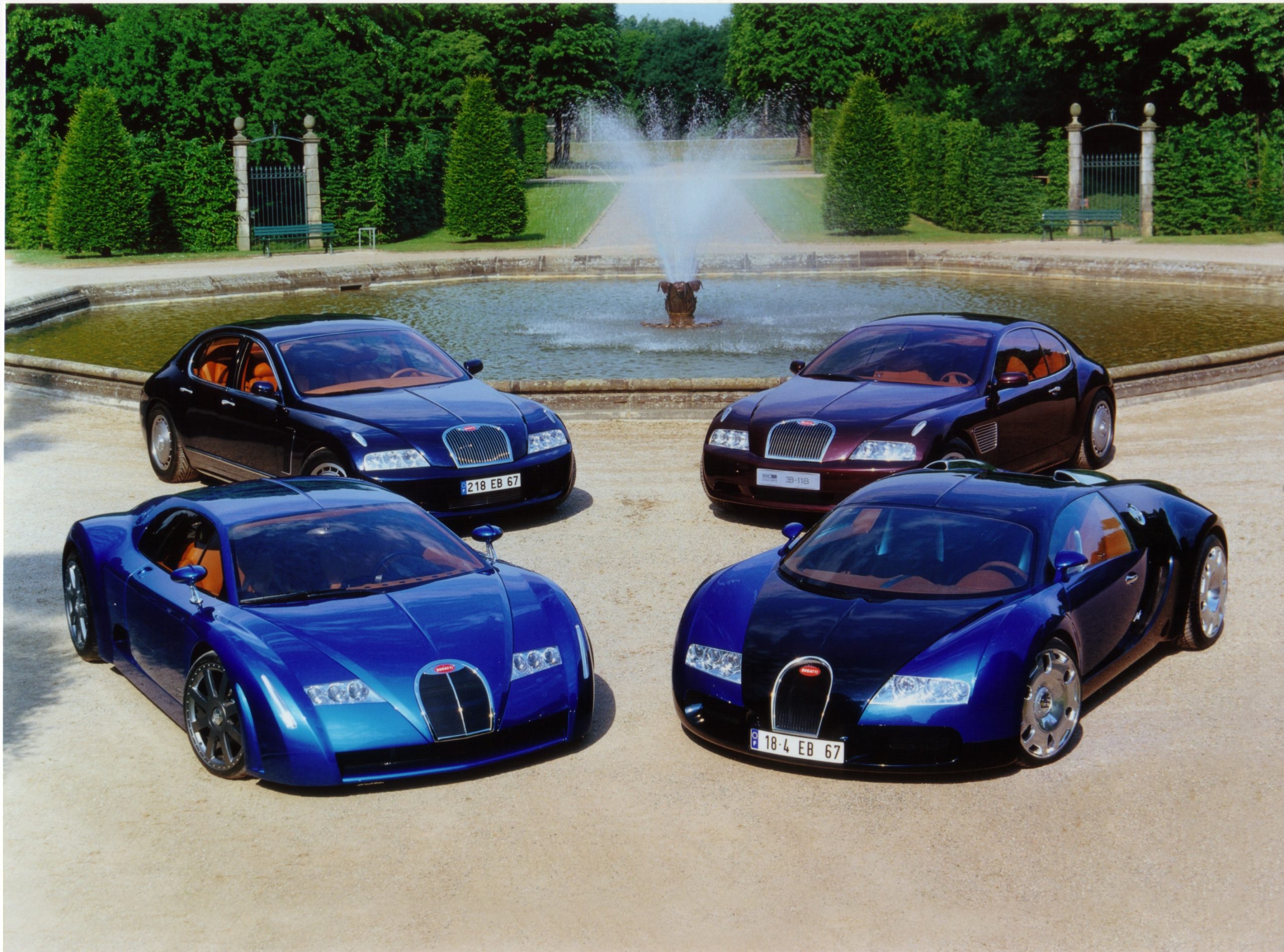 Four prototypes, one engine: the 18-cylinder W. Back right, the EB118 coupé with front-mounted engine (1998), back left, the EB218, a four-door luxury sedan (1999); front left, the Chiron 18/3, the first mid-engine sports car (1999), and front right the 18.4 Veyron that, stylistically, prefigures the model that finally went into production.
The truth is, Piech had a deep passion for cars and the car world. So much so that, when the opportunity presented itself, he inevitably found himself drawn to the Bugatti brand. In 1995, Romano Artioli’s attempt to revive the famous firm founded by Ettore Bugatti in the early 1900s had failed. The brand was up for sale, and it boasted a valuable technological and design heritage, developed over the years, with great courage, at the magnificent Campogalliano plant near Modena.