Cars
The epitome
This article discusses the rise of the French automobile industry in the 1930s, with a focus on the Bugatti brand and their iconic Type 57SC Atlantic model.

In a world troubled by great uncertainties, the 1930s heralded a decade of irrepressible folly that swept through Paris and across France: the desire to appear magnificent and “flamboyant” propelled the French automobile into a new dimension in which the forms, that were never straight and never edgy, followed the harmony of the curvilinee instrument, which was soon to become known as the “French curve”. Manufacturers and coachbuilders vied to see who could impress the most. The winner, thanks to a well-established and recognized blazonry, was Bugatti.
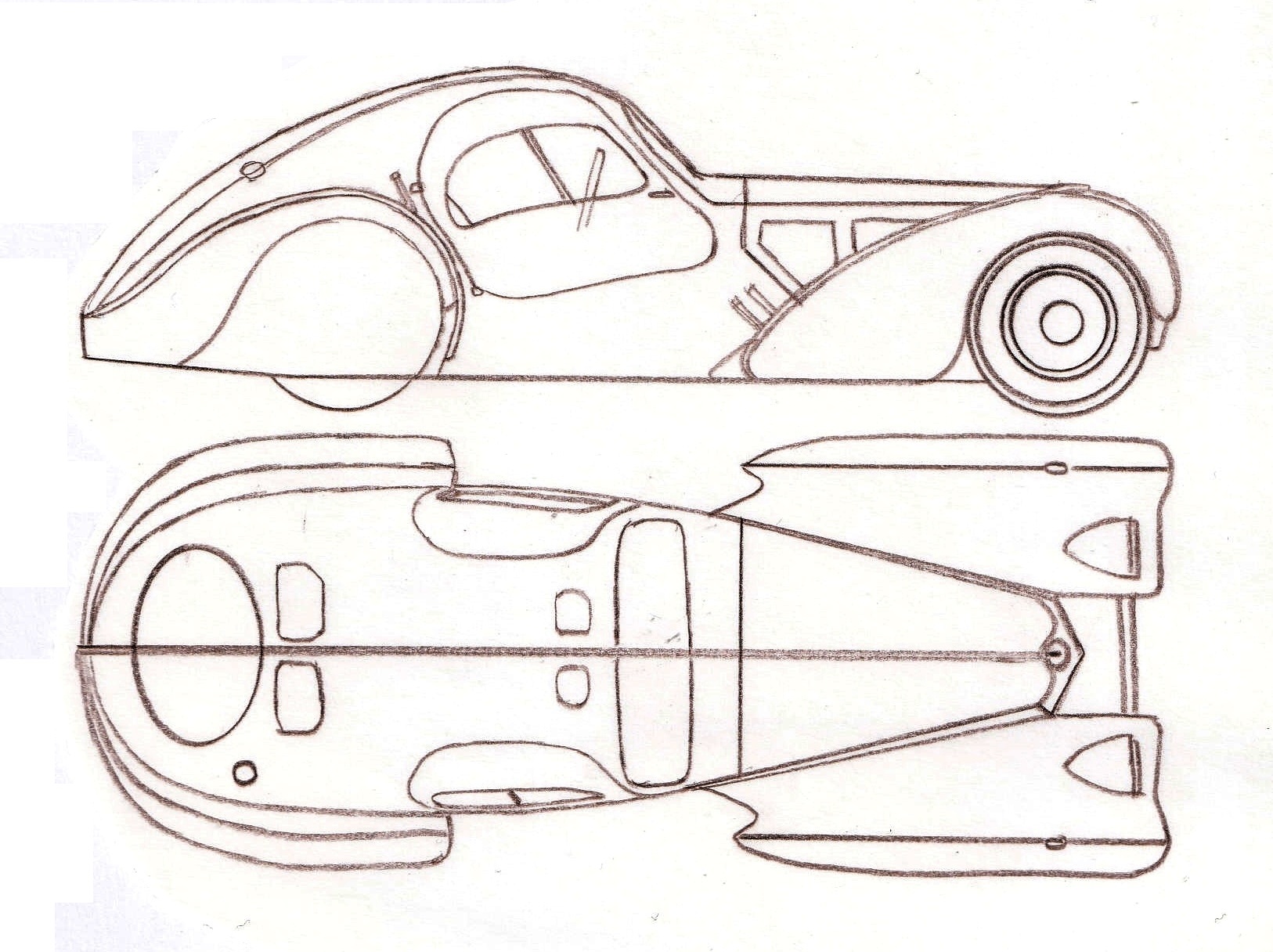 The top view of the design shows Jean Bugatti’s ingenious idea of combining the two parts of the body longitudinally with an exposed riveted dorsal spine that also hints towards a rear fin.
In particular, Ettore’s brilliant and unfortunate son, Jean, who in the space of just a few years found glory with the magnificent 57SC Atlantic - and not only this model - successes at Le Mans and tragically met his death while driving the most prestigious of his cars, the Type 57 Tank.