Cars
Promotional Vehicles Part 6: Showcase Trucks and Car Advertising
Roarington concludes its journey through bizarre promo vehicles, spotlighting iconic trucks and mobile marvels from the 1930s to postwar Europe.

Roarington’s journey through the strangest and most curious promotional vehicles in the world comes to an end this week with the final episode dedicated to showcase trucks and other creations used to promote cars or motorcycles. Today, we’re used to large advertising campaigns on television or social media platforms for the launch of new automotive models, but how did marketing work back in the 1930s? Major exhibitions, such as the 1933 Chicago World’s Fair, were the best way to introduce new products to the public. But for GM’s Vice President Charles Kettering, that wasn’t enough — so he decided to take the concept on the road. The name he chose was “Parade of Progress”, a traveling caravan that would reach even the smallest towns in America, bringing the future to millions of people across the country. GM amazed visitors with vehicles created specifically for the event, such as the spectacular Streamliners, which could be joined together with large tents to form actual exhibition stands — very similar to the hospitality suites we now see in racing paddocks all over the world.
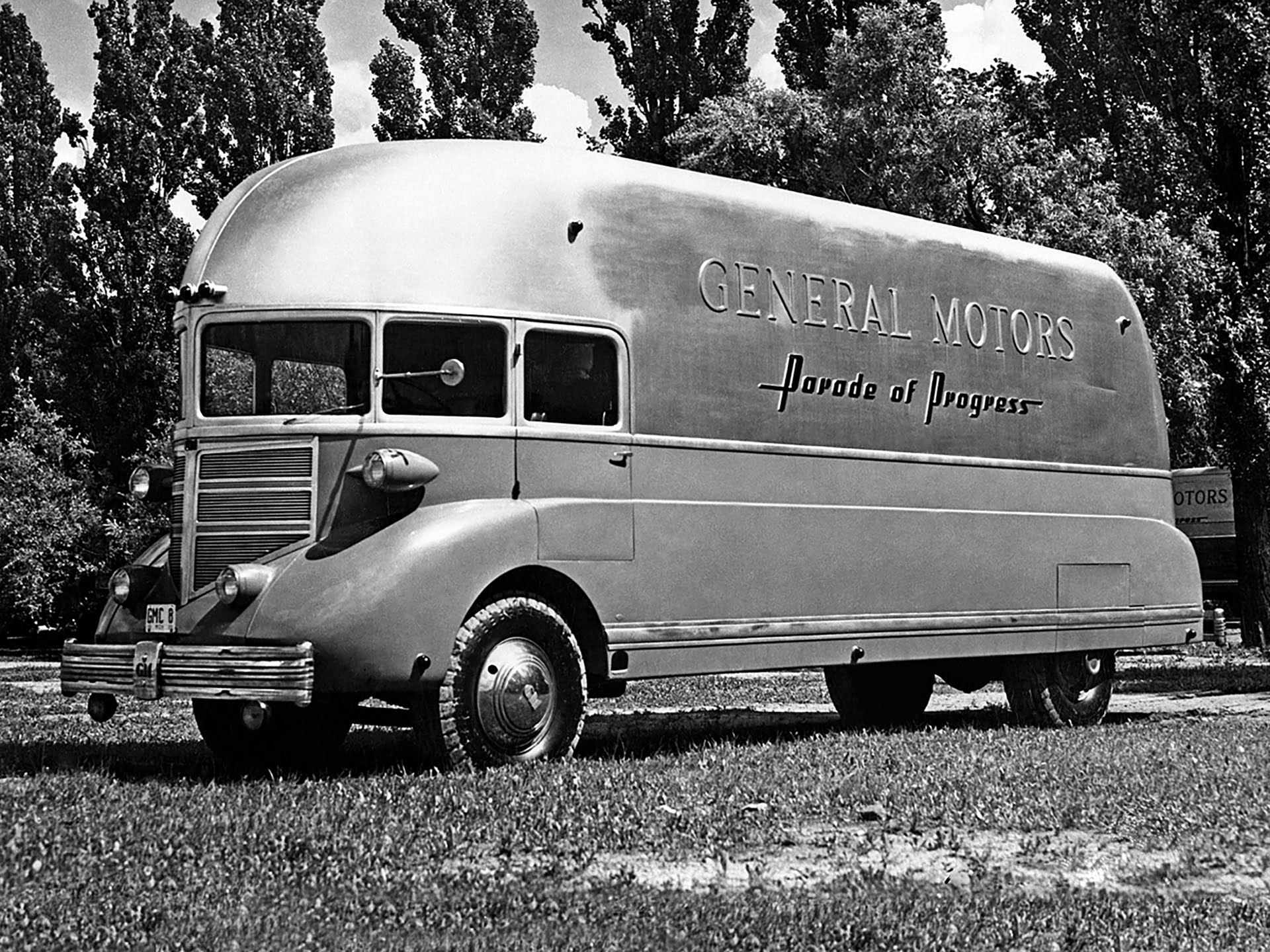
The Streamliners led the “Parade of Progress” until 1940, when Kettering and GM decided to expand the exhibitions by scaling up the entire show and introducing the Futurliners. These vehicles featured aerodynamic bodies, Art Deco styling, deep red-painted sides, a white roof, and large chrome side panels. True ancestors of today’s motorhomes, they could deploy modular structures from the roof and side panels to form walkable stages.