Cars
Lone Stars: the Sixties
Unveiling 1960s Lone Stars: Extraordinary designs that defied mass production, from Lamborghini's Marzal to Alfa Romeo's Carabo. Automotive dreams brought to life.

Throughout the history of the automobile, there have been numerous lone stars which, when you take a look at them today, continue to shine with their own light. None of them were created to become production cars, but rather to send out a message that was uninhibited by industrial and marketing constraints, signed by designers and the manufacturers themselves. Here comes the third part of our series on Lone Stars, based on intensive conversations with renowned Italian designer __Lorenzo Ramaciotti__: the 1960ies.
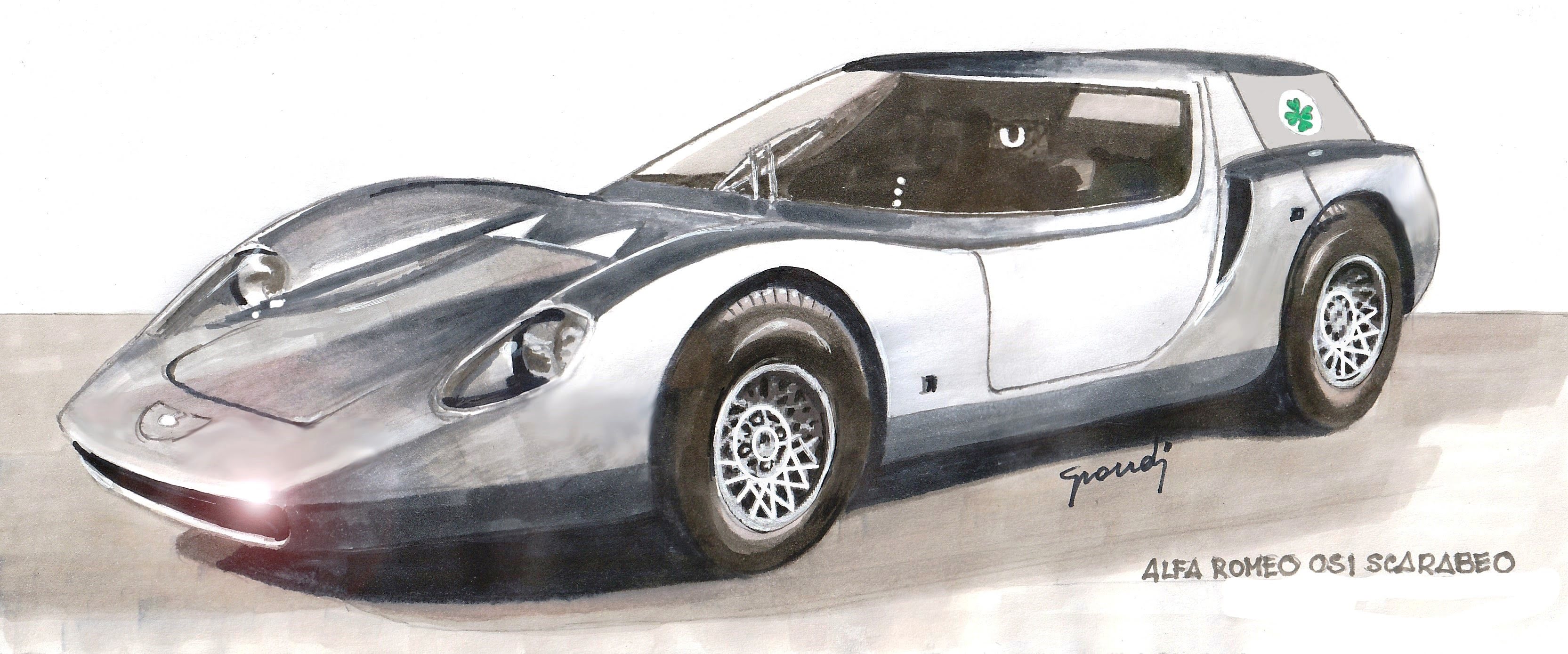
In the mid-1960s, with manufacturers led by managers who had their sights clearly set on large series production numbers, a stylistic revolution appeared that ended up monopolising an entire 20-year stretch: square shapes and tight lines. Automated production lines removed every trace of craftsmanship from the production processes and became a stimulus for the creation of lone stars ready to drive design forwards through radical shapes. These proposals were increasingly distant from mass production, but fundamental in nurturing the automotive dream. The Marzal spacecraft for Lamborghini and the Carabo wedge for Alfa Romeo, both by Bertone and Gandini, are clear references to this approach. No less interesting for the technical concepts developed by its famous engineers, Busso and Satta, and its ground breaking style was the 1966 Alfa Romeo Scarabeo, bodied by the Turinbased OSI on a design by Sergio Sartorelli.