Art
Art for Advertising: Marcello Dudovich, the Force of Elegance
Engineering as desire, status as brushstroke – how one poster master made the automobile an object of longing before mass ownership changed
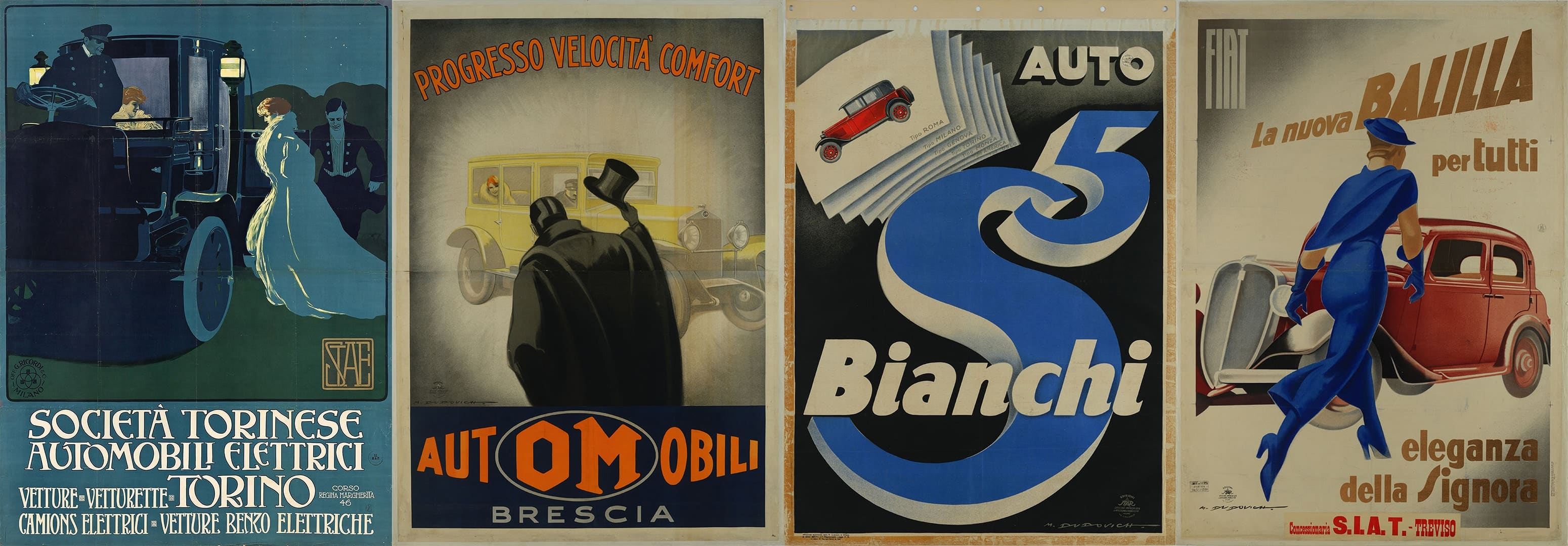
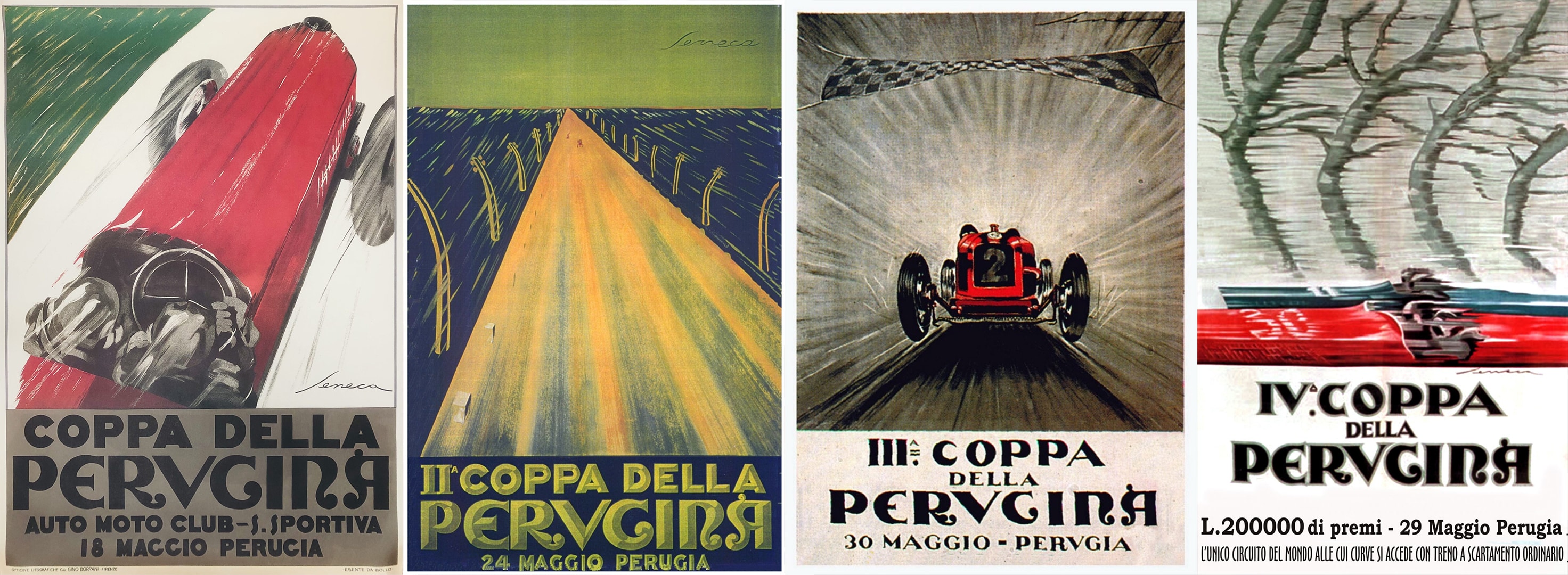
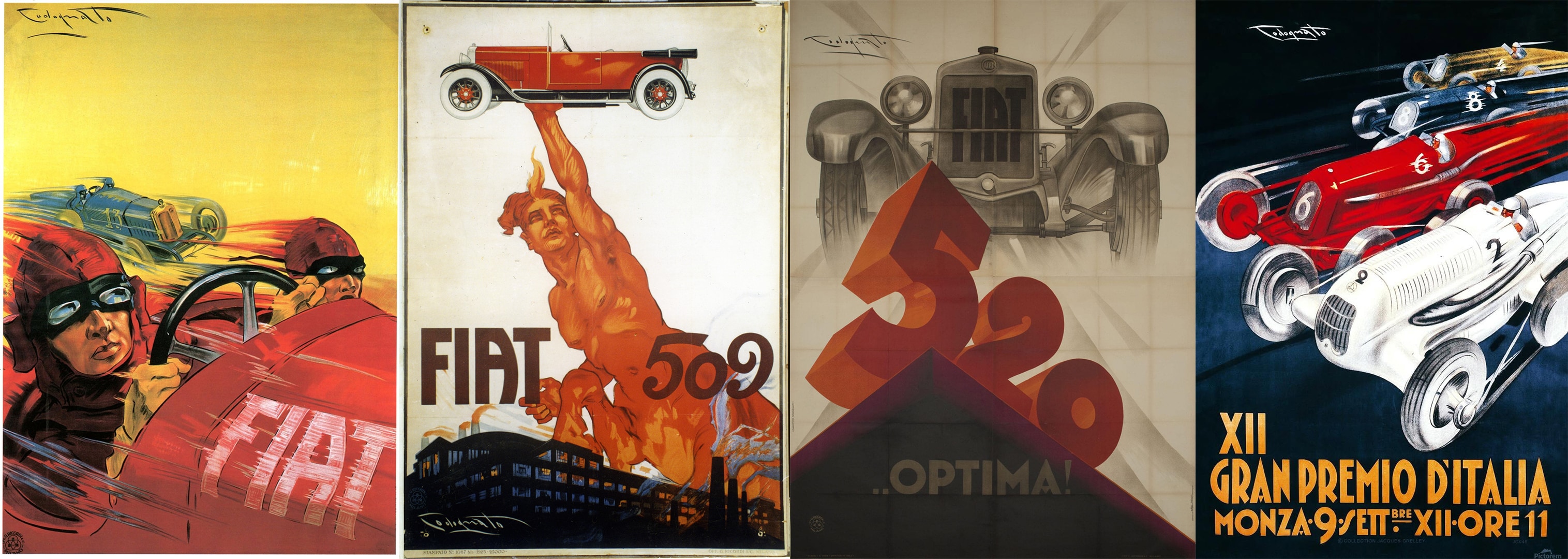
After meeting Plinio Codognato – whose advertising creativity cast the automobile as a symbol of power – and Federico Seneca – who interpreted it as speed – we now turn to Marcello Dudovich, one of the greatest masters of what is known as poster art. Born towards the end of the nineteenth century, he was first inspired by the floral Liberty style before moving, with decisive commitment to clear colour and form, towards an unmistakable Art Déco aesthetic. As early as 1900, still very young, he received a gold medal at the Universal Exposition in Paris, while in 1920 and 1922 he was invited to exhibit among the celebrated artists of the Venice Biennale.
His relationship with the automobile began when the vehicle was still anything but commonplace. Around 1909–1910 he created a poster for the Società Torinese Automobili Elettrici: an elegantly dressed woman steps into a chauffeured car, while another lady is already seated inside. And the curiosity, seen today, is worth pausing over: more than a century ago, Dudovich was advertising electric cars.
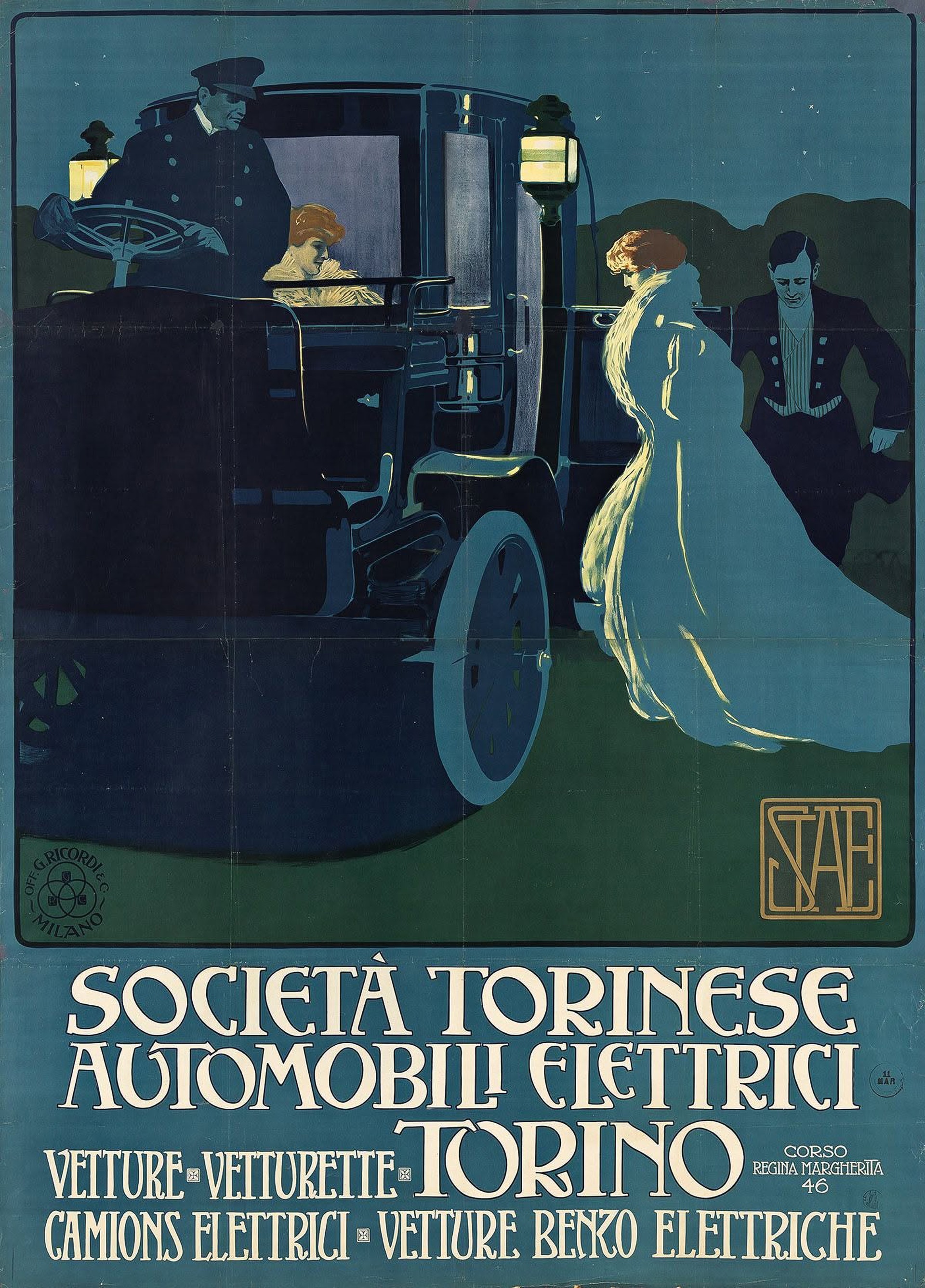
Nearly twenty years later we find him returning to the automobile – now fast, yet treated by him as an object of distinction. In the 1928 poster "Progresso Velocità Comfort" for Automobili OM, a man in a top hat raises his hand in greeting as a chauffeured car passes, an elegant woman on board. The automobile is not isolated from the world: it is the centre of a high-profile social scene.
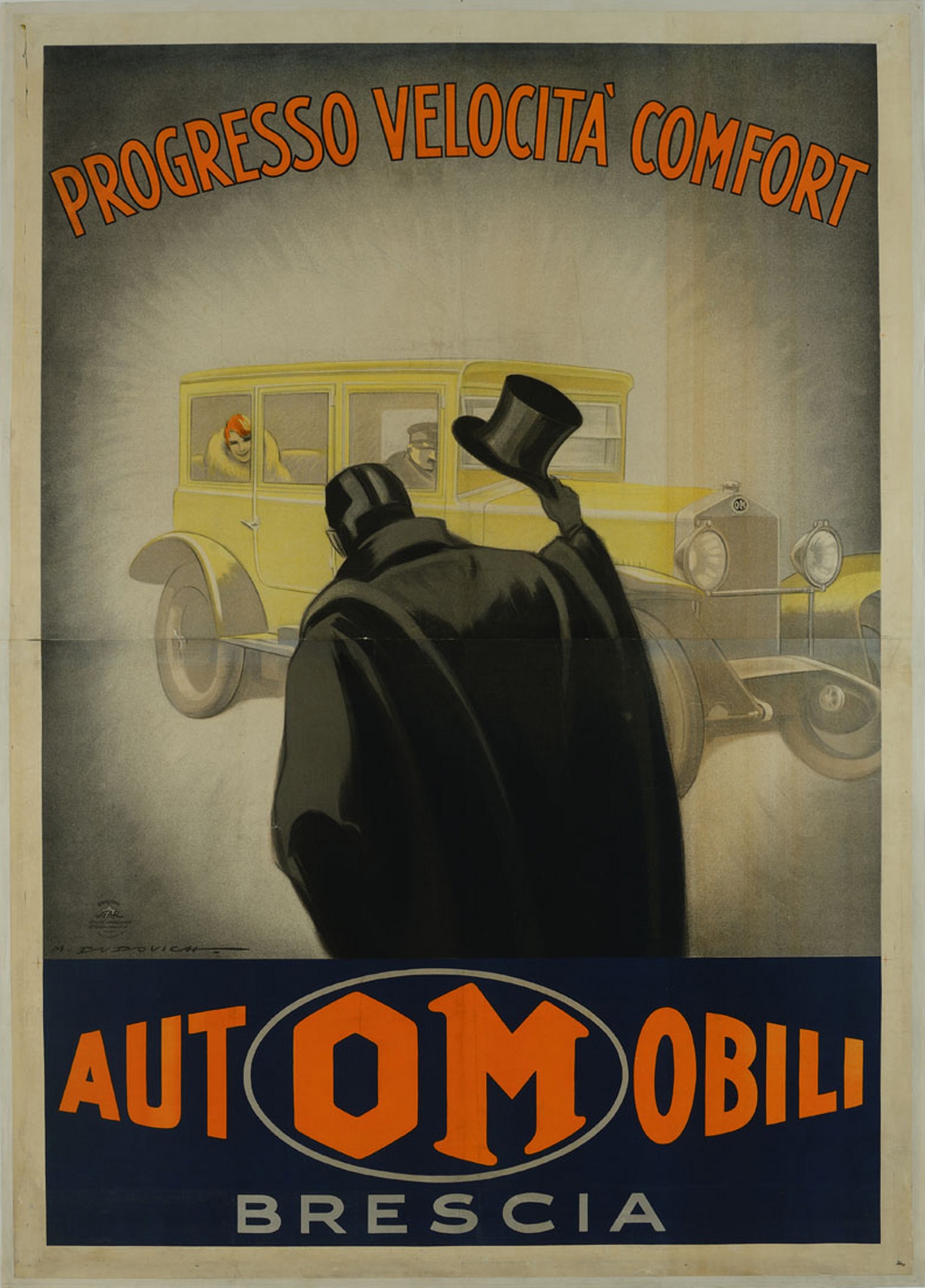
With the Bianchi S5, around 1930, Dudovich too moves towards a more essential visual language. The car is placed directly alongside the oversized letters and model number: the product takes the place of the social scene and becomes the protagonist of the composition. The impact and force that were the hallmarks of the poster art of which he was so sought-after a master.
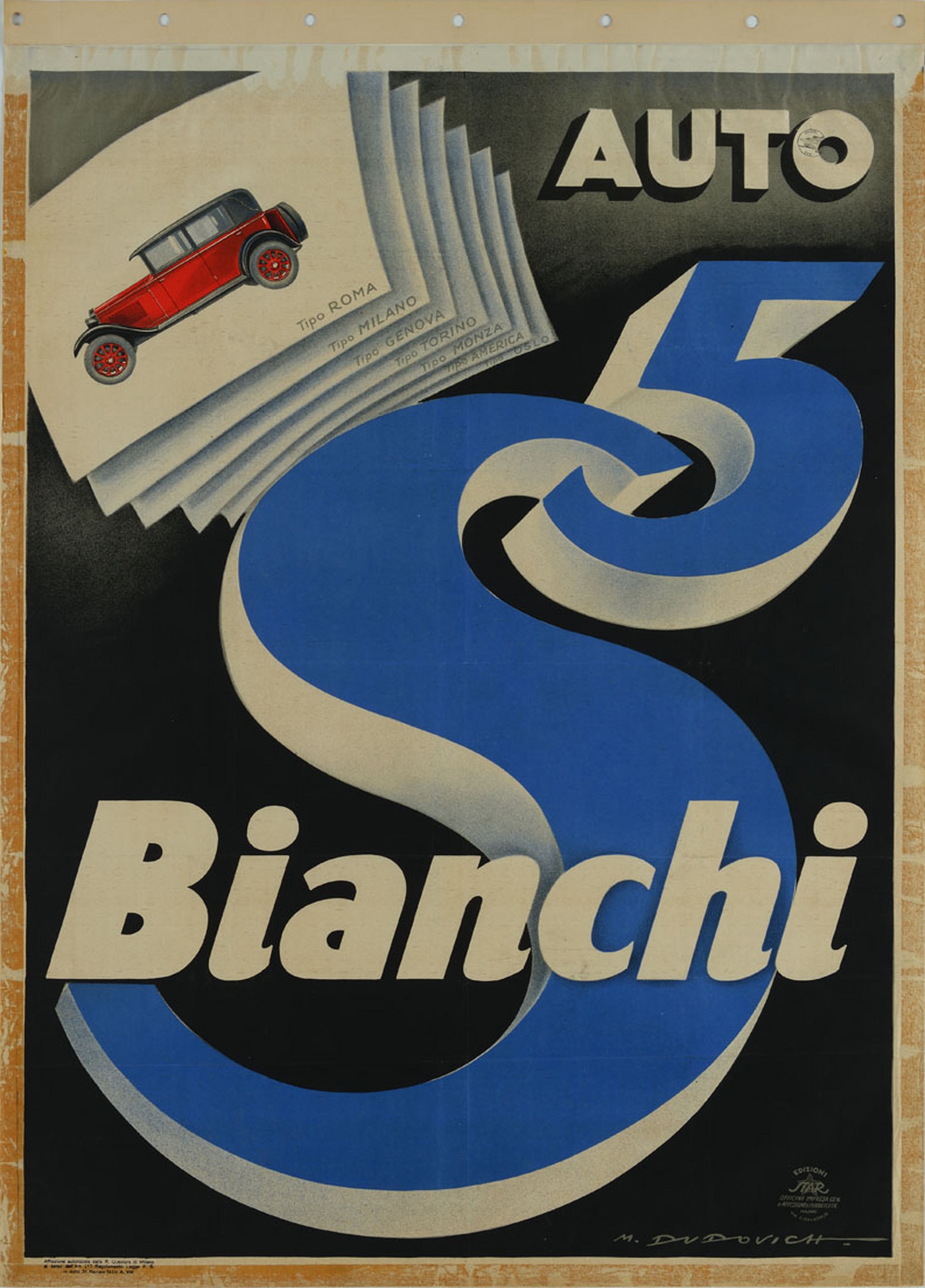
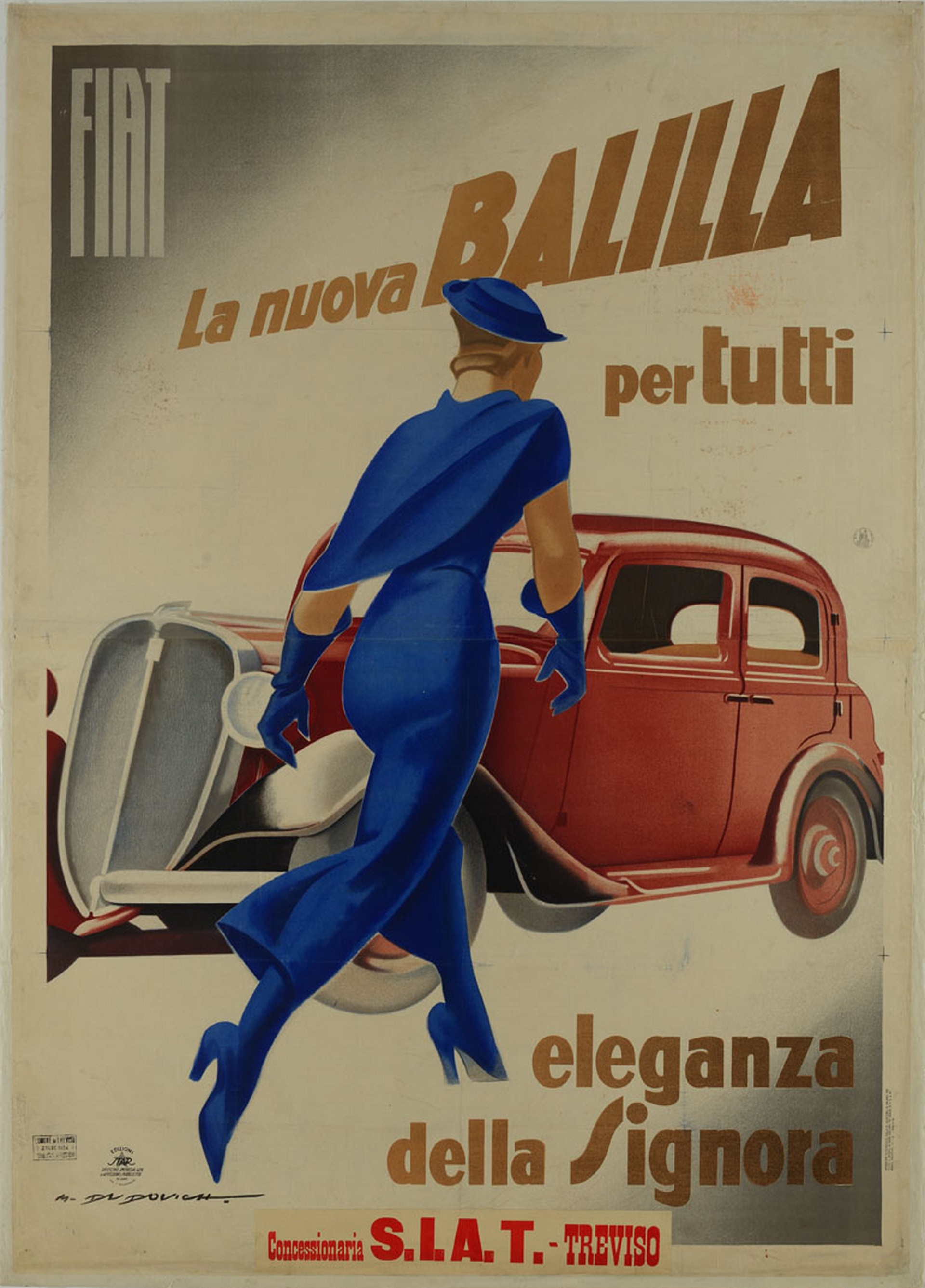
It is with the Fiat 508 Balilla, however, that car and female figure find what is perhaps their most celebrated synthesis. In the 1934 poster, a woman dressed entirely in blue – uninhibited and sensual – strides with confidence towards a red Balilla. The copy promises "La nuova Balilla per tutti" and, just below, "eleganza della Signora." One can easily imagine that Dudovich had little choice but to accept the headline "La nuova Balilla per tutti" – and it is a safe bet that his own proposal contained no "per tutti." But there it is: advertising creatives, unlike artists, sometimes have to yield to the client’s wishes. Setting aside that observation of ours, this is perhaps Dudovich’s most interesting contribution to the automotive imagination. His magnificent women – many and varied across his numerous advertising works – are ahead of their time, uninhibited and seductive. As are the cars, by now destined for wider ownership, so much so that they no longer need to race in order to appeal. Better to observe who is driving, who is stepping in, and the world to which ownership grants admission. A style and a status symbol rendered in a few strokes and bold colours.
The automobile is no longer merely a triumph of engineering. It has become desire.