Cars
Ferrari’s Technological Innovations Part 17: F50. When Formula 1 Became Road-Legal
The Ferrari F50, introduced in 1995, was a road-legal supercar designed with true Formula 1 engineering. With a load-bearing V12 engine derived from the 640 F1, carbon-fiber monocoque, and advanced suspension.
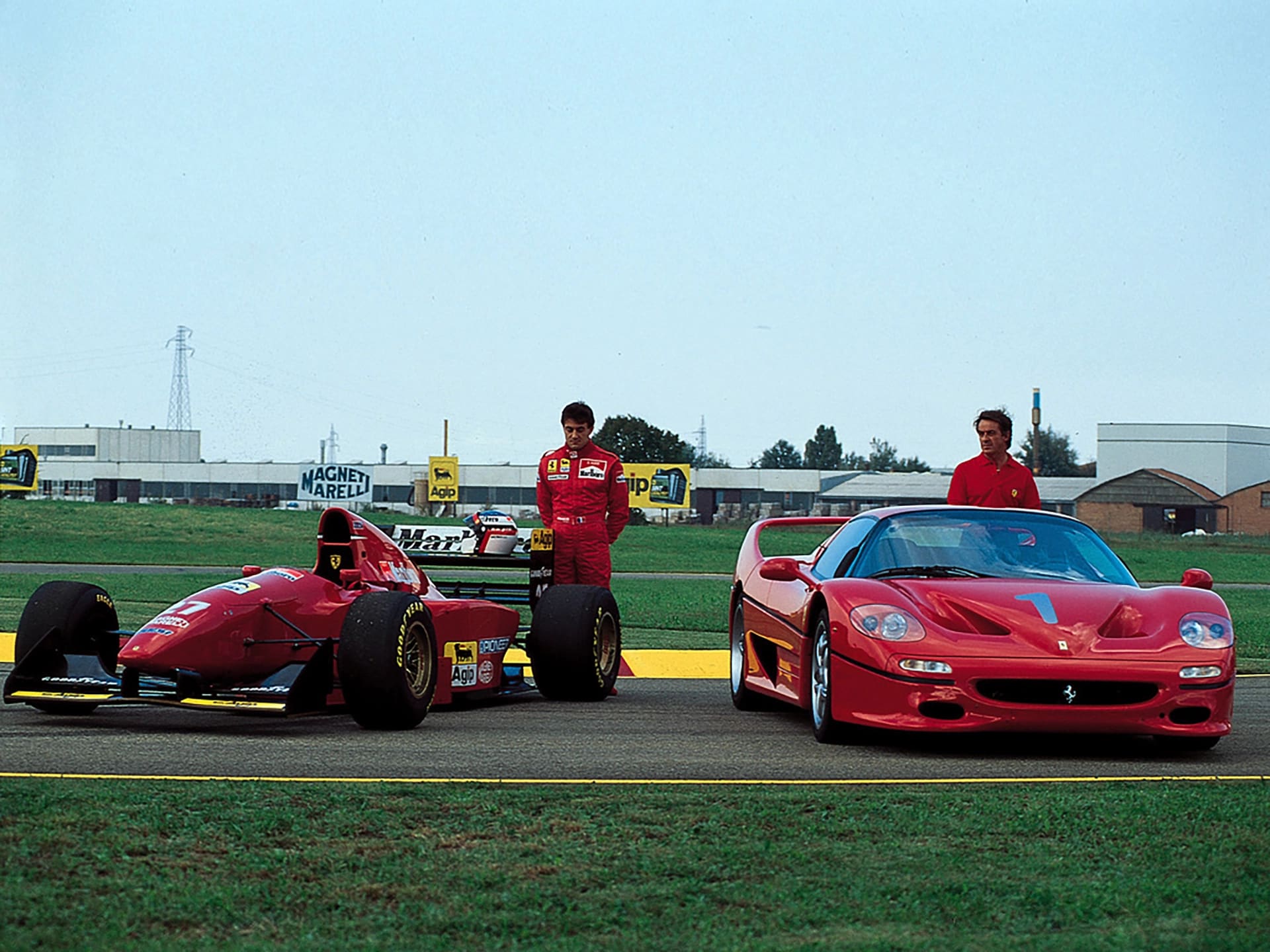
The universal success of the F40 – it’s worth remembering that it was originally announced for a production run of 400 units, but to prevent unacceptable speculation, many more had to be produced, around 1,250 – meant that the F50 needed to have extraordinary and unique characteristics. Introduced in 1995, the F50, created to celebrate Ferrari’s 50th anniversary, was truly surprising. It was Piero Ferrari, son of the great Enzo, who put forth an idea that no other manufacturer could have suggested: To create a true road-legal car conceived exactly like a Formula 1 car. And so it was.
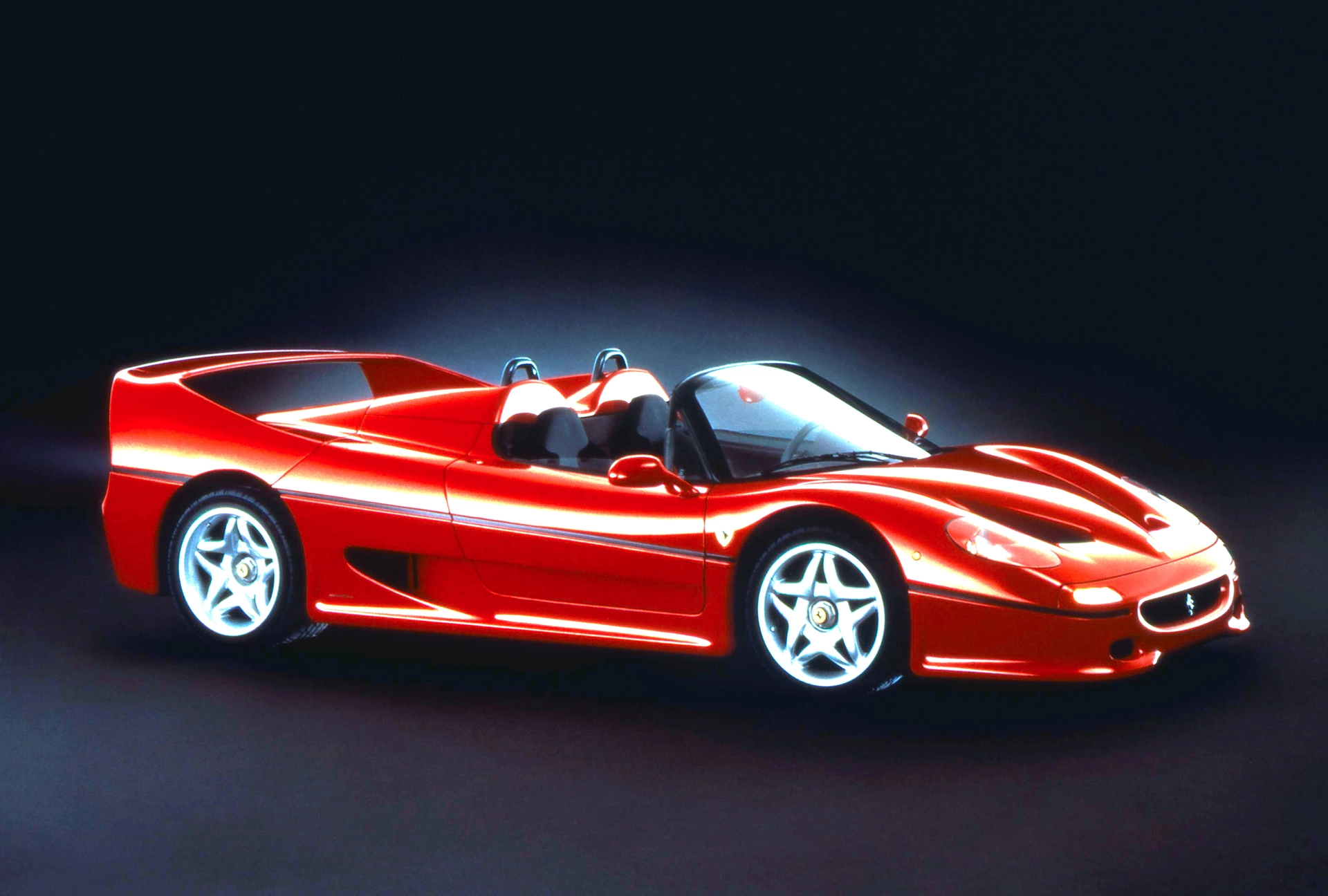
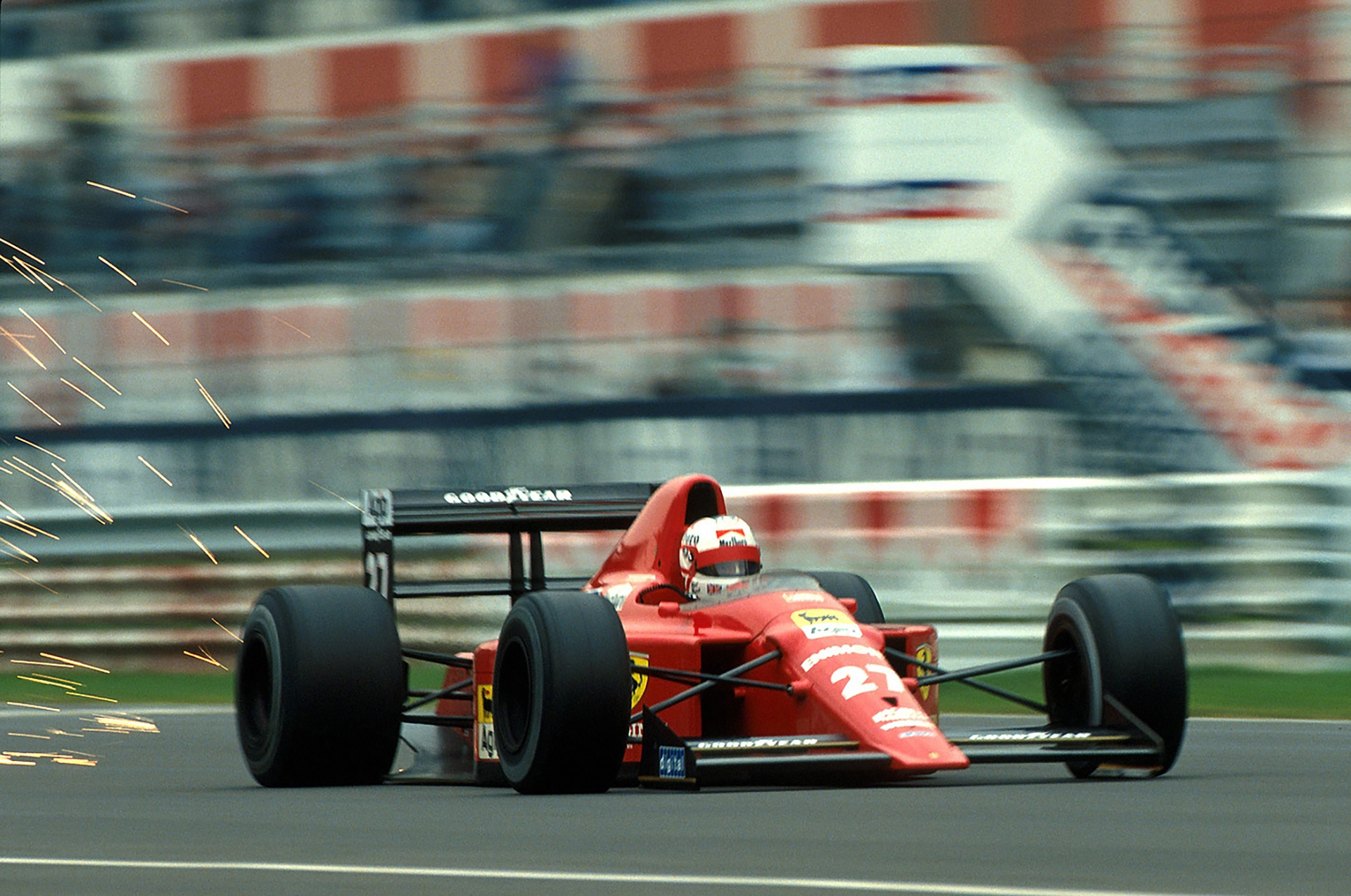
As we know, Formula 1 cars feature complex and innovative technical solutions, often chosen with one goal in mind: Winning races. These solutions, due to their cost and complexity, could have discouraged project leaders. But that was not the case: The engine was the same one used in the victorious 640 F1 in 1989 with Mansell and Berger and in 1990 with Alain Prost, who came close to winning the World Championship. From its original displacement of 3,500 cc, the beautiful 65° V12 was increased to 4.7 liters to ensure power levels similar to the F1 car, delivering 520 horsepower—an impressive figure at the time. But the most extraordinary feature was its intake system with three valves per cylinder plus two exhaust valves, and a structural design with special castings that enabled the most unique characteristic of Formula 1: Making the engine a load-bearing structure for the entire rear end.