Cars
Ferrari’s Technological Innovations Part 16: F355. The First Road Car with Ground Effect
The Ferrari F355 revolutionized road car design by introducing ground-effect technology, leveraging race-proven innovations to improve grip and handling.

It may seem incredible that the automobile, in its development over decades, took more than 75 years to understand the importance of utilizing the air it encounters when driven. In fact, research initially focused on the opposite approach: reducing drag by making cars as streamlined as possible to improve air penetration. Yet, the solution would have been simple for an industry that had always taken inspiration from airplanes. It would have sufficed to invert the principle of airplane wings, which enable flight by creating lift. By flipping this principle, airflow generated by speed could create low pressure beneath the vehicle, pushing it downward, enhancing road grip and stability. This concept, first tested by Chaparral cars in the American Can-Am championship and later in Formula 1 in the mid-1970s, demonstrated that air is not the enemy but the ally of automobiles.
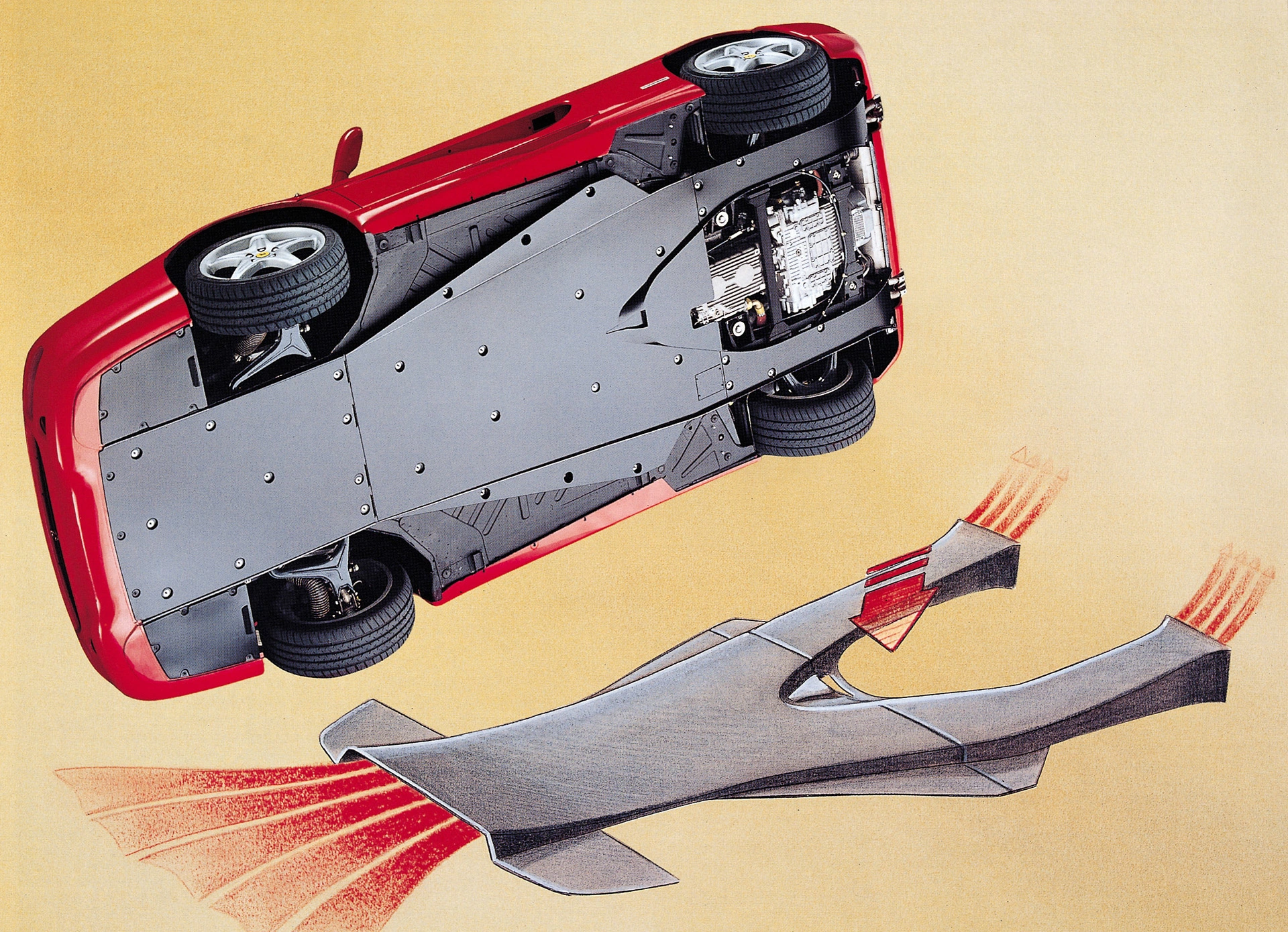
The system is essentially simple: air directed beneath the car increases its speed when the cross-sectional area is reduced, allowing it to exit at the rear. This reduces pressure and pushes the car toward the ground, improving adhesion and drivability. While the principle is straightforward, implementing it is highly complex but essential for performance. In an attempt to further enhance ground effect in Formula 1, Ferrari experimented with a double floor to create downforce. This was featured on the F92, produced in 1992, but it was unsuccessful due to being ahead of its time.