Collectors & Aficionados
“Fan car”? Try again Gordon.
In the 1970s, the use of downforce in automobiles was discovered and studied, leading to the development of the Chaparral 2J, which used fans to create a low-pressure zone and increase downforce.

The beginning of the 1970s was a milestone in the history of the automobile: finally, they had grasped the effectiveness of the use of downforce, that is, the crushing of the car towards the ground to ensure traction and road holding. The first studies were carried out at General Motors where they discovered that by channelling air beneath the car the flow caused downforce that increased in proportion to the amount of air that can be released from the rear of the car. The discovery was made why trying to correct the road handling defects of the Chevrolet Corvair that had been heavily criticised for its poor safety record. The engineers of the experimental group were in contact with Hap Sharp and Jim Hall) who built the Chaparral racing cars that used Chevrolet engines. And these two were the initiators of the great revolution that introduced ground effect and the in-car adjustable rear wing into the competitive world of motor racing, an anticipation of the current DRS system.
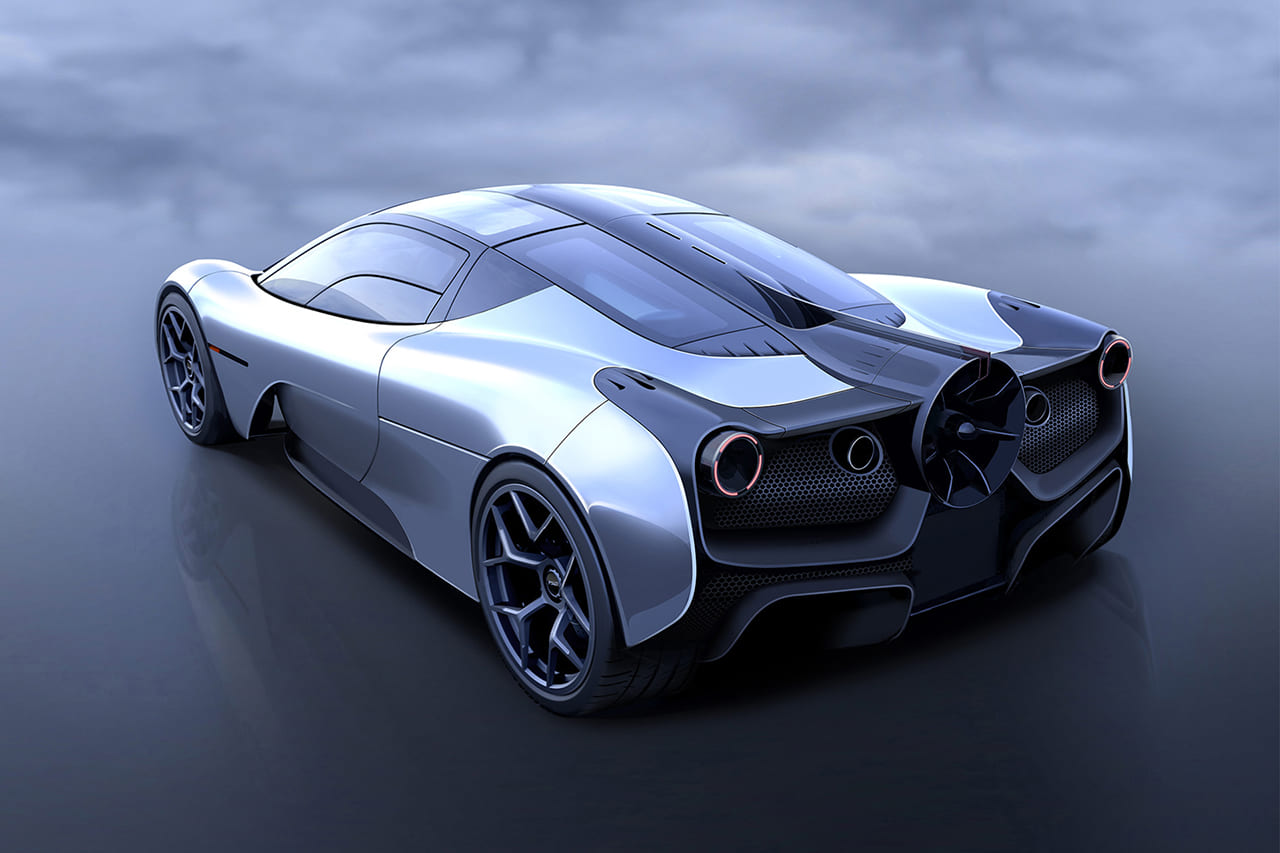 The T.50 by Gordon Murray, the designer who brought the Brabham BT46B with the rear fan extractor to the track in 1978, today proposes the same concept
Studying the function of diffusers in a fully-sealed underbody car led the imagination of Jim Hall, the team's brilliant financier, to think of “helping” the air to escape in order to create downforce by using fans as extractors. In the 1970 season of the Can-Am Championship, a revolutionary car debuted: the Chaparral 2J, which had two 43 cm diameter fans installed at the back of the car, each mounted and controlled by a small, independent 2-stroke engine producing about 50hp. Like a real home vacuum cleaner, these fans sucked air from the car floor and blew it away from the back to create a low-pressure zone and increasing downforce. Despite exceptional qualifying times and many pole positions, the car never managed to achieve success due to numerous early mechanical failures.