Events & Tours
Senna and Verstappen at the Old Nürburgring: A Trial for True Champions
Senna in 1984 and Verstappen in 2025 both took on the Nürburgring Nordschleife, proving true champions seek more than titles—they seek the thrill.

Some names aren't born by chance: "The Green Hell" for the old Nürburgring, over 20 kilometers long amid the ups and downs and pitfalls of the Eifel forest, abandoned by Formula 1 due to its dangers after Lauda's dramatic accident, is a fitting name. Bravo to the Germans for keeping the GT endurance racing program alive and well, which still features on its calendar. Having made this necessary premise, which could be summed up as "a crazy track, full of pitfalls of all kinds, including weather conditions, so long as to be extremely difficult to learn", we can introduce the two protagonists of this story: Ayrton Senna, Brazilian, three Formula 1 World Championship winners, and Max Verstappen, Dutch, four Championship winners. Two great champions who wanted to understand what it means to race on a circuit from another era, as difficult as it is dangerous. A gesture, albeit at different times, that restores poetry to motorsport and constitutes an act of love towards the public, who perceives that the romantic idea of drivers driven by a passion that burns stronger than fear can still exist.
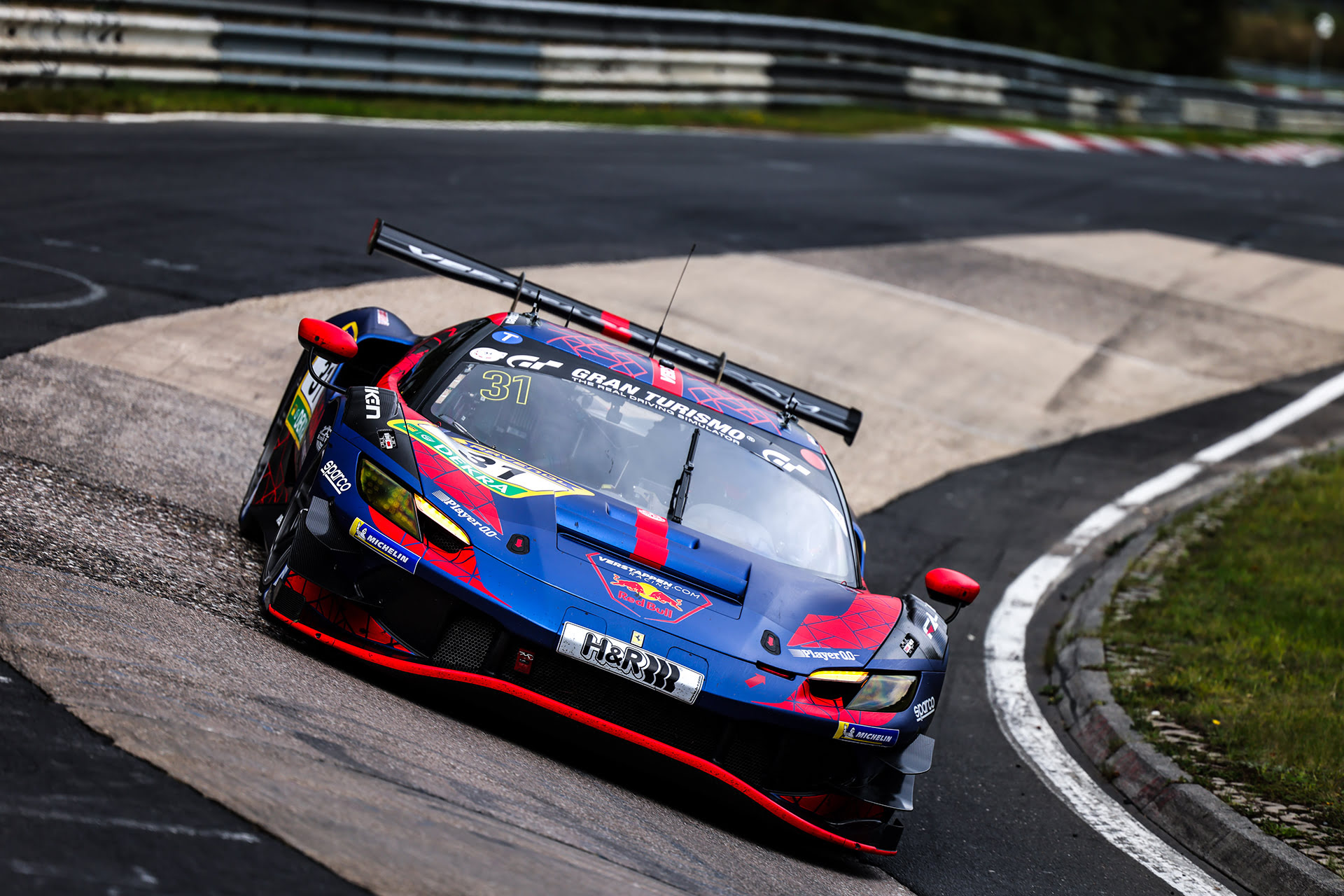
Ayrton Senna wanted to race at the Nürburgring in 1984, driving a Team Joest Porsche 956 in the 1000 km. Max Verstappen did just that on Saturday, September 27th, winning the Nürburgring 4 Hours (NLS9, the race's acronym) on his debut in a Ferrari 296 GT3 of the Emil Frey Racing team, partnered by Englishman Chris Lulham. Senna didn't win; the 956 was a beast to be tamed, capable of over 600 horsepower with brakes and aerodynamics at the cutting edge of the technical knowledge of the time. In testing, it gave a clear indication of what it was capable of: it was immediately faster than his famous teammate Henri Pescarolo, demonstrating extraordinary adaptability. Unfortunately, in the race, the car couldn't fight for victory due to a clutch failure, but the message was already clear. Formula 1 wasn't enough for him; he wanted to experience the race in all its forms to prove he was the best. Forty years later, the Nürburgring is still there, identical. Max Verstappen, the dominator of modern Formula 1, emerges from the pits at the wheel of his team's red and blue Ferrari 296 GT3, managing traffic, overtaking and lapping at the limit given the unique nature of the Green Hell. Verstappen made it clear from the start that he was there to win. At the start, he quickly took the lead and then built a solid lead that, after two laps, handed teammate Chris Lulham a safe position. The victory came by more than twenty seconds over the second-placed driver.