Cars
Part 5 - A Bugatti in your garage? Some good reasons to having one The Racing Parabola
Discover the remarkable journey of Roland Bugatti, who at just 24 years old, aimed to revive the Bugatti marque after the devastation of war. From failed projects like the Type 73 and Type 101 to a daring Formula 1 venture with the Bugatti Type 151.

The sons of great men have a weighty heritage to shoulder. This is especially so if the scion is only 24 and intends to breathe new life into a great marque following the devastation of the war by seeking to recover the precious machine tools created to produce excellence. Such was the steadfast aim of Roland, Ettore’s second son, when the Molsheim factory was returned to his father. by that time, Ettore’s health was so bad that he couldn’t even be informed of the change in circumstances, and Roland had to handle everything alone. He could not have foreseen that in 1966, following the collapse of an audacious effort at relaunching the marque, his step-mother, Geneviève Delcuze, Ettore’s second wife and the mother of Thérèse and Michel, would sell what remained of Bugatti, trademark and all, to Hispano Suiza, the company that during the war years had commissioned Bugatti to produce mechanical parts for its engines.
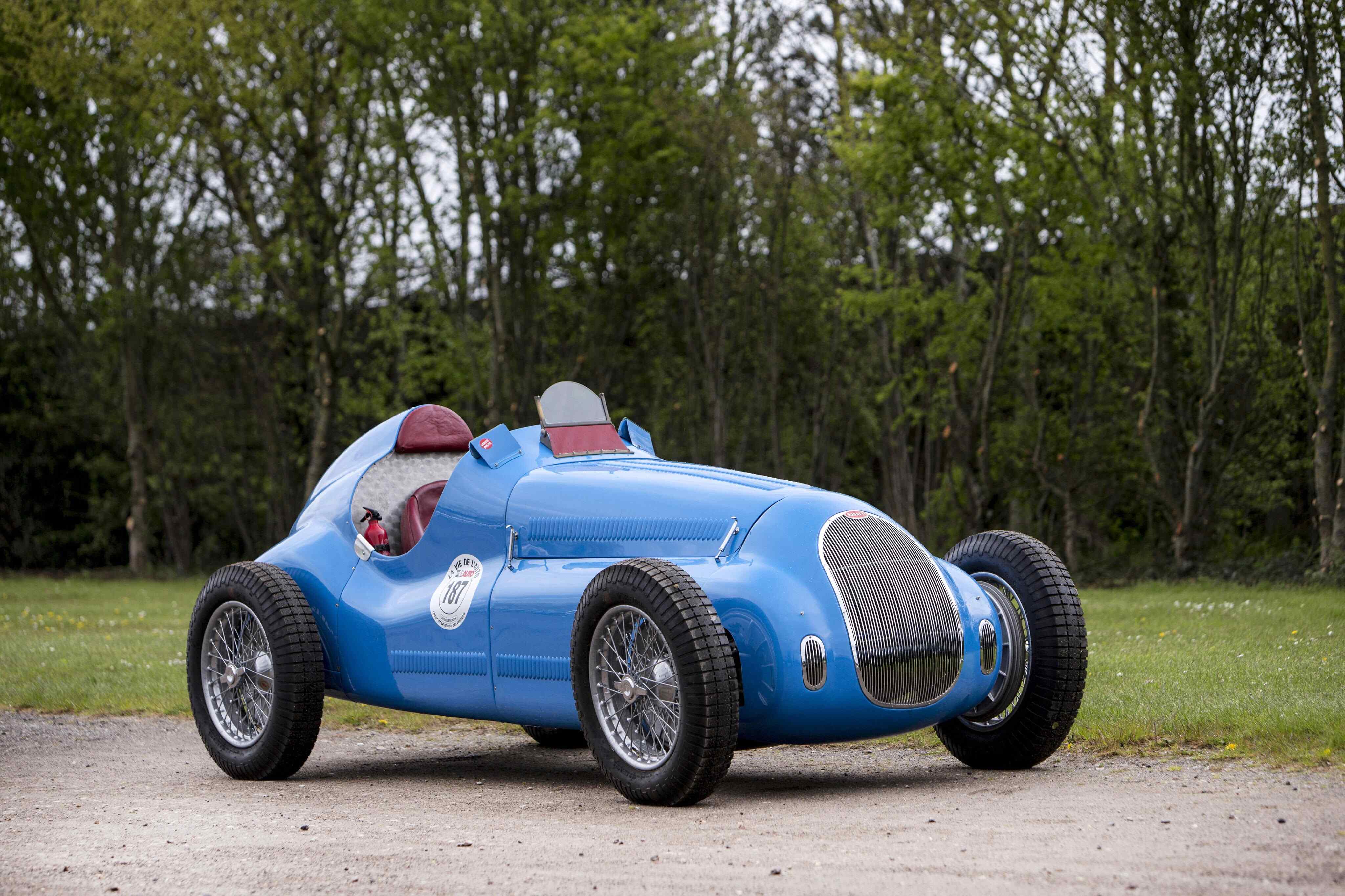
All this was still to come, however, when Roland and Pierre Marco, the loyal factory director and driver, began to think about new projects. Jean Pierre Wimille’s victory at the wheel of the Type 50 at the 1946 Grand Prix de la Libération in Paris suggested that designing road vehicles to bring the famous marque back to life could be a valid project. Yet the Type 73, presented in 1947, and the Type 101, based on the Type 57 and launched in 1951, turned out to be utter failures, despite the fact that a few models, including Geneviève’s with its Antem bodywork, were indisputably magnificent. Times had changed, and with them technology as well, and the world was heading toward mass motorization and production.