Cars
How to cut a tail
In March 1962, Auto Italiana magazine celebrated the creation of the Alfa Romeo Giulietta SZ Coda Tronca, a car born out of experimental trials and the unique traits of Zagato's design.

“The Weapon of Victory” is how the magazine Auto Italiana celebrated the newly-created Alfa Romeo Giulietta SZ Coda Tronca in March 1962, a car created from experimental trials as well as “shape and function” needs, which are the peculiar traits of Zagato’s DNA. The Alfa Romeo SZ Coda Tonda (Rounded tail) was the starting point of the development of the Alfa SZ Coda Tronca (“Kamm tail”).
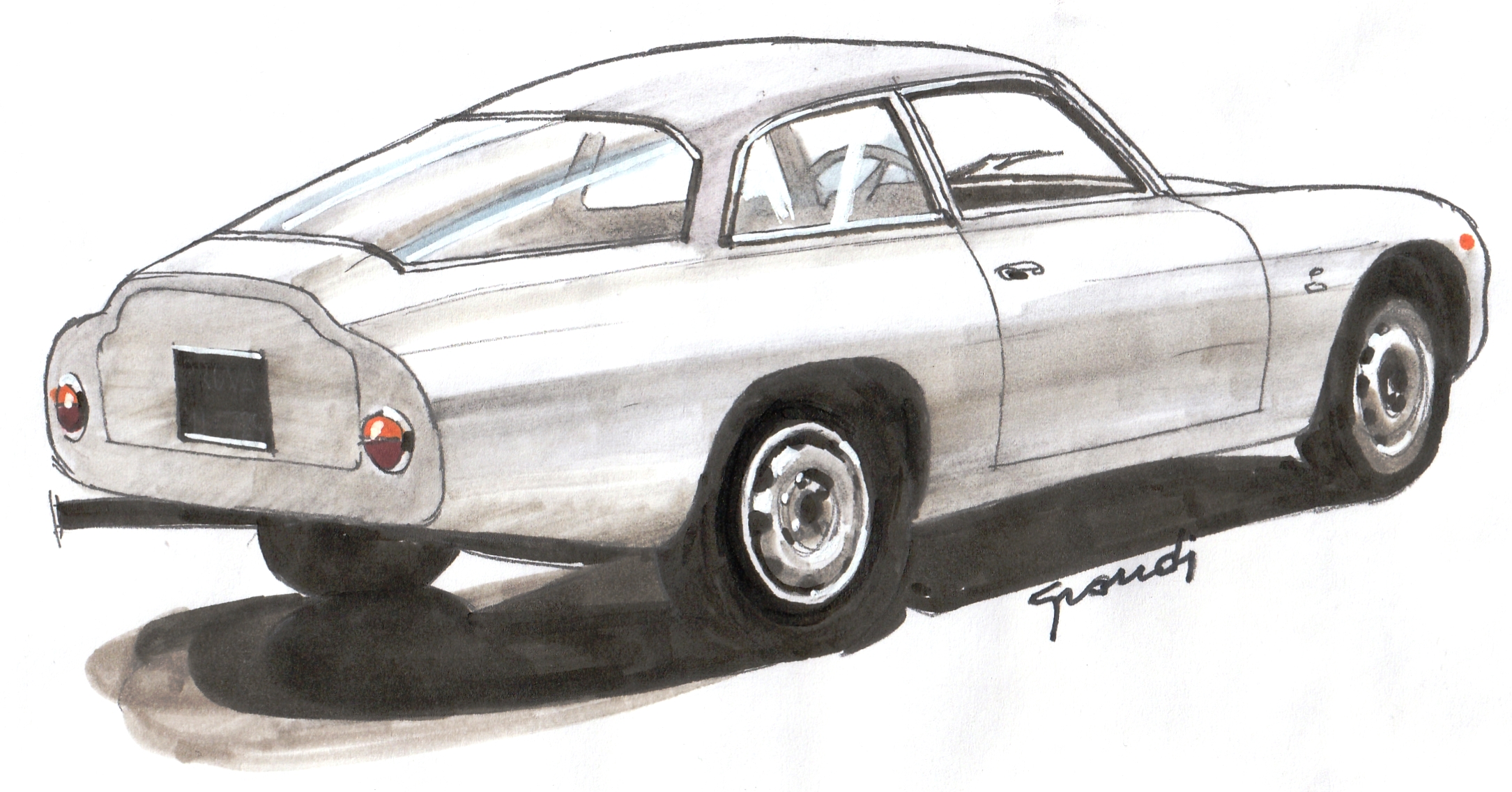 The compact and rounded Giulietta SZ, which won everything on the track and on the road, completely changes its appearance when transformed into a Coda Tronca (Kamm tail). Thanks to these changes, performance improved further.
While it’s true that the Coda Tonda was easily dominating the 1300 GT classes, it is also true that the fast and light Lotus Elites were the hands-down winners in every other important international race. That was a problem for Alfa Romeo, as big car manufactures at the time were using race wins as a powerful marketing tool. You won on Sunday so that you could out on Monday. That was Alfa Romeo’s strategy and it worked pretty well. For this reason, they had to create a completely new car. Elio Zagato, driven by his visionary spirit and working together with the Polytechnic of Milan, Alfa Romeo and excellent testers such as Conrero and Facetti, started a technical analysis aimed at the evolution of the SZ Coda Tonda. After various long and intense studies, they chose to focus their attention on the research on aerodynamics done by Prof. W. Kamm in the 30s. According to Kamm, a highly extended shape increases aerodynamic efficiency and, therefore, the maximum speed of a car. Elio Zagato, assisted during the design phase by a young Ercole Spada, modified a Giulietta SZ Coda Tonda, stretching the “nose” of the car and cutting the tail. They started with the front section, taking inspiration from the work applied to the Maserati 450 S built for Sir Stirling Moss a few years earlier.