Cars
1992 McLaren F1
The McLaren F1 was born out of Bruce McLaren's dream to produce a road car that could win the 24 Hours of Le Mans. With a focus on weight reduction, the car featured a carbon fiber chassis and BMW-developed V12 engine producing 618bhp.

Bruce McLaren, in the months leading up to his death on the Goodwood circuit in June 1970 onboard an M8D Can-Am, cherished the dream of producing a road car that could participate and win in the 24 Hours of Le Mans. After the sudden death of its founder, the company from Woking was forced to halt the project, which ended up being postponed for twenty years. In March 1990, in the midst of their almost complete domination of Formula 1 with Prost and Senna, a working group was created led by Gordon Murray and the designer Peter Stevens, from which McLaren F1 was to emerge two years later.
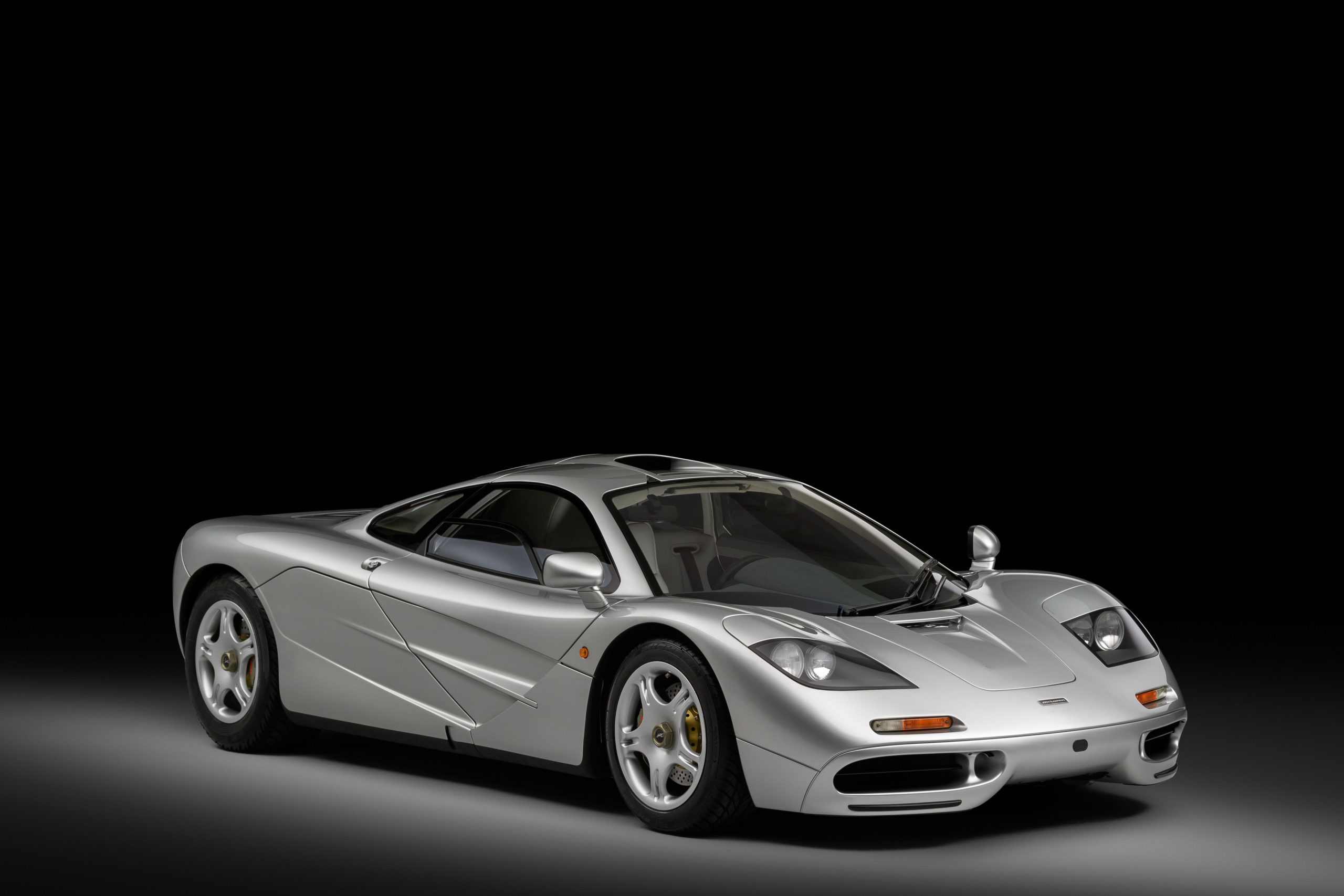 The initial plan anticipated a production run of 350 examples, but only 106 were actually delivered to customers
Inspired by single-seaters, it came with three seats, with the central one dedicated to the driver, a truly unique configuration for a production sports car. The main focus of the project was to save weight, and therefore it came without any assistance such as ABS and traction control to give maximum priority to pure driving pleasure; it was the first road car in the world to adopt a monocoque carbon fibre chassis, combining lightness and exceptional rigidity. Eight manufacturers were consulted to supply the engine, the only component not developed internally at McLaren, and the decision was made to go with BMW, perhaps because of Murray's past at Brabham-BMW between the 70s and 80s. The Bavarian technicians developed a 6064cc, 60° V12 engine, capable of producing 618bhp, tested on an M5 E34 Touring.