Cars
1923. A war child: the Voisin C6 Laboratoire
Gabriel Voisin, known for building innovative airplanes during WWI, entered the 1923 Gran Prix of Tours with an aluminum monocoque chassis and a tapered tail for greater aerodynamic efficiency.

Gabriel Voisin made his name and fortune building airplanes during World War I. These were highly innovative planes, being built entirely in aluminum, and not with canvas for the wings and fuselage like others of the time. Keen to exploit his experience with light alloys, after the war, Voisin was drawn to the automobile market. There he found a tough rival in Ettore Bugatti, whose splendid cars boasted performance levels that more than matched their esthetic appeal.
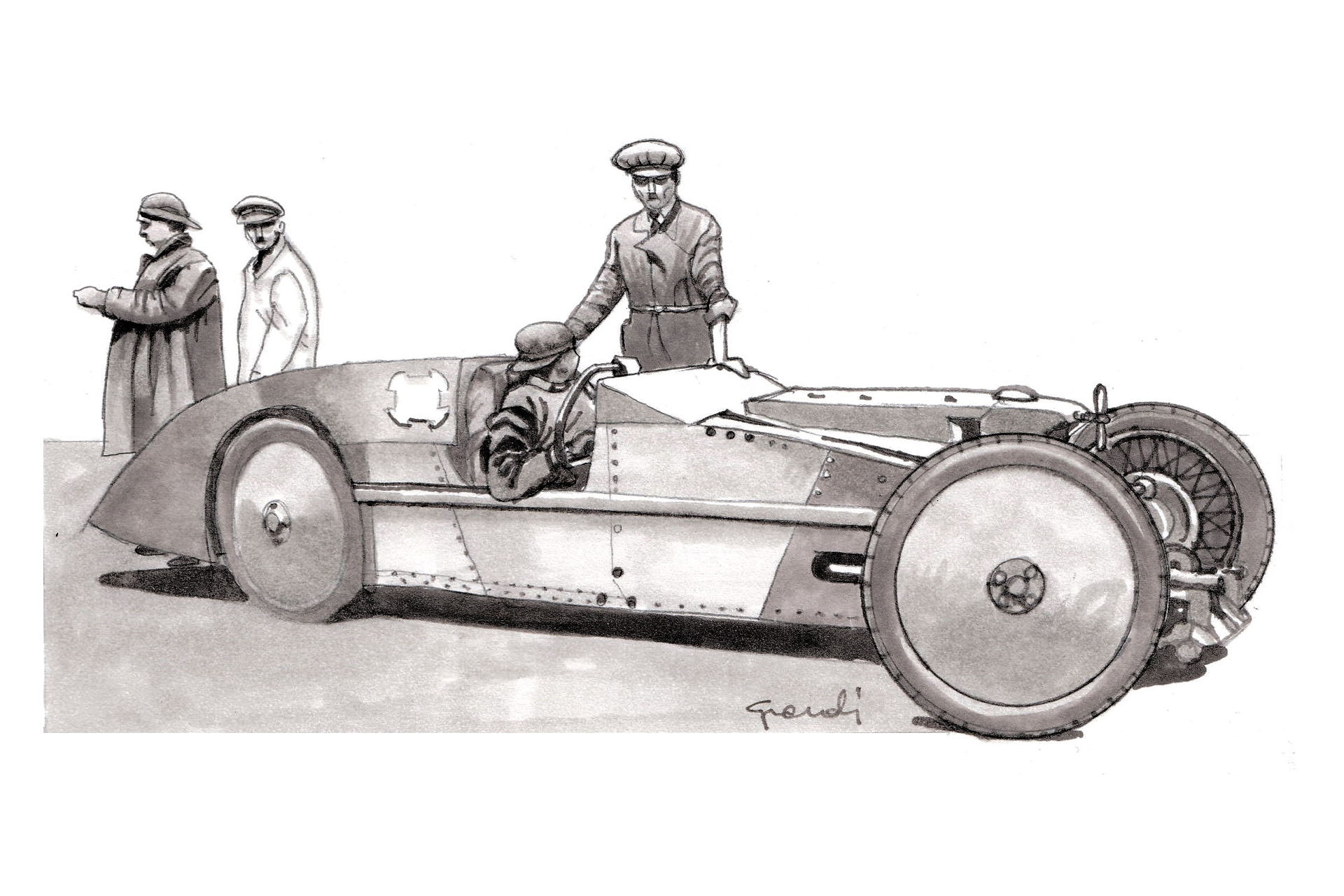 Surprising in technical solutions that combine a heightened search for aerodynamic effectiveness at the rear leaving the front-mounted engine uncovered and clearly visible
So, what greater challenge could there be for Voisin than to take on his already famous rival in a Gran Prix race? We are talking about the 1923 Gran Prix of Tours. Knowing that Bugatti was getting ready to unveil a car that would be revolutionary, both in content and style, Voisin responded in kind. He built an aluminum monocoque chassis with a closed and completely flat bottom — in Formula 1 racing, this idea finally came to fruition half a century later — and a long, tapered tail for greater aerodynamic efficiency. In line with the principle that cars should be teardrop shaped, the rear track was narrower than the front, and the wheels were flush with the body and had perfectly smooth rims.