Events & Tours
100 years of Le Mans. Harder, faster and more passionate than ever
Evolution of Speed: Witness the transformation of Circuit de la Sarthe over 100 years of the 24 Hours of Le Mans. From modest beginnings to record-breaking speeds, explore the relentless pursuit to tame ever-faster cars on this legendary track.

In the 100 years of 24 Hours, the Circuit de la Sarthe in France, near the town of Le Mans, has consistently been racing against cars on the track. The circuit is racing? Absolutely: in an attempt to limit the risks posed by ever-faster cars, the track has been modified no fewer than thirteen times. In the first race in 1923, the relatively unknown French drivers Chenard and Valcker recorded an average speed of just 92 km/h over the 24-hour interval. But by 1939, the average speed over the course of the race had increased to 140 km/h - a significant jump for cars of that era.
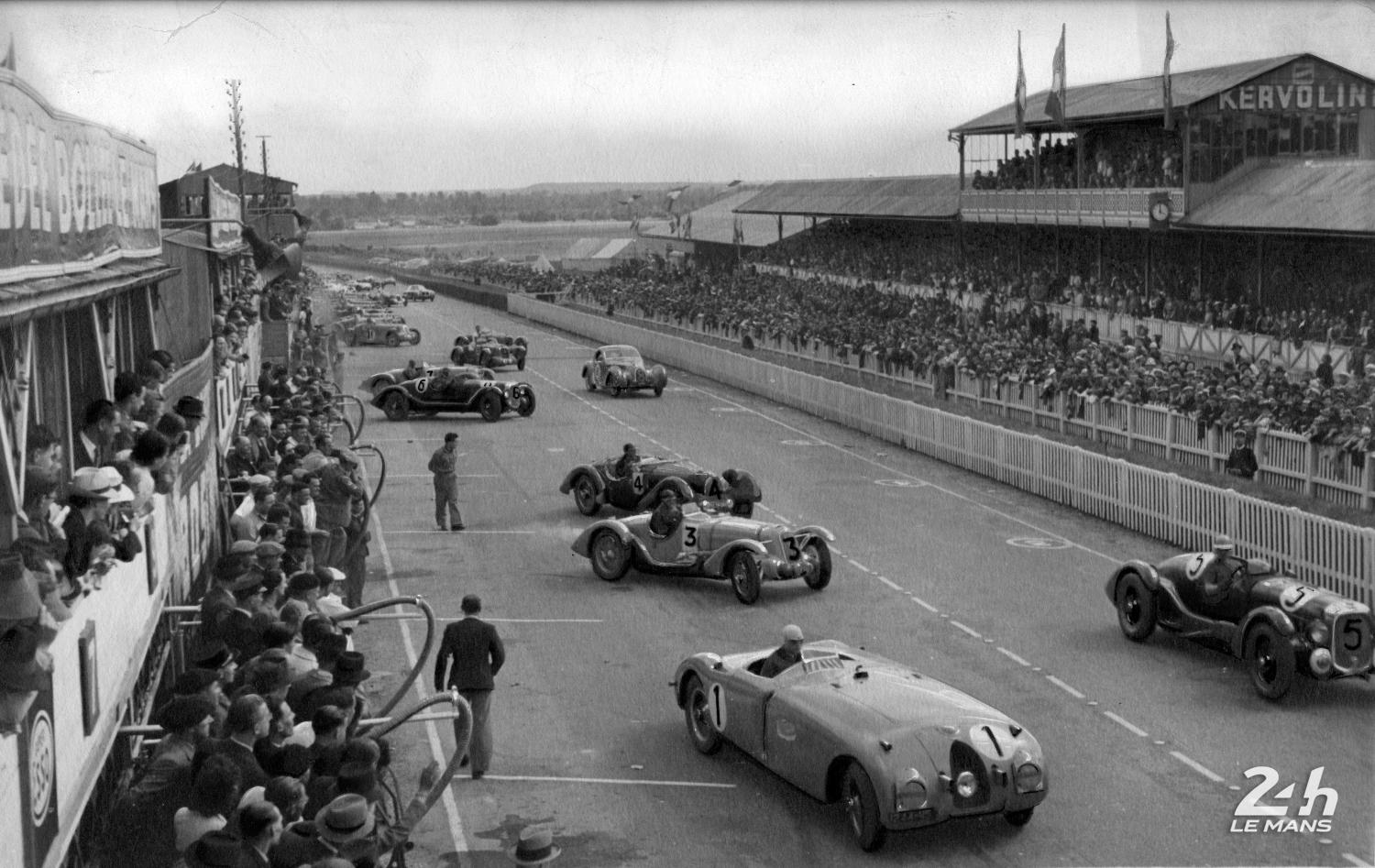 Wimille and Veyron's No. 1 Bugatti at the start of the 1939 24 Hours of Le Mans, which they won at a record average of 139.781 km/h, remarkable for the time
However, the situation changed dramatically after World War II. In 1967, the Ford GT40 that many remember as the star of the recent film “Ford V Ferrari”, clocked an average speed of 218 km/h over the entire race thanks to the evolution Mark IV on the same circuit that had remained unchanged since 1956. Since then, modifications to the track and regulations governing engine specifications have constantly tried to reign in the overall speed of the cars but have been unable to stop it from increasing.